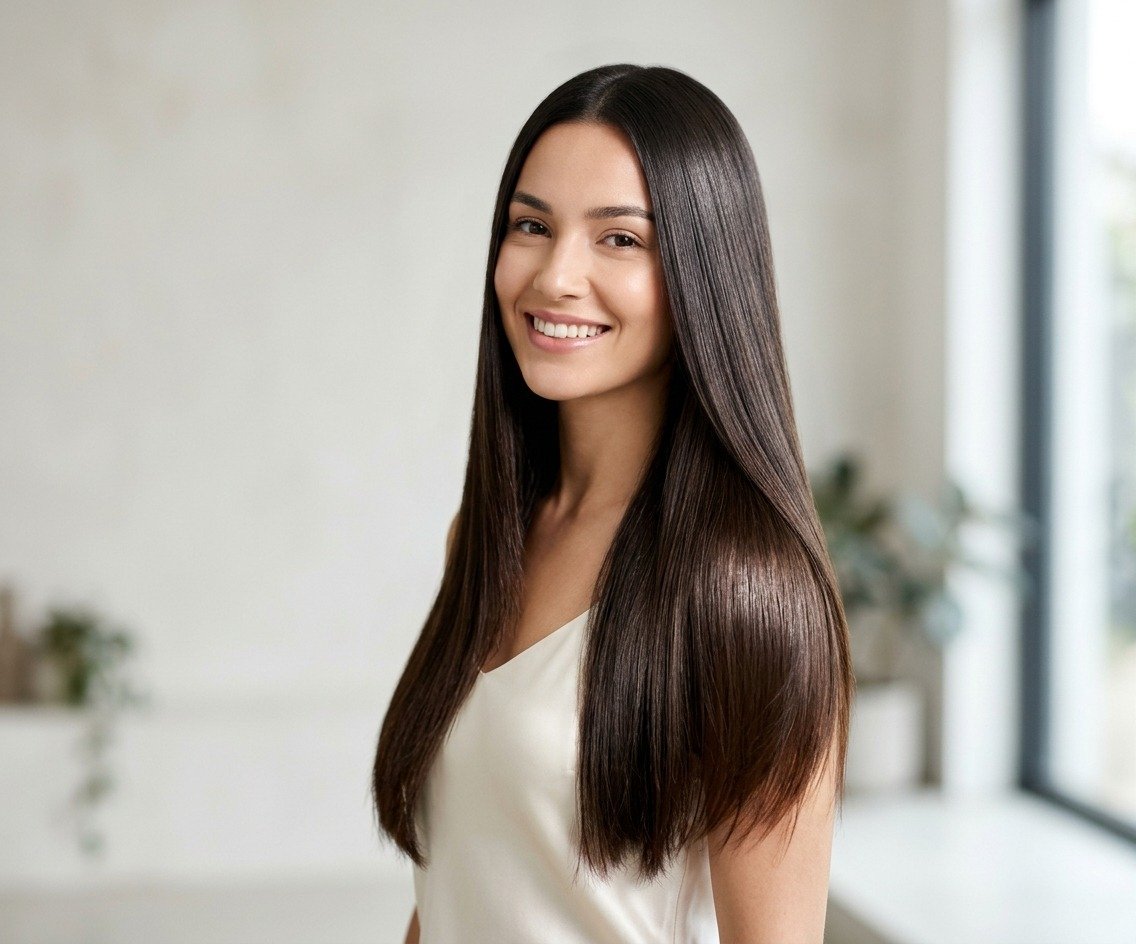
Straight Hair: The Complete Guide to Care, Styling & Taper Fade Styles
Straight hair is hair that falls flat from root to tip, with no natural curl or wave. It is often shiny because the scalp’s natural oils travel down the strand with ease. It can also turn oily, flat, or frizzy faster than other hair types. This guide covers what straight hair is, how to keep it soft and sleek without damage, which cuts suit it best, and how taper fades work with straight hair.
Straight Hair at a Glance
| Feature | What to expect |
| Shine | High, because oils travel down easily |
| Oil | Builds up fast at the roots |
| Volume | Often low, since hair lies flat |
| Frizz | Appears in humidity or when hair is dry |
| Trims | Every 6 to 8 weeks to keep the shape |
What Is Straight Hair?
Straight hair is classed as type 1 hair. It has no curl pattern, and each strand grows straight out of the scalp. Within type 1, there are three subtypes. Type 1A is stick-straight and rarely holds a curl. It is the rarest type. Type 1B has more body and can hold a curl with styling. Type 1C lies mostly flat, looks tousled when air-dried, and is often thick and coarse, which frizzes in humidity.
The same flat shape is both a strength and a weakness. Detangling is easy, because strands do not twist around each other. But oil moves down the strand just as easily, so roots can look greasy a day after washing. Volume is the other struggle, with no natural lift at the roots.
How to Get Soft, Straight Hair Without Heat
Daily flat ironing dries hair out and causes split ends and breakage. These heat-free methods take longer, yet they keep hair healthier. Wavy hair responds to most of them; curlier hair needs wet wrapping or banding.
- Wrap your hair overnight. Brush out tangles, then wrap sections tightly around your head and pin them flat. Cover with a silk scarf and sleep on it. This works best for wavy hair.
- Wet wrap for curlier hair. Pin damp hair flat against your head and let it dry in place. Use a smoothing leave-in first if your hair frizzes.
- Blow-dry with cool air. Let hair air-dry until half dry. Then dry it in sections on the cool setting, smoothing each section with a brush from root to tip. Allow extra time; it is slower than a hot blowout.
- Use extra-large rollers. Roll one-inch sections onto very large rollers; leave in overnight or until fully dry. Large rollers smooth hair instead of curling it.
- Try the banding method. Part hair down the middle, divide each side into sections, and place soft elastics down each section, spaced slightly apart. Leave overnight, then comb through gently. Banding stretches coils and reduces shrinkage.
- Do a slicked-back bun. With damp hair, make a low ponytail, twist it, and wrap it into a tight bun. Secure with a silk scrunchie and let it dry fully. This smooths a light wave pattern.
Natural Hair Masks That Soften and Smooth Hair
Masks add the softness that straightening alone cannot give. They coat the strand, lock in moisture, and calm frizz. Use one a week; rinse with cool water.
- Milk and honey mask. Mix one cup of full-fat milk with one tablespoon of honey. Smooth it onto damp hair, leave for 20 to 30 minutes, then rinse. Milk softens texture, and honey seals in moisture.
- Egg and olive oil mask. Beat one egg with two tablespoons of olive oil. Apply, cover with a shower cap, and leave for 30 minutes. Rinse with lukewarm water; egg protein strengthens, olive oil seals moisture.
- Aloe vera and oil mask. Blend half a cup of aloe vera gel with half a cup of warm olive or coconut oil. Apply for 30 to 45 minutes, then wash out. Aloe hydrates and smooths frizz without weighing hair down.
- Banana mask. Mash one ripe banana with a tablespoon of honey and a little yoghurt. Apply, let it dry halfway, and rinse well. Banana’s vitamins leave hair soft and easy to manage.
Expect softer hair after a few uses, not a permanent texture change.
Daily Care Routine for Straight Hair
Straight hair needs light care. Heavy products weigh it down, and skipping washes leaves roots greasy. A simple routine works best.
Wash with a gentle, sulfate-free shampoo, and focus conditioner on the mid-lengths and ends, not the roots. Wash frequency is personal: daily for very oily hair, every two to three days for others. Between washes, a little dry shampoo at the roots adds freshness and lift.
Detangle with a wide-tooth comb, starting at the ends and working upward. Never brush soaking-wet hair from root to tip; it snaps strands. Use a microfiber towel or old T-shirt; rough towels cause friction and frizz.
Keep styling light. A pea-sized amount of leave-in conditioner or a drop of argan, coconut, or almond oil smooths ends without grease. A silk or satin pillowcase cuts friction, but silk does not absorb oil like cotton. Eat enough protein, plus omega-3 sources such as fish, walnuts, or almonds.
Salon Straightening Options and Their Risks
Natural methods only go so far. Salon treatments change the hair’s structure, so know the trade-offs before you book.
A keratin treatment smooths the surface without breaking the hair’s bonds. Results last three to five months, then your natural texture returns. Some formulas contain formaldehyde, so ask for a formaldehyde-free option.
Japanese straightening, or thermal reconditioning, breaks the bonds that make hair curly and leaves it pin-straight. It takes up to eight hours, costs over $500, and needs touch-ups every six to twelve weeks. A relaxer works in a similar way and suits coarse, tight curls, at a lower cost of roughly $45 to $100.
Damaged hair can break during the process, so ask for a strand test and mention past colour work.
Taper Fades for Straight Hair: Low vs High
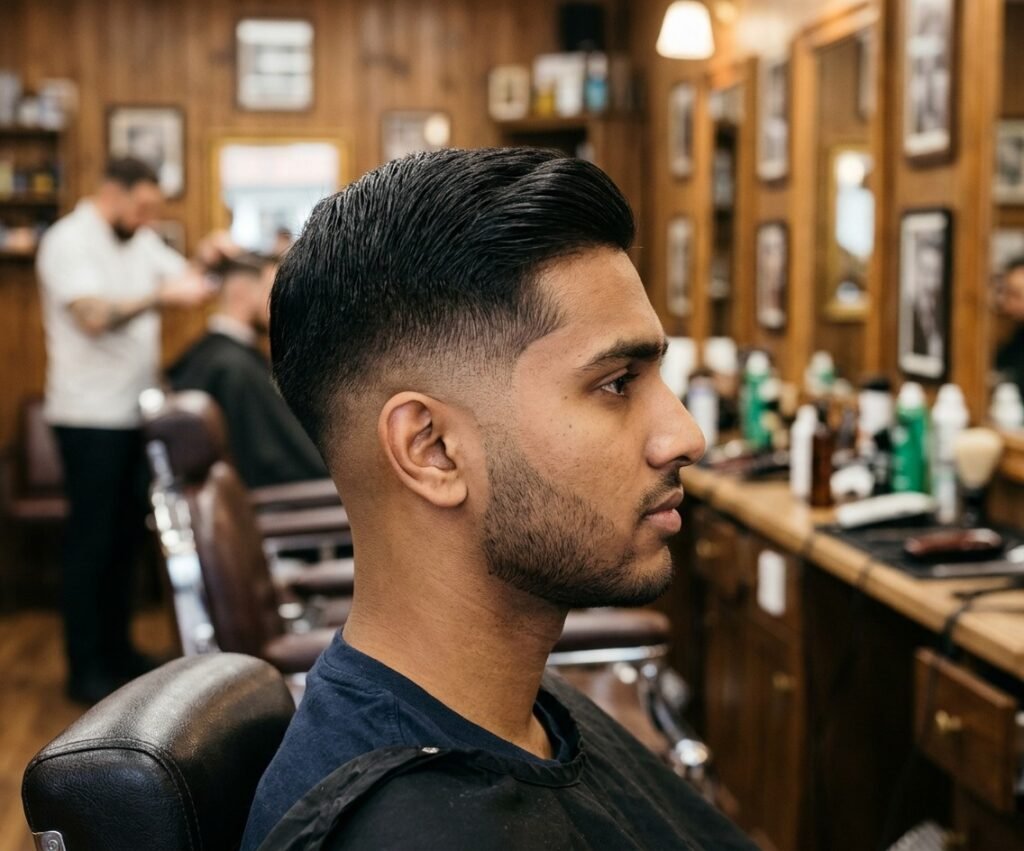
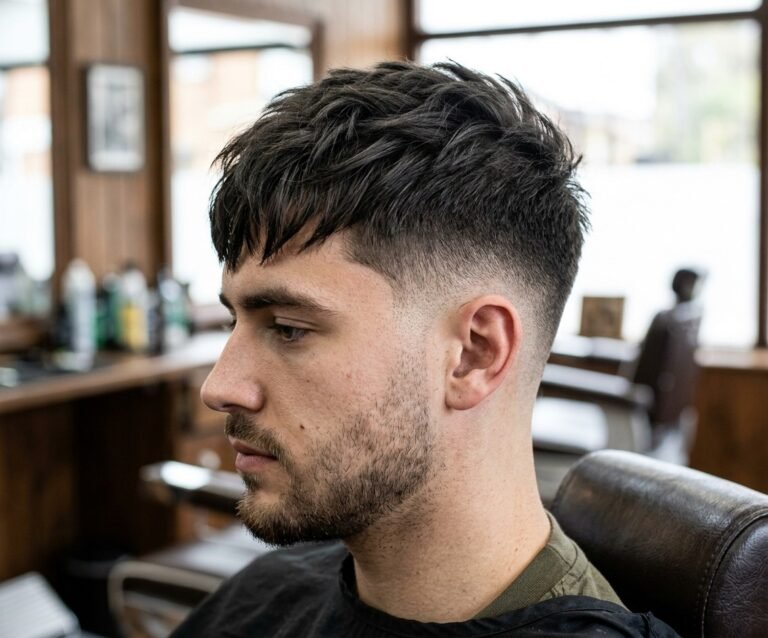
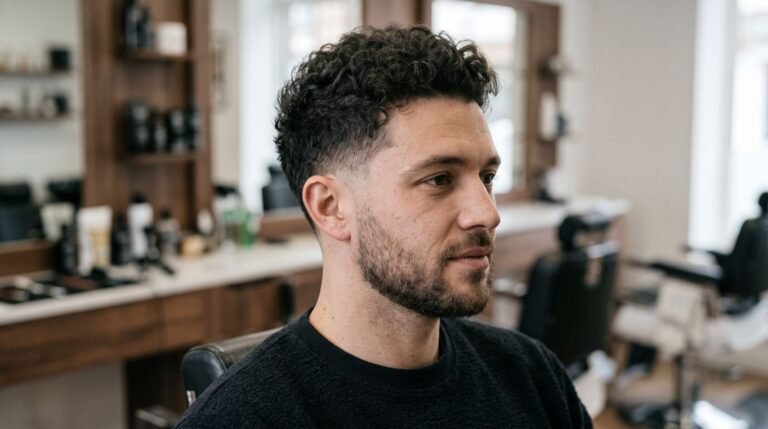
A taper fade shortens the sides and back in a smooth gradient while the top keeps its length. On straight hair, the fade line shows clearly, so a clean blend matters more than on textured hair. The two main choices are the low and high taper fades.
Low Taper Fade
A low taper fade starts just above the ear. The change is subtle, and most of the side keeps its length. It suits offices and first-time fades. On straight hair, it gives a neat outline without exposing much scalp, and it grows out gracefully.
High Taper Fade
A high taper fade starts above the temple. The contrast is bold, and the sides look much shorter. It suits thick straight hair best, because the top has enough weight to balance the short sides. It needs touch-ups more often, about every two weeks, since regrowth shows fast against the short fade. For more hairstyle inspiration and styling options, check out our detailed guide to the high taper fade, including different looks and barber tips.
Which One Should You Choose?
Choose the low taper fade for a quiet, professional look and easy grow-out. Choose the high taper fade for strong contrast and a sharper style. A mid taper fade sits between the two and suits most people. Tell your barber three things: where the taper starts, how short the sides go, and the top length. Bring a photo of hair like yours.
Best Haircuts for Straight Hair
The right cut gives straight hair the shape it lacks on its own. Layers add movement: face-framing layers soften the front, invisible layers add body without visible steps, and bouncy layers give a fuller finish. A blunt or A-line bob looks sharp and needs little styling. Long curtain bangs or a full fringe frame the face, while a wolf cut or butterfly cut adds texture for anyone bored with flat, one-length hair.
Fine hair looks fuller with a blunt cut or bob; thick hair handles layers well. Trim every six to eight weeks to keep the shape.
Myths About Straight Hair
Cold water keeps hair straight. Water temperature does not change texture. Cold water can lock in moisture and help shine, but it will not straighten hair.
Higher heat holds a style longer. High iron settings damage hair and cause frizz and breakage. Use the lowest setting that works, and always use a heat protectant.
Fine straight hair can never have body. Only type 1A rarely holds body or curl. Types 1B and 1C can hold styles with the right tools and products.
Combing wet hair from root to tip makes it straight. This only gives a temporary effect, and it can snap strands and cause frizz once dry. Comb from the ends upward, with leave-in conditioner.
Common Problems and How to Fix Them
Frizz. Frizz comes from dryness and humidity. Fix it with weekly deep conditioning and a smoothing serum on the ends.
Oiliness. Oil travels fast down straight strands. Fix it by washing to your own schedule and keeping conditioner off the roots.
Flatness. Straight hair lacks root lift. Fix it with root-lift drying, a switched part, or layers in your cut.
Tangles. Fine strands knot when wet. Fix it by detangling damp hair gently and avoiding sleep on wet hair.
Frequently Asked Questions
Can curly hair become straight naturally?
Heat-free methods can loosen a wave and smooth hair, but they cannot permanently change tight curls. Lasting straightness needs heat or chemicals, so keep expectations honest.
How can I make my hair soft and straight naturally without heat?
Wrap damp hair overnight, use a milk and honey mask weekly, and blow-dry on cool. No flat iron needed.
Does milk really straighten hair?
Milk softens and smooths hair, and full-fat milk can tame waves, but it will not straighten tight curls. Think of it as a smoothing treatment, not a straightener.
How long do natural straightening results last?
Until your next wash, or until humidity hits. Humidity returns hair to its natural pattern; silk scarves and serum help it last.
How often should I wash straight hair?
As often as your roots need it. Oily hair may need daily washing, while others do fine every two to three days. Use dry shampoo between washes if roots look greasy.
What is the best haircut for straight hair?
Layers add movement, a blunt bob adds sharpness, and curtain bangs frame the face. The best cut depends on your thickness and face shape.
What is the difference between a low taper fade and a high taper fade for straight hair?
A low taper fade starts just above the ear and looks subtle. A high taper fade starts above the temple and gives bold contrast. Both show clearly on straight hair, so a clean blend matters.
How often should I trim straight hair?
Every six to eight weeks. Trims remove split ends and keep the shape, especially for bobs and layers.
Conclusion
Straight hair is simple to care for, but it rewards the right habits. Keep products light, protect it from heat, feed it moisture with masks, and choose a cut that adds the shape your hair lacks. If you want a fade, a low taper keeps things subtle and a high taper makes a bolder statement. Treat your hair gently, and it will stay soft, sleek, and healthy.