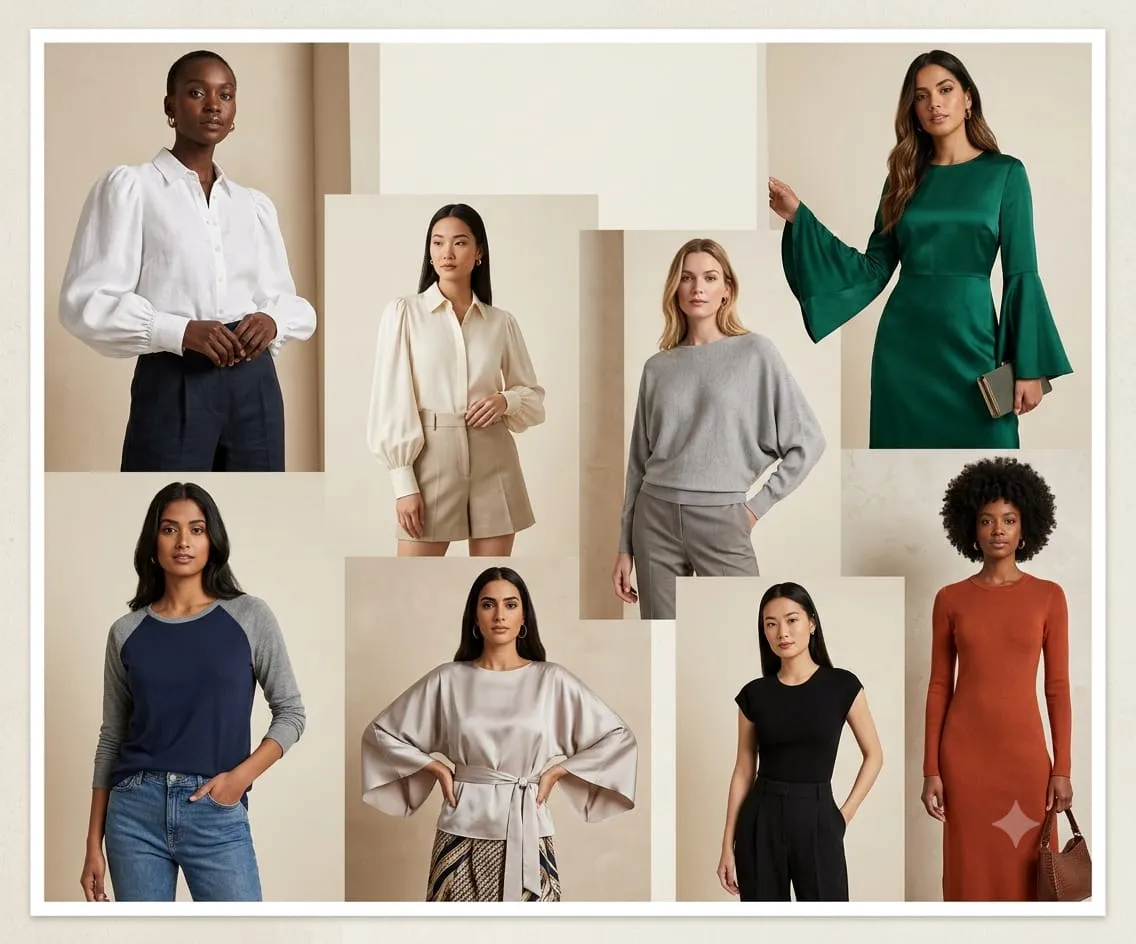
Types of Sleeves: A Complete Guide to Sleeve Styles and Designs
Choosing the right sleeve can be harder than it looks. You may find a dress that has the perfect color and fabric, but the sleeves feel too tight. A blouse may look beautiful online, yet the sleeve volume makes it difficult to layer. A jacket may have a stylish design but restrict your arm movement.
These are common problems because sleeves affect much more than appearance. They influence how a garment fits, how freely you can move, how much coverage you get, and how comfortable the clothing feels throughout the day.
In garment design and clothing selection, small differences in sleeve construction can make a noticeable difference. A set-in sleeve creates a more structured shoulder line, while a dolman or batwing sleeve gives more room around the upper body. A raglan sleeve can make arm movement easier, while a puff or bishop sleeve can add volume and visual interest.
The challenge is knowing which sleeve style is right for your needs. Sleeve names can also be confusing because some describe the way a sleeve is constructed, while others describe its length, shape, or decorative details.
That is why this guide breaks down the most important types of sleeves in simple terms. You will learn how different sleeve styles are constructed, how they differ in length and shape, where they are commonly used, and how to choose and style them for different occasions.
Whether you are buying clothes, planning an outfit, designing a garment, or learning about fashion construction, understanding sleeve types can help you make more informed choices. The goal is not simply to find a sleeve that looks good. It is to find one that also works for the garment, the occasion, your comfort, and your personal style.
Quick Takeaway: What Are the Main Types of Sleeves?
The main types of sleeves include set-in, raglan, cut-in, one-piece, dolman, kimono, puff, bell, bishop, cap, short, three-quarter, and long sleeves. Sleeve construction and design can be classified by their construction, length, shape, volume, or decorative details. The best sleeve depends on the garment, fabric, occasion, comfort, and level of coverage you want.
Why Do Sleeves Matter in Fashion?
Sleeves are far more than a simple part of a garment; they play a real role in both style and function. A long sleeve, for instance, provides warmth and coverage, while a cap sleeve creates a light, delicate look, and a puff sleeve adds volume for a romantic feel.
Sleeve design also affects how a garment fits and moves. Some styles give the arms more freedom, while others create a structured, tailored shape. Because of this, the right sleeve can shift the entire mood of an outfit: a fitted sleeve reads polished and professional, while a bell or bishop sleeve feels dramatic and expressive.
Understanding the different sleeve styles available ultimately helps you make smarter, more intentional fashion choices.
How Are Sleeves Classified?
Sleeves aren’t all named based on the same feature — some are classified by construction, others by length, shape, volume, or decorative detail. A puff sleeve, for example, describes shape and volume but can still use set-in construction, while a long bishop sleeve describes both the shape and the length of the sleeve at once.
Because of this overlap, understanding each category separately makes it much easier to compare and identify different sleeve styles.
Sleeve Construction
This describes how the sleeve is attached to or built into the garment, with common examples including set-in, raglan, cut-in, one-piece, and two-piece sleeves.
Sleeve Length
This describes how far the sleeve extends down the arm, with common examples including cap, short, half, three-quarter, and long sleeves.
Sleeve Shape and Volume
This describes the overall form of the sleeve, including styles like puff, bell, bishop, balloon, butterfly, dolman, and batwing sleeves.
Decorative and Functional Details
Some sleeve styles are defined by special features rather than shape or length alone, including ruffle, cuffed, cold-shoulder, off-shoulder, and detachable sleeves. Because of this layered system, a single garment can carry more than one sleeve classification — for example, a dress might feature a long puff sleeve built with set-in construction.
Classification of Sleeves
One of the easiest ways to understand sleeve styles is to start with how they’re constructed.
Set-In Sleeves
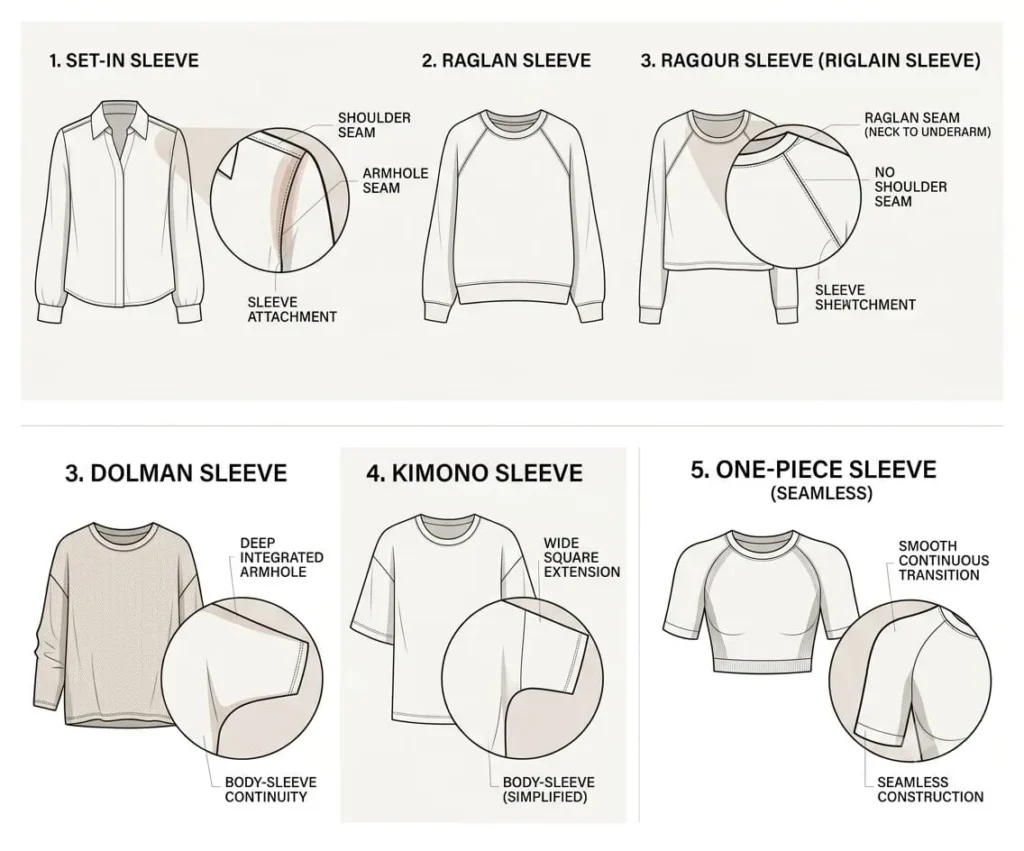
A set-in sleeve is sewn into a separate armhole in the garment, making it one of the most common sleeve constructions used today. You’ll find set-in sleeves in shirts, blouses, dresses, jackets, blazers, and coats, where they create a clear shoulder line and a neat, tailored fit. A set-in sleeve can also take on many different shapes and lengths, since both puff sleeves and bishop sleeves commonly use this same construction method.
Cut-In or Extended Sleeves
A cut-in or extended sleeve is cut as part of the main garment rather than attached through a traditional armhole seam, with dolman and batwing sleeves standing as the most common examples. These sleeves typically have a loose, flowing shape that provides more room around the underarm and shoulder, which is why they’re so popular in casual tops, dresses, and other relaxed garments.
Removable Sleeves
Removable sleeves can be attached to or taken off a garment using buttons, snaps, zippers, or other fasteners, giving a single piece of clothing more than one look. A dress might have long sleeves for a formal event, for example, and then have them removed for a lighter evening style. This makes removable sleeves a smart option for anyone who wants more versatility from their wardrobe.
One-Piece Sleeves
A one-piece sleeve is built directly into the main garment pattern rather than cut separately and attached to a traditional armhole, creating a smooth transition from the body of the garment into the sleeve. Dolman sleeves and some kimono-style sleeves use this approach, and as a result, one-piece sleeves tend to show up most often in loose, comfortable clothing.
Types of Sleeves at a Glance
Here is a quick overview of some popular sleeve styles and their main features.
| Sleeve Type | Main Feature | Common Use |
| Cap Sleeve | Very short and lightweight | Summer dresses and tops |
| Short Sleeve | Covers part of the upper arm | T-shirts and casual clothing |
| Puff Sleeve | Gathered fullness and volume | Dresses and blouses |
| Bell Sleeve | Flares toward the hem | Bohemian and statement outfits |
| Bishop Sleeve | Full sleeve gathered at the wrist | Blouses and formal wear |
| Raglan Sleeve | Diagonal seam from neck to underarm | T-shirts and sportswear |
| Dolman Sleeve | Wide armhole and relaxed shape | Casual tops and knitwear |
| Batwing Sleeve | Deep armhole and wide upper shape | Loose tops and dresses |
| Kimono Sleeve | Wide sleeve integrated into the garment | Robes, dresses, and tunics |
| Butterfly Sleeve | Wide and flowing shape | Dresses and elegant tops |
Types of Sleeves by Length
Sleeve length is one of the simplest ways to classify a sleeve style, and it’s often the first thing people notice about a garment.
Short Sleeves
Short sleeves usually cover part of the upper arm and are common in T-shirts, casual tops, polo shirts, dresses, and blouses. They’re a popular choice for warm weather and are also easy to layer under jackets and sweaters when temperatures drop.
Half Sleeves
Half sleeves provide more coverage than a very short sleeve, though the exact length can vary depending on the garment and design. They’re common in casual shirts, dresses, blouses, and traditional clothing, offering a comfortable balance between coverage and ease of movement.
Three-Quarter Sleeves
Three-quarter sleeves usually end somewhere between the elbow and wrist, making them especially useful during transitional weather. They also create a polished, practical look and appear frequently in shirts, blouses, dresses, and casual jackets.
Long Sleeves
Long sleeves usually extend to the wrist or slightly beyond it, making them popular in shirts, dresses, sweaters, jackets, and coats. Beyond added coverage and warmth, long sleeves can also create a sleek, elegant appearance depending on the fit and fabric.
Types of Sleeves by Shape and Volume
Sleeves can also be classified by their shape and the amount of volume they carry, which helps explain how a sleeve actually looks and moves on the body.
Fitted Sleeves
Fitted sleeves follow the natural shape of the arm and usually have little extra fabric, creating a clean, streamlined appearance. They’re common in shirts, dresses, blazers, and formal clothing, and they’re also easy to layer under jackets and coats.
Loose Sleeves
Loose sleeves leave extra space around the arm, providing more comfort and allowing easier movement throughout the day. Dolman, kimono, and batwing sleeves are all common examples of this relaxed design approach.
Voluminous Sleeves
Voluminous sleeves carry extra fabric that builds out a larger shape, with puff, balloon, bishop, and leg-of-mutton sleeves all capable of creating serious volume. These styles are often used to make a fashion statement, and the amount of volume can range from subtle to genuinely dramatic.
Flared Sleeves
Flared sleeves become wider toward the hem, with bell sleeves and some angel sleeves serving as classic examples. This shape creates movement and can give an outfit either a soft or a dramatic feel, depending on the fabric and flare.
Draped Sleeves
Draped sleeves use loose fabric that falls naturally from the arm or shoulder, often creating a soft, flowing silhouette. Kimono, cape, and some butterfly sleeves commonly show this kind of natural drape.
Decorative Sleeves
Decorative sleeves use details such as ruffles, pleats, gathers, cutouts, or overlapping fabric to add visual interest. Ruffle, petal, paned, and cold-shoulder sleeves are all good examples, and these small details can turn a simple garment into something far more eye-catching.
How to Choose the Right Sleeve Before Buying
When buying a garment, the sleeve style can affect both comfort and appearance, so it’s worth thinking about length, shape, and volume before you commit to a purchase. Short and cap sleeves work well for warm weather, while long sleeves offer more coverage and warmth. Loose styles like dolman and kimono sleeves give more room for movement, whereas fitted sleeves create a cleaner, more structured appearance.
Fabric matters just as much as style. Lightweight fabrics work best for flowing sleeves, while structured fabrics are better suited to sleeves that need to hold their shape. In the end, the best sleeve is simply the one that matches the garment, the occasion, the weather, and your own comfort.
25+ Popular Types of Sleeves
Now let’s look at some of the most popular and interesting sleeve styles in more detail.
1. Cap Sleeves
Cap sleeves are very short sleeves that cover only part of the shoulder and upper arm, creating a soft, delicate look. They’re common in women’s dresses, blouses, and tops, and they work especially well for warm weather since they add a feminine touch without adding much volume.
2. Puff Sleeves
Puff sleeves are gathered or pleated to create extra volume, with the fullness appearing around the shoulder, upper arm, or lower part of the sleeve depending on the design. They’re common in dresses and blouses, where they create a romantic, playful, or vintage-inspired look, and the amount of volume can range from subtle to dramatic.
3. Lantern Sleeves
Lantern sleeves have a rounded, three-dimensional shape that becomes wider in one part of the sleeve before narrowing again, resembling the shape of a lantern. This style can look modern and artistic, and it works especially well with garments made from structured or flowing fabrics.
4. French Sleeves
French sleeves usually fall around or just below the elbow, offering more coverage than a short sleeve without covering the full arm. This style creates a refined, elegant appearance and is often seen in blouses, dresses, and transitional clothing.
5. Bell Sleeves
Bell sleeves become wider toward the bottom, with the flare beginning near the elbow or lower on the arm depending on the design. Some bell sleeves have only a small flare, while others are wide and dramatic. This style is popular in bohemian, vintage, and statement fashion, and it works well on dresses, blouses, tops, and jackets.
6. Bishop Sleeves
Bishop sleeves are usually full and loose, often gathering at the wrist with a cuff to create a soft, flowing shape. They’re common in blouses, dresses, and evening clothing, where they add a romantic, elegant touch to an outfit.
7. Raglan Sleeves
Raglan sleeves have a diagonal seam that runs from the neckline toward the underarm, extending into the neckline area rather than sitting at a traditional armhole. This style is common in T-shirts, sweatshirts, sportswear, and casual clothing, allowing comfortable arm movement and a relaxed appearance.
8. Kimono Sleeves
Kimono sleeves are inspired by traditional Japanese clothing and are usually wide, flowing directly from the body of the garment without a traditional armhole seam. They’re common in robes, dresses, blouses, and tunics, where they create a relaxed, flowing silhouette.
9. Dolman Sleeves
Dolman sleeves are wide near the shoulder and underarm and usually become narrower toward the wrist, often cut as part of the main garment. They’re popular in relaxed tops, dresses, and knitwear, providing plenty of room around the upper body for a comfortable, casual fit.
10. Batwing Sleeves
Batwing sleeves are closely related to dolman sleeves but feature a very deep armhole and a wide shape near the upper arm before narrowing toward the wrist. The name comes from the wing-like shape created when the arms are extended, and this style is often used in loose tops, dresses, and sweaters.
11. Ruffle Sleeves
Ruffle sleeves feature one or more layers of gathered or flared fabric, with the ruffle appearing around the shoulder, along the sleeve, or at the cuff. These sleeves add movement and texture and are common in women’s blouses, dresses, and summer clothing.
12. Circular Flounce Sleeves
Circular flounce sleeves use a flared piece of fabric attached to the main sleeve, creating a soft, flowing effect. They’re often made from lightweight fabrics that allow the sleeve to move naturally, which is why they’re common in dresses and feminine blouses.
13. Cape Sleeves
Cape sleeves are inspired by the shape of a cape and often hang loosely from the shoulder, with some designs including an opening that allows the arm to move freely. They’re popular in evening dresses and formal clothing, where they create an elegant, dramatic appearance.
14. Asymmetrical Sleeves
Asymmetrical sleeves don’t have matching shapes or lengths on both sides — one arm may have a sleeve while the other stays bare, or both sleeves may follow entirely different designs. This creates a modern, artistic look and is often used in statement dresses and fashion-forward designs.
15. Balloon Sleeves
Balloon sleeves have a rounded, oversized shape that’s usually full through the body and narrow at the cuff or wrist. This design adds volume and creates a bold silhouette, and it’s often seen in modern dresses, blouses, and tops.
16. Butterfly Sleeves
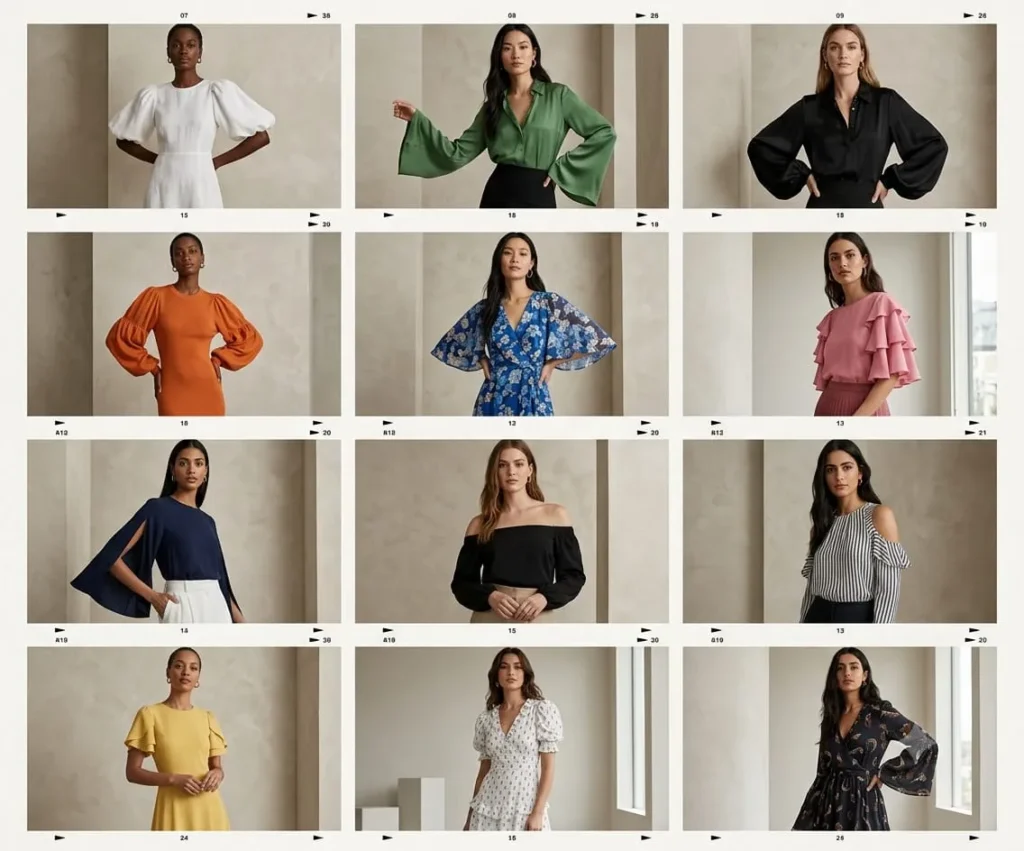
Butterfly sleeves are wide and flowing, spreading outward from the shoulder in a shape that can resemble butterfly wings. These sleeves are often made from lightweight fabrics such as chiffon or silk, making them popular in summer dresses, blouses, and evening wear.
17. Leg-of-Mutton Sleeves
Leg-of-mutton sleeves have a large, full shape around the upper arm that narrows toward the wrist, a style strongly linked to vintage and historical fashion. Modern versions can be subtle or very dramatic, and they’re often used in statement dresses, blouses, and costume design.
18. Juliet Sleeves
Juliet sleeves are similar to leg-of-mutton sleeves, usually featuring a full, gathered upper section with a more fitted lower part, sometimes separated by a visible seam. This romantic, historical style is often seen in bridal wear and period-inspired fashion.
19. Cuff Sleeves
Cuff sleeves end with a separate cuff and are common in button-down shirts, blouses, and tailored garments. The cuff may include buttons, a slit, or another type of closure, and depending on the design, cuff sleeves can look simple and professional or more decorative.
20. Angel Sleeves
Angel sleeves are wide and often flare out from the armhole, creating a wing-like shape when the arms are extended, sometimes with an uneven or pointed hem. They’re often used in flowing dresses and tops to create a dramatic, graceful appearance.
21. Petal Sleeves
Petal sleeves are made from overlapping pieces of fabric that cross over each other and resemble flower petals. Often used on short or three-quarter sleeves, they create a soft, feminine look and are common in dresses and lightweight blouses.
22. Peasant Sleeves
Peasant sleeves have a soft, loose shape with fullness throughout, and the wrist may be gathered with elastic, a cuff, or a tie. This style is popular in bohemian and relaxed fashion and works especially well with lightweight, flowing fabrics.
23. Hanging Sleeves
Hanging sleeves feature a long extension of fabric that hangs from the back or lower part of the sleeve, sometimes including a slit. This style has historical and vintage influences, and modern versions can create a dramatic, artistic look.
24. Cold-Shoulder Sleeves
Cold-shoulder sleeves have an opening around the shoulder that exposes part of the upper arm while the rest of the arm stays covered. This style became popular in women’s tops and dresses, offering a balance between coverage and a more revealing design.
25. Paned Sleeves
Paned sleeves are made from several strips or sections of fabric, sometimes held apart with decorative bands or trims to create a three-dimensional effect. This style is mostly associated with historical clothing and costume design.
Types of Sleeves for Dresses
The right sleeve can change the entire look of a dress, with some styles creating a simple, casual appearance and others adding elegance or drama. For casual dresses, short sleeves, cap sleeves, dolman sleeves, and flutter-style sleeves are practical choices, while summer dresses tend to favor sleeveless, cap, butterfly, and off-shoulder styles.
Formal dresses often use bishop, cape, bell, puff, and long fitted sleeves, while bridal and romantic looks lean toward Juliet, bishop, puff, and off-shoulder sleeves for an elegant effect. If more coverage is the goal, long sleeves, three-quarter sleeves, kimono sleeves, and loose flowing styles are all useful options. Ultimately, the best sleeve for a dress depends on the fabric, season, occasion, and overall design.
Sleeve Comparison: Set-In vs Cut-In vs One-Piece
Understanding construction can help you quickly identify different sleeve types at a glance.
| Sleeve Construction | Main Feature | Common Garments |
| Set-in | Separate sleeve sewn into the armhole | Shirts, blazers, dresses |
| Cut-in or extended | Sleeve is cut as part of the garment | Relaxed tops and dresses |
| One-piece | Sleeve and body are integrated into one pattern | Dolman and loose garments |
Set-in sleeves often create a more structured look, while cut-in and one-piece sleeves usually produce a softer, more relaxed shape. That said, the final appearance still depends heavily on the fabric, sleeve length, and overall sleeve design.
What Is the Difference Between Dolman and Raglan Sleeves?
Dolman and raglan sleeves are sometimes confused, but they’re built quite differently. A dolman sleeve is usually wide at the armhole and narrows toward the wrist, often integrated directly into the body of the garment, while a raglan sleeve has a clear diagonal seam running from the neckline toward the underarm.
Both styles allow good freedom of movement, but they create distinctly different shapes using different construction methods.
What Are the 3 Basic Types of Sleeves?
There isn’t a single universal classification of the three basic sleeve types, but sleeves are often discussed in terms of three broad construction groups: set-in sleeves, which are sewn into a separate armhole; raglan sleeves, which extend from the neckline toward the underarm; and cut-in or one-piece sleeves, which are integrated into the main garment. Many other sleeve styles are simply variations built on these three basic constructions.
What Is a Normal Sleeve Called?
A “normal” sleeve is often called a set-in sleeve — a separate sleeve that’s sewn into the armhole of the garment. Set-in sleeves are common in shirts, blouses, dresses, jackets, and coats.
What Are 3/4 Sleeve Shirts Called?
They’re usually called three-quarter sleeve shirts or 3/4 sleeve shirts. This sleeve typically ends between the elbow and wrist, giving more coverage than a short sleeve while still keeping part of the forearm exposed.
What Are the Most Common Types of Sleeves for Dresses?
Many sleeve styles work well with dresses, and some of the most popular choices include:
- Cap sleeves
- Short sleeves
- Puff sleeves
- Bell sleeves
- Bishop sleeves
- Butterfly sleeves
- Ruffle sleeves
- Long sleeves
- Off-shoulder sleeves
- Cold-shoulder sleeves
- Cape sleeves
The best option ultimately depends on the dress style, fabric, season, and occasion.
Common Sleeve Types by Garment
Then use:
| Garment | Common Sleeve Styles |
| Dresses | Cap, puff, bell, bishop, butterfly, ruffle, cape, off-shoulder |
| T-Shirts | Short, half, raglan, three-quarter |
| Blouses | Puff, bishop, bell, ruffle, butterfly, cuff |
| Jackets | Set-in, raglan, two-piece, structured |
| Coats | Set-in, coat sleeves, gusseted sleeves |
| Sweaters | Raglan, dolman, batwing, long sleeves |
| Formal Wear | Bishop, cape, fitted long, puff, bell |
What Are the Most Common Types of Sleeves for T-Shirts and Blouses?
T-shirts often use short, half, raglan, or three-quarter sleeves, while blouses offer far more variety. Popular blouse sleeve styles include puff, bishop, bell, ruffle, butterfly, dolman, batwing, and cuff sleeves. Fabric matters here too — lightweight fabrics often work well with flowing sleeves, while stretch fabrics suit fitted, casual styles.
What Are the Most Common Types of Sleeves for Jackets and Sweaters?
Jackets often use set-in, two-piece, raglan, and structured sleeves, while coats may also use gusseted sleeves for better movement. Sweaters, on the other hand, tend to favor raglan, dolman, batwing, and drop-style sleeves. The right choice ultimately depends on the garment’s purpose and fabric.
Choosing the Right Sleeve for Your Garment
The best sleeve isn’t always the most fashionable one — it should also work for your lifestyle and comfort.
Comfort and Movement
Choose a loose sleeve if you want more freedom of movement, since dolman, batwing, and kimono sleeves can all provide extra room. For active clothing, raglan sleeves are also a popular, practical choice.
Season and Weather
For hot weather, short, cap, or sleeveless designs make the most sense, while long sleeves provide more coverage during cooler months. Flowing sleeves can also work well in mild weather when made from lightweight fabric.
Occasion and Style
For work and formal events, clean, structured styles work best, with set-in and two-piece sleeves creating a polished appearance. For parties and special events, puff, bell, bishop, cape, and off-shoulder sleeves can make a much stronger statement. At the most formal end; a black tie gala or wedding cape and fitted long sleeves tend to work better than high-volume styles.
Body Proportion and Fit
Sleeves can change the visual balance of an outfit — voluminous sleeves tend to draw attention to the upper body, while fitted sleeves create a cleaner, more streamlined appearance. The key is choosing a sleeve that makes you feel comfortable and confident, since there are no strict rules that apply to everyone.
Arm Coverage and Modesty
Long sleeves provide the most arm coverage, while three-quarter sleeves offer moderate coverage and still leave part of the forearm visible. Coverage becomes a genuine requirement at some occasions; and a funeral attire and many religious services expect covered shoulders and arms as a baseline. Loose, flowing sleeves can also provide coverage without feeling tight or restrictive.
Buying Guide: How to Choose the Best Sleeve Style
When buying clothing, it helps to look at more than just the sleeve name. Start by checking the sleeve length to make sure it gives you the coverage you want, then consider the sleeve volume, since a full sleeve will feel very different from a fitted one.
Next, check the fabric — lightweight fabrics create movement, while structured fabrics hold their shape. It’s also worth thinking about the garment’s purpose, since a sleeve that works beautifully for an evening dress may not be practical for everyday work. Finally, consider how easy the garment is to layer: fitted sleeves are usually easier to wear under jackets, while wide sleeves may need more room.
| Your Need | Sleeve Styles to Consider | Why |
| Maximum movement | Raglan, dolman, batwing | More room and flexibility |
| Structured fit | Set-in, two-piece | Creates a tailored shape |
| Warmth | Long, coat sleeves | More arm coverage |
| Hot weather | Cap, short, sleeveless | Less coverage and lighter feel |
| Relaxed fit | Kimono, dolman, peasant | Loose and comfortable |
| Formal look | Bishop, cape, fitted long | Polished and elegant |
| Statement look | Bell, balloon, puff | Adds volume and visual interest |
| Versatility | Detachable sleeves | Allows multiple styling options |
Styling Guide: How to Wear Different Sleeve Types
How to Style Puff Sleeves
Keep the rest of your outfit simple if the sleeves are very full. A fitted skirt or straight-leg trousers can help balance out the volume.
How to Style Bell Sleeves
Bell sleeves already create plenty of movement on their own, so pairing them with simple accessories helps keep the outfit from looking too busy.
How to Style Bishop Sleeves
Bishop sleeves work well with fitted bottoms — try slim trousers or a straight skirt to create balance.
How to Style Dolman and Batwing Sleeves
Since these sleeves are usually loose, pairing them with more fitted bottoms creates a balanced, proportional silhouette.
How to Style Cape Sleeves
Cape sleeves can be dramatic on their own, so keep jewelry and other details simple and let the sleeve remain the main feature of the outfit.
How to Style Ruffle and Butterfly Sleeves
These styles already have a soft, feminine look, which means they work well with simple jeans, trousers, or skirts.
How to Style Long Sleeves
Long sleeves are easy to dress up or down — choose fitted long sleeves for a clean look, or flowing sleeves for a softer, more relaxed appearance. But, how you wear the hem matters too. A french tuck defines the waist on a long-sleeved shirt without making the outfit feel formal.
Sleeve Trends and Fabric Guide
| Sleeve Type | Suitable Fabrics | Main Appeal |
| Puff sleeve | Cotton, poplin, taffeta | Volume and romance |
| Bishop sleeve | Chiffon, silk, lightweight cotton | Soft and elegant |
| Bell sleeve | Cotton, lace, lightweight blends | Flowy and dramatic |
| Dolman sleeve | Jersey, knit, linen | Relaxed and comfortable |
| Kimono sleeve | Rayon, silk, linen | Loose and flowing |
| Butterfly sleeve | Chiffon, silk, georgette | Light and graceful |
| Ruffle sleeve | Chiffon, cotton, viscose | Playful and feminine |
| Long sleeve | Cotton, wool, jersey | Coverage and warmth |
| Cap sleeve | Cotton, jersey, light fabrics | Simple and lightweight |
| Detachable sleeve | Cotton, denim, blends | Versatility |
How to Choose Sleeves Based on Your Personal Style
If you prefer a classic look, try set-in, cuff, or simple long sleeves. If you lean toward romantic fashion, consider puff, bishop, butterfly, or ruffle sleeves instead. For a relaxed everyday style, dolman, batwing, kimono, and peasant sleeves are excellent choices, while bolder dressers might try asymmetrical, cape, balloon, or dramatic bell sleeves.
For a vintage-inspired look, consider Juliet, leg-of-mutton, poet, or hanging sleeves. In the end, the best sleeve is simply the one that matches your personality and feels comfortable to wear.
Sewing Difficulty of Different Sleeve Types
Some sleeve styles are considerably easier to sew than others. Simple set-in sleeves can actually be challenging for beginners, since the sleeve cap has to be fitted correctly, while dolman and kimono sleeves tend to be easier because the sleeve is integrated directly into the garment.
Puff, bishop, and ruffle sleeves often require gathering or pleating, and two-piece sleeves along with tailored cuff sleeves demand more sewing skill overall. Complex styles such as paned sleeves can be much harder to construct. For beginners, it’s often best to start with simple patterns and move on to more complex designs as skills improve.
FAQs About Types of Sleeves
What are the main types of sleeves?
Some of the main sleeve types include set-in, raglan, kimono, dolman, batwing, cap, puff, bell, bishop, butterfly, ruffle, and long sleeves.
What is the most common type of sleeve?
The set-in sleeve is one of the most common sleeve constructions, used in many shirts, blouses, dresses, jackets, and coats.
What is the difference between a puff sleeve and a balloon sleeve?
A puff sleeve usually gets its fullness from gathers or pleats, while a balloon sleeve tends to have a larger, rounded shape that’s gathered or narrowed at the cuff.
What is the difference between a bell sleeve and a bishop sleeve?
A bell sleeve gradually widens toward the bottom, while a bishop sleeve is usually full through the arm and gathered into a cuff at the wrist.
What is the difference between a dolman sleeve and a batwing sleeve?
Dolman and batwing sleeves are closely related, and both feature extra fabric around the upper arm. Batwing sleeves, however, usually have a deeper armhole and a more dramatic, wing-like shape.
What is a cap sleeve?
A cap sleeve is a very short sleeve that covers part of the shoulder and upper arm.
What is a raglan sleeve?
A raglan sleeve has a diagonal seam running from the neckline to the underarm, and it’s common in sportswear, T-shirts, and sweatshirts.
What is a three-quarter sleeve?
A three-quarter sleeve usually ends between the elbow and wrist, providing moderate arm coverage.
Are sleeveless clothes considered a type of sleeve?
Technically, no — a sleeveless garment has no sleeves at all. However, sleeveless designs are often included in sleeve guides because they’re such an important garment option.
Which sleeve is best for summer?
Short, cap, butterfly, flutter, and sleeveless designs are all popular for summer. Fabric matters too, since lightweight, breathable materials help keep you comfortable in the heat.
Which sleeve is best for formal wear?
The best choice depends on the garment, but bishop, cape, bell, fitted long, and elegant puff sleeves can all work well for formal clothing.
Which sleeve is best for a relaxed fit?
Dolman, batwing, kimono, and peasant sleeves are all good choices for a relaxed fit, since they usually provide more room around the upper body and arms.
What are detachable sleeves?
Detachable sleeves are sleeves that can be removed from a garment using zippers, buttons, or snaps, allowing one piece of clothing to be worn in different ways.
Conclusion
There is no single best sleeve style for everyone. The right choice depends on how the garment is made, how you want it to fit, where you plan to wear it, and how much comfort and coverage you need.
After looking at the different types of sleeves, one thing becomes clear: sleeve design is about both appearance and function. Set-in and two-piece sleeves can create a clean, structured look. Raglan sleeves can support comfortable movement. Dolman, batwing, and kimono sleeves can provide a more relaxed fit. Puff, bell, bishop, balloon, and other statement sleeves can add volume and personality to an outfit.
When choosing clothing, I recommend looking beyond the sleeve name. Pay attention to the actual construction, sleeve length, fabric, fullness, cuff, and armhole. These details often have a greater effect on comfort and fit than the name of the sleeve itself.
It is also worth thinking about your daily needs. If you spend a lot of time moving your arms, a sleeve with more room may be more practical. If you need to layer clothing, a fitted sleeve may work better under a jacket or coat. For warm weather, shorter sleeves and breathable fabrics can improve comfort. For formal occasions, structured or statement sleeves can help create a more polished look.
The best sleeve design is the one that brings these factors together. It should suit the garment, support comfortable movement, and match your personal style.
Whether you are shopping for a new outfit, styling an existing wardrobe, or working on a garment design, understanding the different types of sleeves gives you a better way to judge clothing. Instead of choosing a sleeve based only on its appearance, you can make a more informed decision based on fit, function, fabric, and occasion.
At Smart Clothing Ltd, our experience with apparel and garment sourcing has shown us that details such as sleeve construction and design can have a real impact on the final garment. A well-designed sleeve should not only look attractive. It should also work with the fabric, fit the purpose of the garment, and provide the comfort the wearer expects.
In the end, the right sleeve is not simply the one that follows a trend. It is the one that makes the garment feel right, look right, and work well for the person wearing it.