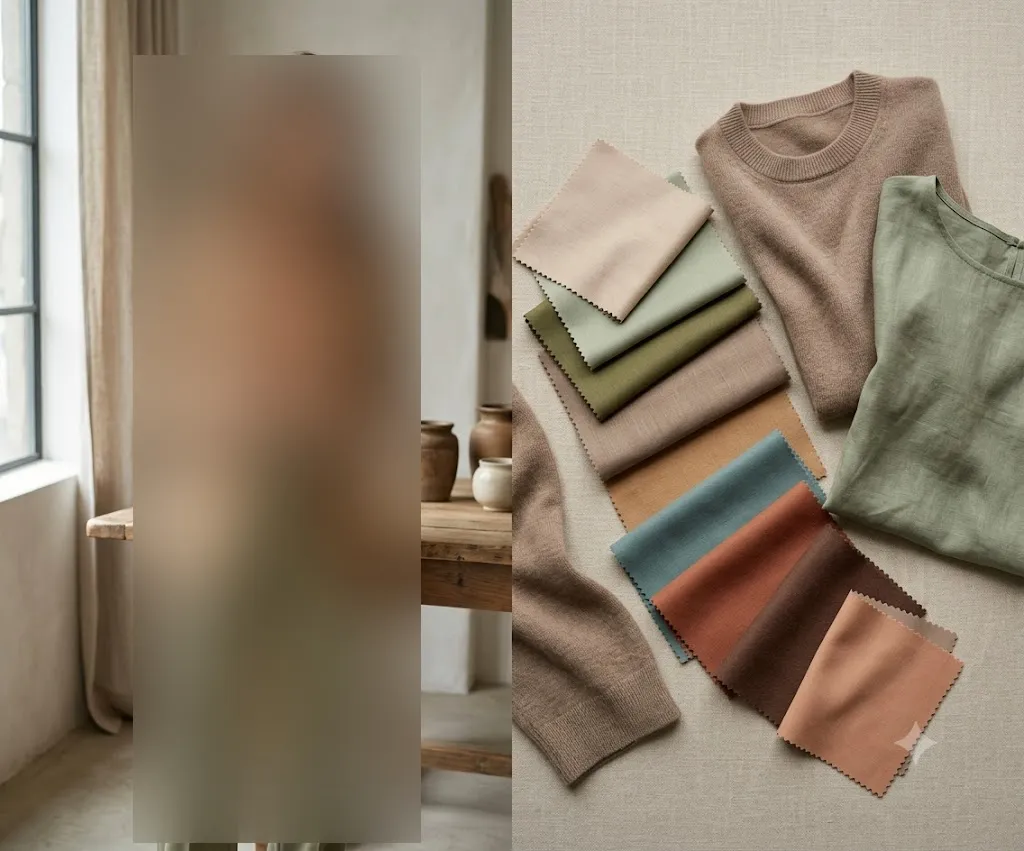
Soft Autumn Color Palette: The Complete Guide to Colors, Style & Wardrobe
Have you ever bought a shirt, sweater, or lipstick that looked perfect in the store, only to wonder why it made you look tired once you wore it? Or maybe you’ve filled your closet with clothes you rarely reach for because something about the color never feels quite right.
If that sounds familiar, you’re not alone. Many people discover seasonal color analysis after years of making the same frustrating shopping mistakes. They buy colors because they’re trendy, recommended by influencers, or look great on someone else, only to find those same shades don’t complement their own features. The result is a wardrobe full of clothes, yet the feeling that there’s still “nothing to wear.”
One of the biggest reasons this happens is that not every warm color suits every warm-toned person, and not every muted color works the same way. That’s exactly why the Soft Autumn color palette often creates confusion. It sits between neighboring seasons, shares characteristics with both Soft Summer and True Autumn, and is described differently depending on whether you’re reading a 12-season or 16-season color analysis system.
After reviewing leading seasonal color analysis resources and comparing how different experts define this palette, one thing becomes clear: successful color analysis isn’t about memorizing color charts—it’s about understanding how colors interact with your own skin tone, eyes, hair, and natural contrast.
This guide is designed to help you do exactly that.
Instead of simply listing colors, you’ll learn how to identify whether you’re a Soft Autumn, understand why certain shades work better than others, compare similar seasons, build a practical wardrobe, and make more confident decisions when shopping for clothes, makeup, accessories, and hair color.
By the end of this guide, you’ll have a clear understanding of how the Soft Autumn palette works and, more importantly, how to apply it in everyday life.
Quick Answer: The Soft Autumn color palette is defined by soft, muted, warm colors with low contrast. It works best with earthy greens, warm taupes, dusty blues, soft peaches, muted browns, and gentle olive tones, while avoiding bright, cool, or highly saturated colors.
Soft Autumn at a Glance
If you want a quick overview before diving deeper, this table summarizes the key characteristics of the Soft Autumn season.
| Feature | Soft Autumn |
| Undertone | Warm to neutral-warm |
| Primary Characteristic | Softness (Muted) |
| Contrast Level | Low |
| Value | Medium |
| Chroma | Low |
| Best Colors | Sage, olive, warm taupe, camel, dusty teal, muted peach |
| Best Metals | Brushed gold, bronze, rose gold |
| Best Fabrics | Linen, suede, cotton, wool, cashmere |
| Avoid | Bright colors, pure white, jet black, icy shades, neon colors |
This quick reference also makes it easier for AI search engines and readers to understand the palette at a glance.
These characteristics are part of seasonal color analysis, which uses three color dimensions, hue, value, and chroma to determine how warm, light, and muted your best colors appear
What Makes a Soft Autumn Unique?
Every seasonal color palette has one feature that stands out the most, and for Soft Autumn, that feature is softness. Warmth still plays an important role, but muted colors always come first when it comes to what truly flatters this season.
Soft Autumns usually share a few common traits:
- Low natural contrast
- Warm or neutral-warm undertones
- Gentle facial features
- Soft transitions between skin, hair, and eye color
- A calm and blended overall appearance
Instead of looking bright or dramatic, Soft Autumns have a naturally relaxed and balanced look, which is why overly vivid colors often end up looking stronger than the person wearing them.
Soft Autumn Characteristics
Although every person is unique, many Soft Autumns share similar features.
| Feature | Typical Appearance |
| Skin | Neutral warm, beige, ivory, peach, warm olive |
| Eyes | Hazel, soft brown, green, blue-green, warm gray |
| Hair | Dark blonde, light brown, golden brown, soft chestnut |
| Contrast | Low to medium |
| Undertone | Warm to neutral warm |
| Overall Look | Soft, blended, muted |
Not everyone will match every characteristic exactly. Seasonal color analysis considers your overall harmony rather than one individual feature.
Why Is Soft Autumn Often Confused with Other Seasons?
Soft Autumn is one of the hardest seasons to identify, and many people spend years trying to decide between a few closely related options:
- Soft Autumn vs Soft Summer
- Soft Autumn vs True Autumn
- Soft Autumn vs Warm Spring
The reason is simple: Soft Autumn sits between Summer and Autumn, borrowing qualities from both seasons without fully belonging to either. It carries the softness of Summer alongside the warmth of Autumn, and this balance is exactly what makes self-analysis so difficult.
Looking at photos alone rarely gives a clear answer, since lighting, makeup, camera filters, and hair color can all change how your coloring appears from one image to the next.
Soft Autumn in the 12-Season vs 16-Season Color Analysis System
One topic that often causes confusion is the difference between the 12-season and 16-season color analysis systems. In the traditional 12-season system, Soft Autumn is considered a warm, muted Autumn that sits between True Autumn and Soft Summer.
Some modern 16-season systems introduce Muted Autumn as a separate neutral season. In those systems, Muted Autumn may be described a little differently from the traditional Soft Autumn, with a stronger emphasis placed on neutral undertones rather than warm undertones.
Because different consultants use different systems, someone labeled Soft Autumn in one system may receive a slightly different result in another. That said, both systems agree on one important point: softness is the dominant characteristic, and the biggest differences simply come down to how much warmth or neutrality is assigned to the season.
A Note About Different Color Analysis Systems
Seasonal color analysis is not completely standardized. Different consultants and color analysis schools use different frameworks, including 4-season, 12-season, and 16-season systems, so results can vary depending on where you go.
Because of these differences, someone identified as Soft Autumn in one system may receive a slightly different classification in another. The most important goal isn’t the label itself, but finding the colors that create the most natural harmony with your individual features.
Soft Autumn vs Soft Summer
One of the most common questions people ask is, “Am I Soft Summer or Soft Autumn?” The two seasons share one important quality: both are muted. The real difference between them comes down to temperature.
| Soft Autumn | Soft Summer |
| Warm to neutral-warm | Cool to neutral-cool |
| Earthy appearance | Airy appearance |
| Warm olive | Dusty blue |
| Soft camel | Cool taupe |
| Muted peach | Dusty rose |
| Warm sage | Blue-gray |
Soft Autumn looks healthier in colors with a gentle warmth, while Soft Summer looks better in colors with a subtle coolness. If cool grays make your face look tired but soft olive brightens your skin, Soft Autumn is usually the better match for you.
Many people sit between neighboring palettes, especially Soft Autumn and Soft Summer, and that’s more common than you might think. If you’re unsure, don’t worry about finding the perfect label right away.
Start by wearing softer, lower-contrast colors and observe which shades make your skin appear healthier and your eyes brighter. Professional draping can provide additional clarity if you remain uncertain after experimenting on your own.
Soft Autumn vs True Autumn
Soft Autumn and True Autumn belong to the same family, but they are not identical, and the biggest difference between them is intensity. True Autumn handles richer, warmer colors with ease, while Soft Autumn needs those same colors toned down to look their best.
| Soft Autumn | True Autumn |
| Soft first | Warm first |
| Muted colors | Rich earthy colors |
| Lower contrast | Medium contrast |
| Dusty olive | Rich olive |
| Soft terracotta | Burnt orange |
| Warm taupe | Deep camel |
If mustard yellow, rust, or pumpkin orange feel too strong on you, Soft Autumn is usually the better fit. On the other hand, if muted colors make you look dull while richer earthy shades make you glow, True Autumn may suit you better instead.
How to Tell If You Are a Soft Autumn
There is no single feature that confirms your season on its own, so instead of searching for one telltale sign, it helps to look at your overall harmony by asking yourself a few key questions.
Do your features blend together naturally?
Soft Autumns rarely have dramatic contrast, and their eyes, skin, and hair usually flow together gently rather than standing apart from one another.
Do muted colors look better than bright colors on you?
Bright colors often attract attention before people even notice your face, while muted colors let your natural beauty stand out instead.
Do warm earthy colors feel more flattering than icy colors?
Soft Autumns usually look healthier in shades like soft olive, warm taupe, dusty teal, muted peach, and sage green, while icy blue, bright white, and vivid pink often create unwanted contrast against their features.
Can you wear medium colors better than very light or very dark ones?
Soft Autumn sits comfortably in the middle of the value scale. Very dark colors can feel heavy, very light colors may wash out the complexion, and medium-depth colors usually create the best overall balance.
Is your natural coloring calm rather than bold?
Soft Autumn beauty is subtle, and it doesn’t rely on high contrast or bright coloring. Instead, it creates harmony through softness and balance, which is why many Soft Autumns describe themselves as looking “better in natural colors.”
Why Professional Draping Gives Better Results
Many people try online quizzes or compare celebrity photos to find their season, and while these methods can help point you in the right direction, they do have their limits.
Professional draping compares different fabrics directly against your face under controlled lighting, revealing how each color affects skin clarity, eye brightness, shadows, redness, and overall harmony. Small differences between similar palettes become much easier to see this way.
This approach is especially useful for people deciding between Soft Autumn, Soft Summer, and True Autumn, since these three seasons share so many overlapping characteristics.
Common Signs You Might Not Be a Soft Autumn
Sometimes it’s easier to recognize what doesn’t work than what does. You may not be a Soft Autumn if:
- Bright colors make you look healthier than muted ones
- Cool jewel tones flatter you more than earthy shades
- Black and pure white look natural on you instead of harsh
- Golden mustard and burnt orange look better than soft olive and warm taupe
- High-contrast outfits suit your features well
The Best Soft Autumn Colors
The beauty of the Soft Autumn color palette comes from its gentle balance. Every color feels calm, natural, and slightly muted, and instead of demanding attention, these shades create harmony with your natural features.
Rather than memorizing dozens of individual colors, it helps to focus on four simple rules: choose warm or neutral-warm colors, look for low saturation, stay within medium depth, and avoid anything too bright or icy. When shopping, simply ask yourself, “Does this color look soft and earthy?” If the answer is yes, it will probably work well on you.
Best Soft Autumn Color Combinations
The right color combinations create even more harmony than choosing individual colors on their own.
| Main Color | Best Pairing |
| Sage Green | Warm Beige |
| Olive | Camel |
| Dusty Teal | Mushroom |
| Soft Peach | Cocoa Brown |
| Warm Taupe | Cream |
| Terracotta | Soft Olive |
| Chocolate Brown | Muted Peach |
| Moss Green | Stone |
These combinations maintain the low-contrast look that naturally complements Soft Autumn coloring.
Best Neutral Colors
These colors form the foundation of a Soft Autumn wardrobe, and mixing them together creates a timeless, easy-to-wear collection of pieces:
- Warm taupe
- Mushroom
- Stone
- Camel
- Oatmeal
- Soft beige
- Warm gray
- Cocoa brown
- Chocolate brown
- Olive brown
Best Accent Colors
Accent colors add personality without creating harsh contrast, and they help brighten the face while maintaining overall harmony. Popular Soft Autumn shades include:
- Dusty olive
- Sage green
- Moss green
- Muted teal
- Soft turquoise
- Dusty peach
- Terracotta
- Cinnamon
- Warm coral
- Dusty rose
- Soft plum
- Muted burgundy
Colors to Avoid
Not every autumn color belongs in the Soft Autumn palette. Avoid colors that are:
- Pure white
- Jet black
- Bright red
- Electric blue
- Neon shades
- Hot pink
- Bright purple
- Icy pastel colors
- Highly saturated orange
- Sharp emerald green
These colors often overpower Soft Autumn features and create unnecessary contrast against the face.
You don’t need to replace your wardrobe overnight. Start by adding Soft Autumn tops near your face, then gradually replace colors that make you look tired. Accessories like scarves, jewelry, and cardigans are an easy way to introduce your palette without buying a whole new wardrobe from scratch.
Can You Wear Colors Outside Your Palette?
Absolutely, personal style always comes first. If you love a color outside the Soft Autumn palette, wear it away from your face or balance it with Soft Autumn neutrals. For example, you could pair a bright blue skirt with a warm beige blouse, or soften a black outfit using a camel scarf.
How to Build a Soft Autumn Wardrobe
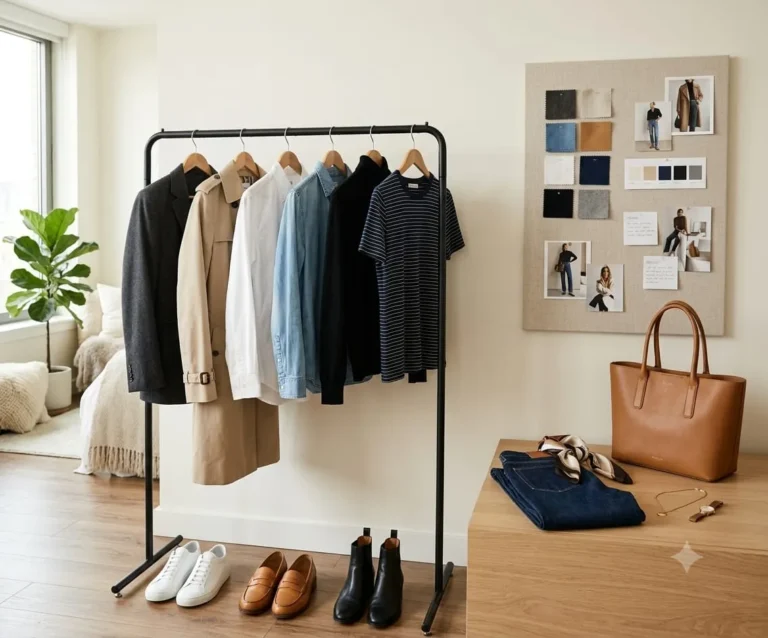
A Soft Autumn wardrobe should feel calm, coordinated, and easy to wear. Since almost every color belongs to the same muted family, mixing and matching outfits becomes much easier, so it’s worth choosing timeless pieces before chasing trendy colors.
Good wardrobe staples include:
- Relaxed blazers
- Soft knit sweaters
- Linen shirts
- Cotton blouses
- Straight-leg trousers
- Washed denim
- Midi skirts
- Neutral cardigans
Since low contrast can flatten an outfit’s shape, styling matters more here than in high-contrast seasons; a front tuck is an easy way to define the waist when your top and trousers sit at similar depths.
Natural fabrics usually complement the Soft Autumn aesthetic better than shiny materials. Good choices include cotton, linen, wool, suede, leather, cashmere, and soft denim, while highly reflective satin or glossy synthetic fabrics can sometimes make colors appear stronger than they really are.
Outfit Ideas for Soft Autumn
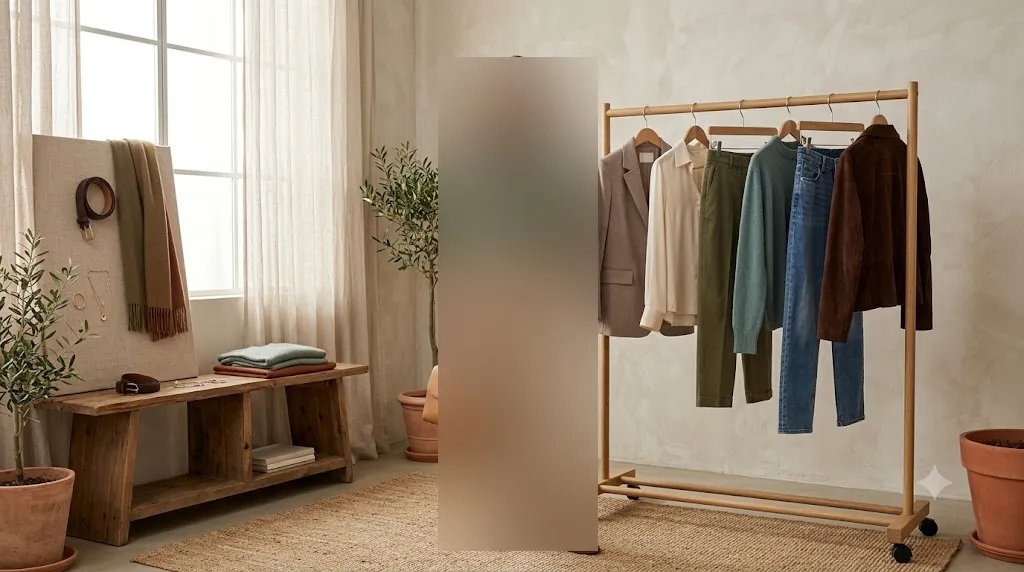
Creating outfits becomes simple once you stay within your palette.
Casual Outfit
- Sage green sweater
- Warm beige trousers
- Brown loafers
- Camel handbag
Office Outfit
- Soft taupe blazer
- Cream blouse
- Olive trousers
- Bronze jewelry
Weekend Outfit
- Dusty teal knit
- Medium-wash denim
- Brown ankle boots
- Soft leather belt
Evening Outfit
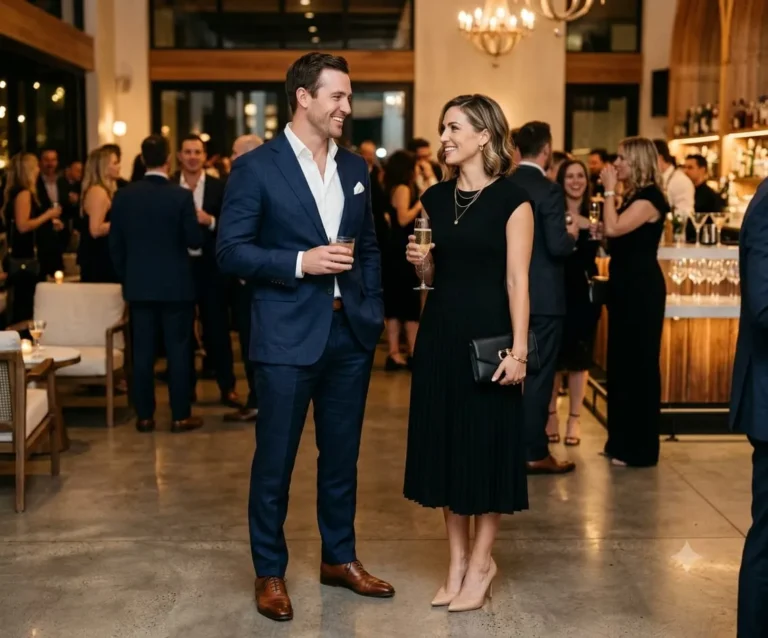
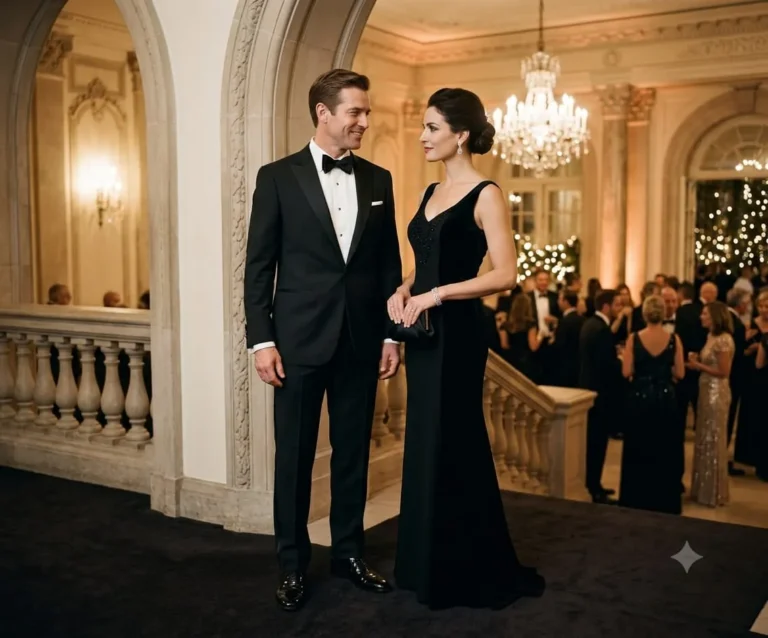
Soft Autumn doesn’t need bright colors for formal occasions. For semi-formal invitations, these deeper muted shades read as perfectly appropriate cocktail attire; chocolate brown or smoky teal in satin or velvet reads as dressy without the contrast of black.
Choose deeper muted shades like chocolate brown, deep olive, muted burgundy, soft bronze, and smoky teal instead. These colors photograph beautifully while keeping your natural harmony intact.
Makeup for Soft Autumn
The best Soft Autumn makeup should enhance your features instead of covering them, and the goal is soft definition rather than dramatic contrast.
Best Foundation
Choose a foundation with neutral-warm undertones, a natural finish, and medium coverage. Avoid foundations that appear too pink or overly yellow, since either extreme can throw off your natural balance.
Best Blush
Soft Autumn blushes include peach, warm rose, apricot, and dusty coral. These shades create a healthy, natural glow without looking overdone.
Best Eyeshadow
The most flattering eyeshadow colors include warm brown, soft bronze, olive, taupe, mushroom, khaki, and soft copper. It’s best to avoid icy silver and bright metallic shades, as they can clash with your natural warmth.
Best Lipstick Colors
Soft Autumn lipsticks should stay muted. Beautiful options include warm nude, cinnamon, soft terracotta, dusty peach, warm rose, muted coral, and brownish pink. Instead of making the lips the center of attention, these shades create balance with the rest of your look.
Best Hair Colors for Soft Autumn
Hair color should follow the same principles as clothing: stay soft, stay natural, and stay warm. Great hair colors include golden brown, soft chestnut, walnut brown, honey brown, caramel brown, and dark blonde with warm highlights. These shades maintain harmony with Soft Autumn skin tones.
Hair Colors to Avoid
Some hair colors create too much contrast and work against your natural coloring rather than with it. Avoid platinum blonde, jet black, blue-black, bright copper, ash blonde, silver gray, and extremely golden blonde. The goal is always to complement your natural coloring, not compete with it.
Best Jewelry for Soft Autumn
Soft Autumn looks best in metals with a gentle finish. Choose brushed gold, antique gold, bronze, copper, soft rose gold, if you wear the same piece daily, a gold-filled permanent bracelet in a soft finish suits the palette well or use matte mixed metals, since these finishes echo the muted quality of the palette. Highly polished yellow gold or bright silver can sometimes look too strong in comparison.
A Note About Celebrity Color Analysis
Celebrity color analysis should be viewed as inspiration rather than proof. Public figures appear under different lighting conditions, wear professional makeup, color their hair, and are often photographed using edited images, all of which can distort how their true coloring reads.
For this reason, even experienced analysts may disagree about a celebrity’s exact season. Any examples used for comparison should simply illustrate the overall look often associated with the Soft Autumn palette, rather than serve as a definitive reference.
Common Mistakes Soft Autumns Make
Many people unknowingly work against their natural coloring. Common mistakes include:
- Wearing pure black every day
- Choosing bright white instead of soft cream
- Buying highly saturated colors
- Using cool-toned makeup
- Coloring hair too dark or too blonde
- Wearing high-contrast outfits
- Choosing shiny instead of soft textures
Small changes often make a noticeable difference in how put-together and harmonious an outfit or makeup look ultimately feels.
Why Knowing Your Color Season Matters
Understanding your season can make everyday decisions noticeably easier. Many people notice improvements in shopping with more confidence, building a capsule wardrobe, choosing flattering makeup, finding the right hair color, taking better photographs, reducing unnecessary purchases, and creating outfits that always work together.
Instead of following every fashion trend, you end up building a wardrobe that genuinely reflects your natural coloring.
Frequently Asked Questions
What colors should Soft Autumn avoid?
Avoid bright, cool, and highly saturated colors like pure black, bright white, electric blue, neon shades, and icy pastels. Softer, earthy alternatives usually create a more balanced appearance.
What is the best hair color for Soft Autumn?
Golden brown, soft chestnut, walnut brown, caramel brown, and warm dark blonde are among the most flattering choices because they complement the palette’s warm, muted appearance.
How do I build a Soft Autumn capsule wardrobe?
Start with neutral basics such as warm taupe, camel, olive, cocoa, and soft beige. Then add accent colors like sage, dusty teal, muted peach, and terracotta. Choose timeless styles and natural fabrics so every piece works together.
Can Soft Autumn wear True Autumn colors?
Some True Autumn colors can work, but many are richer and warmer than Soft Autumn can comfortably wear. If a color feels too bold or heavily saturated, choose a softer version instead.
Can Soft Autumn wear black?
Black is usually not the most flattering neutral because it creates strong contrast. Deep chocolate brown, espresso, or soft charcoal often provide a more harmonious alternative.
What Changes After Wearing Your Best Colors?
Many people notice their skin looks smoother, dark circles appear lighter, and makeup becomes easier to apply. They also tend to make fewer wardrobe mistakes, discover more outfit combinations that work, and receive more compliments simply because the focus shifts to their face rather than their clothes.
Final Thoughts
Finding your seasonal color palette isn’t about following strict fashion rules or replacing your entire wardrobe overnight. It’s about understanding which colors naturally support your features so getting dressed becomes simpler, shopping becomes more intentional, and your personal style feels more consistent.
One pattern appears again and again across seasonal color analysis: people rarely struggle because they don’t own enough clothes. More often, they struggle because they don’t understand why certain colors make them look healthy, balanced, and refreshed while others leave them looking tired or washed out. Once you recognize those patterns, choosing clothing, makeup, and hair colors becomes much less overwhelming.
If you believe you might be a Soft Autumn, start small. Wear softer colors near your face, compare similar shades in natural daylight, and notice how your skin, eyes, and overall appearance respond. These real-life observations are often more helpful than relying on online quizzes or celebrity comparisons alone.
It’s also worth remembering that seasonal color analysis is not an exact science with one universally accepted system. Different consultants and color analysis schools may classify the same person differently. What matters most is finding the colors that consistently create balance, brighten your complexion, and make you feel confident.
The best wardrobe isn’t built by following every trend. It’s built by understanding yourself. When you know which colors naturally work with your features, you spend less time second-guessing your choices, avoid costly shopping mistakes, and create a wardrobe that feels timeless, cohesive, and uniquely yours.