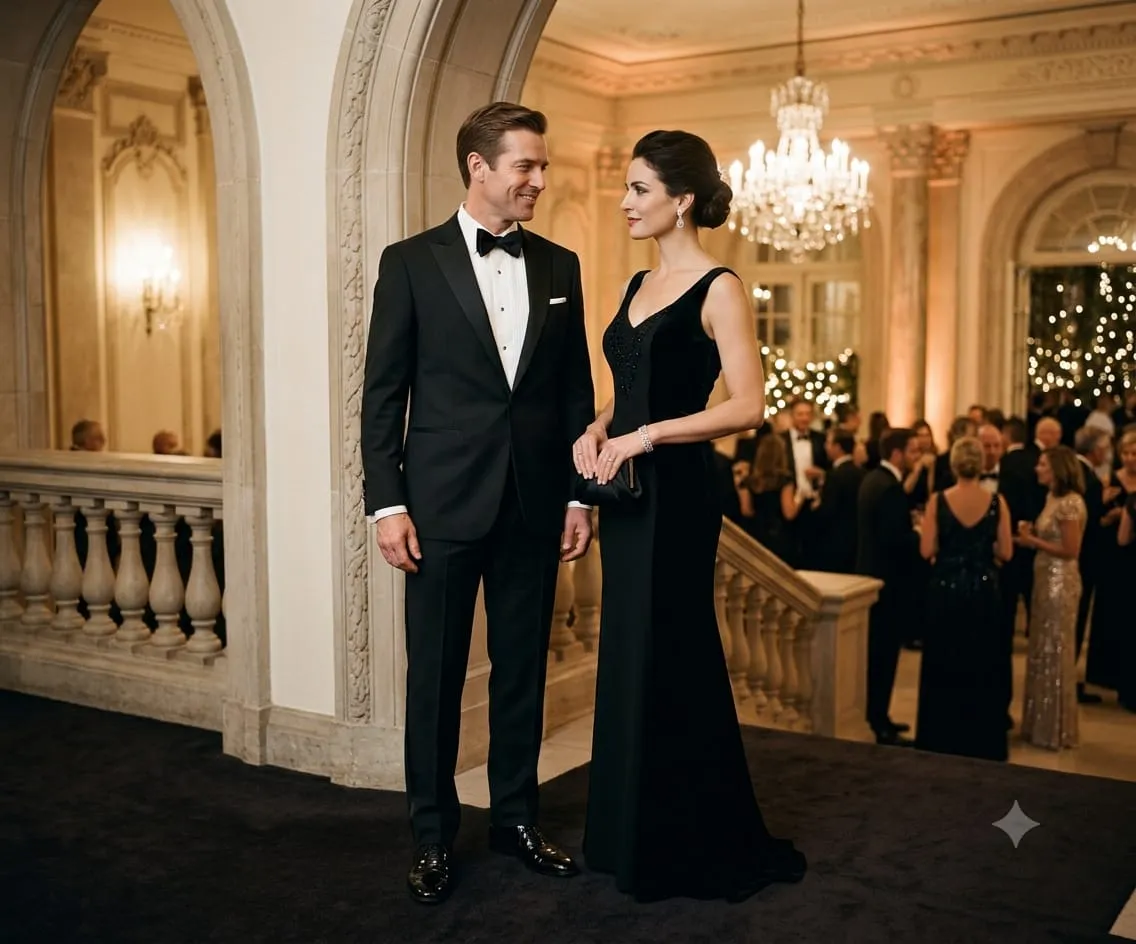
Black Tie Dress Code: The Definitive Guide for Men and Women
Getting a black-tie invitation can be exciting, but it can also create a lot of questions. Do you need a tuxedo? Can you wear a regular black suit? Does your dress have to be floor-length? What does “black tie optional” really mean? And what if the event is a wedding, gala, or outdoor celebration?
These are common concerns, especially if you do not attend formal events often. The biggest mistake is assuming that black tie simply means wearing something black and formal. It is a specific dress code with traditional rules, although modern events can allow some flexibility.
The safest approach is to start with the classic standard and then consider the event itself. For men, traditional black tie centers on a tuxedo, white formal shirt, black bow tie, and appropriate formal shoes. For women, the options are broader, ranging from elegant evening gowns to sophisticated formalwear, depending on the occasion and how strictly the dress code is interpreted.
This guide breaks down the black-tie dress code in simple terms. You will learn what to wear, what to avoid, how black tie differs from other formal dress codes, and how to handle variations such as black tie optional and creative black tie. You will also find practical advice for weddings, galas, seasonal events, and situations where you are unsure what the invitation really expects.
The goal is simple: by the time you finish reading, you should feel confident choosing an outfit that respects the occasion, fits the dress code, and still feels appropriate for you.
| Dress Code | Men | Women |
| Black Tie | Tuxedo, white formal shirt, black bow tie, formal black shoes | Evening gown or sophisticated formal eveningwear |
| Black Tie Optional | Tuxedo or dark formal suit with a conservative tie | Formal gown, dress, or elegant eveningwear |
| Creative Black Tie | Tuxedo with tasteful colors, textures, or accessories | Formal outfit with creative colors, fabrics, or accessories |
| Formal | Dark formal suit or tuxedo | Formal dress, evening gown, or elegant eveningwear |
| Cocktail Attire | Suit, usually without a tuxedo | Cocktail dress or polished formal separates |
What Is the Black Tie Dress Code?
The black tie dress code is a formal evening standard that has traditionally been reserved for events held after dark. It calls for a specific, well-defined look rather than general “formal” attire.
The black tie etiquette is a formal evening standard that has traditionally been reserved for events held after dark. It calls for a specific, well-defined look rather than general “formal” attire.
For women, black tie generally translates to elegant eveningwear. A floor-length gown remains the most traditional choice, though a sophisticated formal dress or an elegant jumpsuit can also work well at a modern black tie event.
Ultimately, the goal is simple: your outfit should look formal, refined, and appropriate for the occasion you’re attending.
A Brief History of the Black Tie Dress Code
Black tie has deep roots in formal menswear, with the modern tuxedo evolving directly from earlier evening dress styles. The dinner jacket rose to popularity as a more relaxed alternative to the traditional tailcoat, offering men greater comfort and freedom of movement without sacrificing elegance.
The term “tuxedo” itself became widely used in the United States, with the style closely linked to the Tuxedo Park area of New York. Over time, this look became the standard for formal evening events, centered on a dark dinner jacket, matching trousers, a white shirt, and a black bow tie.
Today, black tie has grown more flexible than its origins suggest. While the classic rules still carry weight, modern fabrics, colors, and personal styling choices are now widely accepted.
What Counts as a Black Tie Event?
A black tie event is typically a formal occasion that takes place in the evening. Common examples include:
- Black tie weddings
- Charity galas
- Award ceremonies
- Formal dinners
- Opera and theater premieres
- Formal parties
- Corporate galas
- High-profile celebrations
- Some New Year’s Eve events
Always read the invitation carefully, since the exact wording often indicates just how formal the event will be. The venue can offer additional clues as well: a traditional ballroom gala usually calls for a more classic look, while a stylish outdoor wedding may allow a slightly more modern interpretation.
When in doubt, it’s always safer to lean slightly more formal than to risk arriving underdressed.
Black tie sits below white tie in the traditional hierarchy of formal dress codes, but it remains more formal than standard business attire. It is commonly associated with weddings, proms, formal dinners, and theater occasions. Men typically anchor their look around a tuxedo, white formal shirt, and black bow tie, while women enjoy more flexibility with options like floor-length evening gowns and dressy cocktail dresses.
Black Tie Dress Code for Men
For men, the traditional black tie attire is a tuxedo, and it’s worth noting that a regular business suit does not qualify as an equivalent substitute. Each element of the outfit plays a specific role, and the strongest black tie looks tend to be simple, clean, and well-tailored.
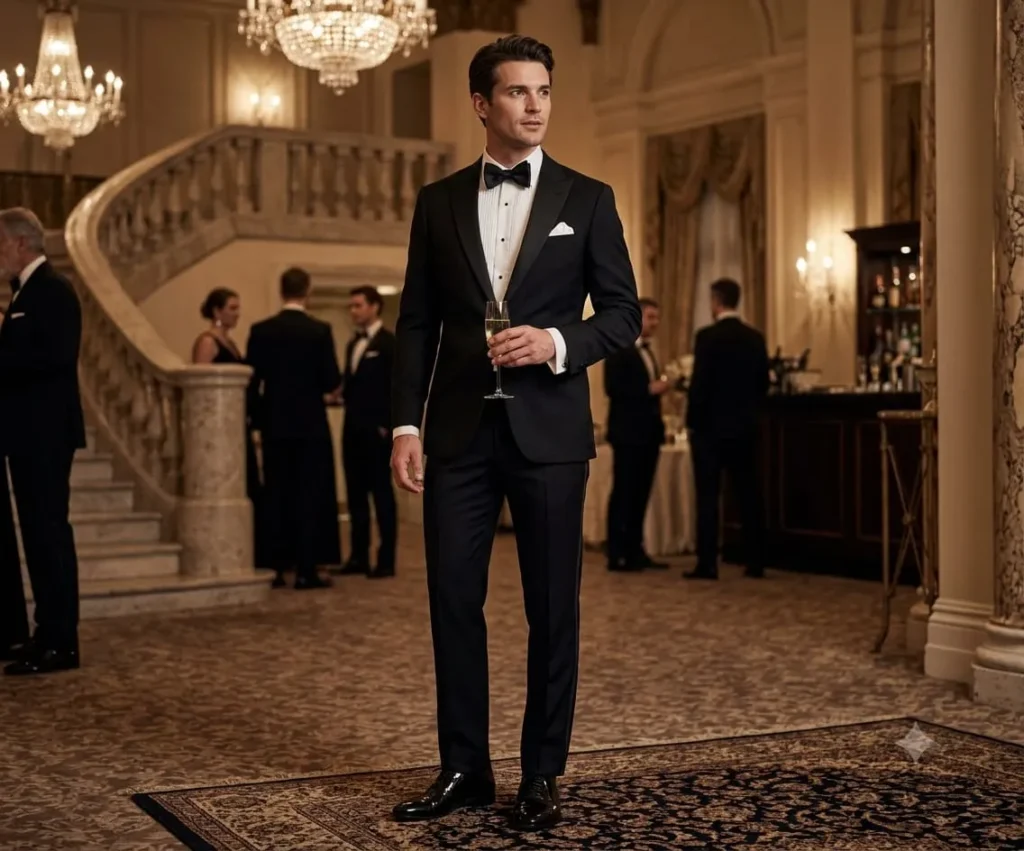
Men’s Black Tie Checklist
Before leaving for the event, check:
- Tuxedo jacket
- Matching tuxedo trousers
- White formal shirt
- Black bow tie
- Formal black shoes
- Cummerbund or waistcoat, if appropriate
- Cufflinks and other formal accessories
Tuxedo Jacket or Dinner Jacket
The tuxedo jacket forms the foundation of any black tie outfit. Black is the classic choice, while midnight blue offers an equally traditional and elegant alternative.
The lapels are usually finished in satin or a similar silk-like fabric, with common styles including shawl lapel, peak lapel, and notch lapel designs. A proper fit matters enormously here — the shoulders should sit correctly, the sleeves shouldn’t run too long, and the jacket should close smoothly without pulling across the chest.
For traditional events, it’s best to keep the jacket dark and simple. Modern black tie events, however, may welcome velvet or other rich fabrics, particularly when the occasion allows more room for personal style.
Tuxedo Trousers
Tuxedo trousers should match the formal styling of the jacket, typically featuring a satin stripe along the outside seam that conceals the trouser seam for a clean, polished look. As with the jacket, fit is essential — trousers shouldn’t be too tight or too loose.
It’s also worth avoiding a visible casual belt with a traditional tuxedo, since the design is meant to create a seamless, unbroken silhouette from top to bottom.
Formal Dress Shirt
A white formal shirt is the safest and most reliable choice for black tie. Traditional options include a pleated front, French cuffs, and a formal collar, though the exact style can vary depending on the tuxedo and the overall formality of the event.
Keep the shirt clean and well pressed at all times. A standard office shirt can look noticeably too casual paired with a traditional tuxedo, so choose a shirt specifically designed for formal eveningwear whenever possible.
Black Bow Tie
The classic black tie outfit calls for a black bow tie, ideally in silk or satin. A self-tied bow tie is often considered the most authentic option, and it should fit your neck correctly — not too large, not too small.
A standard long necktie is not the traditional choice for a strict black tie event. If the invitation simply says “black tie,” a black bow tie remains the safest and most appropriate option.
Cummerbund or Waistcoat
A cummerbund can be worn with a tuxedo, and a formal waistcoat serves as another suitable option — though you generally don’t need both at once. A cummerbund is worn around the waist and helps create a clean visual transition between the shirt and trousers, while a formal waistcoat lends a more structured overall look.
For a traditional black tie event, it’s best to keep this element simple and matched to the formality of the occasion.
Black Tie Shoes
Formal black shoes are the safest choice for men attending a black tie event. Common options include:
- Black patent leather shoes
- Highly polished black leather shoes
- Formal black Oxford shoes
- Other elegant evening shoes
Sneakers and casual footwear should be avoided entirely. Shoes should be clean and polished, and socks should match the overall formal styling of the outfit.
Black Tie Accessories
Accessories should complement the outfit without pulling attention away from it. Strong choices include cufflinks, shirt studs, a simple pocket square, a formal watch, a formal waistcoat, or a cummerbund.
Avoid piling on too many flashy accessories at once. Black tie is fundamentally about controlled elegance, and a few well-chosen details will always outperform a large collection of bold pieces.
Black Tie Dress Code for Women
The black tie dress code for women offers considerably more flexibility than the traditional men’s equivalent. A floor-length evening gown remains the safest and most traditional choice, though modern black tie events increasingly allow other formal options, including:
- Floor-length evening gowns
- Elegant formal dresses
- Sophisticated tea-length dresses
- Formal jumpsuits
- Elegant evening suits
- Dressy separates, depending on the event
Whatever the choice, the outfit should look polished and formal throughout. The venue, season, and wording of the invitation can all help guide the right style decision.
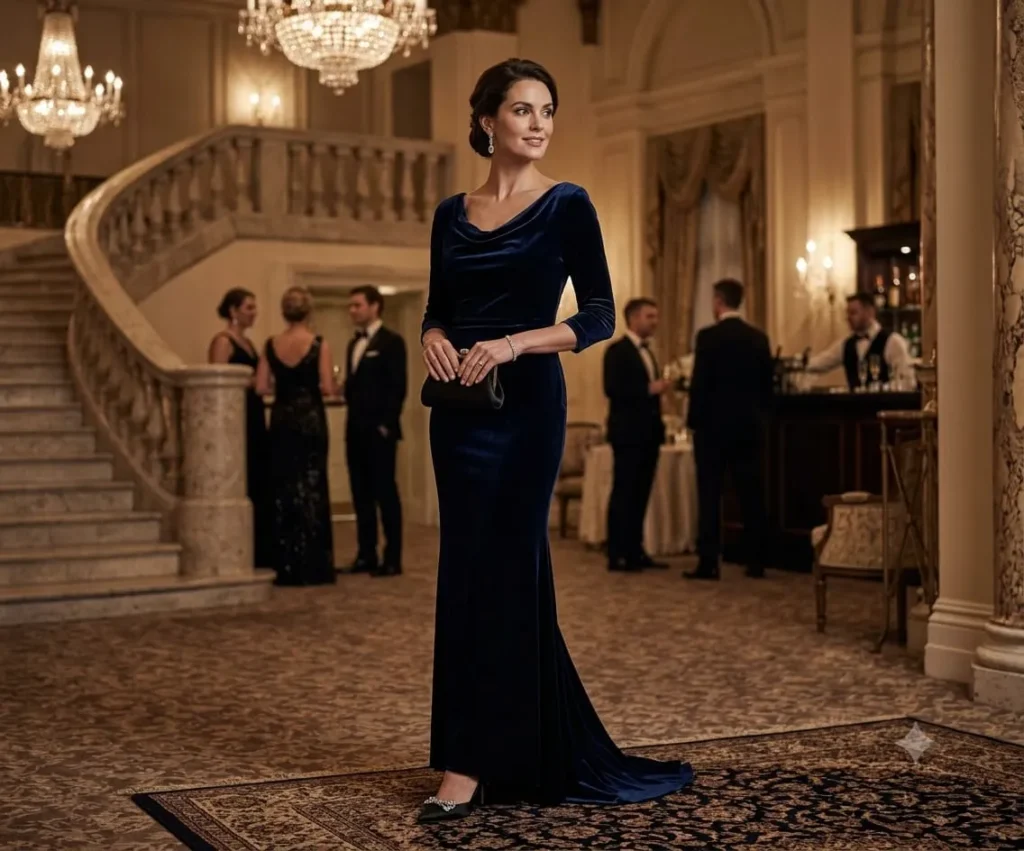
Black Tie Evening Gowns
A long evening gown remains a classic choice for women attending a black tie event. Look for high-quality fabrics and a refined silhouette — velvet, silk, chiffon, and lace can all work beautifully for formal eveningwear; sleeve style carries as much weight as fabric here — bishop, cape, and fitted long sleeves all read as formal, while a plain cap sleeve can pull a gown toward daywear.
You can lean toward a simple, understated design or opt for something more dramatic. The key is balance: if your dress carries strong details, keep the accompanying accessories more restrained.
Can Women Wear a Short Dress to a Black Tie Event?
A floor-length dress remains the most traditional option, though a shorter dress may work at some modern black tie events, provided it’s clearly formal and crafted from an elegant fabric. A simple, casual cocktail dress will typically look too relaxed for the occasion.
If you’re considering a shorter dress, think carefully about the specific event. A formal gala may still call for a full-length gown, while a modern wedding may offer more room for flexibility. When in doubt, a floor-length dress remains the safest choice.
Can Women Wear a Jumpsuit to a Black Tie Event?
Yes, a formal jumpsuit can absolutely work for a modern black tie event. The key is choosing a design made from an elegant fabric with a cut that feels polished and sophisticated, while avoiding casual jumpsuits made from everyday materials.
A well-tailored evening jumpsuit can serve as a strong, stylish alternative to a traditional gown.
Black Tie Shoes for Women
Formal heels remain a classic choice for black tie events, though comfort matters too — elegant flats can work well when they suit both the outfit and the venue. It’s worth thinking through the setting before finalizing your footwear.
An outdoor event, for instance, may call for different shoes than an indoor ballroom, since grass, sand, and uneven ground can make very high heels genuinely difficult to manage.
Jewelry and Accessories
The right accessories can make a formal outfit feel complete. Popular choices include statement earrings, elegant necklaces, bracelets, fine jewelry, a small clutch, a formal shawl or wrap, and hair accessories.
Try to avoid stacking too many statement pieces at once. If your dress already features detailed embellishments, simple jewelry usually works best; if your dress is more understated, jewelry can be used to add visual interest.
Does Black Tie Mean Everything Has to Be Black?
No — the term “black tie” doesn’t require every element of your outfit to be black. For men, a black tuxedo remains the classic choice, with midnight blue serving as an equally traditional alternative. Some modern events may allow other dark colors, though it’s generally best to stay close to classic formalwear when the invitation simply states “black tie.”
Women, on the other hand, enjoy considerably more freedom with color. Formal eveningwear can include jewel tones, rich colors, soft pastels, and other elegant shades. For weddings specifically, it’s best to avoid white or any color that might resemble the bride’s outfit too closely.
The Difference Between Formal, Black Tie, and Black Tie Optional
These three dress codes are closely related but not interchangeable, and understanding the distinctions can help you avoid dressing incorrectly for an event.
Formal Attire
Formal attire is a broad term that can vary considerably depending on the specific event. For men, a dark suit or tuxedo may be appropriate, while women can typically choose a formal dress, evening gown, or another elegant outfit. The exact expectation depends heavily on the invitation and the nature of the event itself.
Black Tie
Black tie is far more specific than general formal attire. For men, the traditional choice remains a tuxedo paired with a white formal shirt and black bow tie. For women, the safest option is an elegant evening gown or comparable formal eveningwear.
Black Tie Optional
Black tie optional offers guests noticeably more flexibility. Men can still wear a tuxedo, though a dark, formal suit is also generally acceptable. Women can continue wearing formal eveningwear, whether that’s a floor-length gown, a formal dress, or an elegant jumpsuit. One step further down sits the cocktail dress code, where a tuxedo would be too formal and a suit becomes the standard.
If you already own a tuxedo, wearing it is usually the safest choice for a black tie optional event.
Modern Variations of Black Tie
Traditional black tie rules still carry significant weight, but modern events increasingly allow room for personal style. Men may experiment with midnight blue tuxedos, velvet dinner jackets, different lapel styles, rich formal textures, and elegant formal shoes.
Women, meanwhile, may choose modern evening gowns, formal jumpsuits, elegant evening suits, bold but refined colors, or sophisticated patterns.
The invitation should always guide your final decision. If the event leans traditional, stay close to classic black tie conventions; if it specifies “creative black tie,” you’ll have considerably more room to express your personal style.
Black Tie for Different Events
The ideal black tie outfit can shift depending on the specific type of event you’re attending.
Black Tie for Galas and Charity Events
Galas and charity events often use black tie to establish a formal, polished atmosphere throughout the evening. For men, a classic tuxedo remains the safest choice, while women can opt for a formal evening gown or another elegant outfit that matches the event’s overall formality.
If the gala has a specific theme, venue, or additional dress instructions, it’s worth factoring those details into your outfit choice. A formal event can still leave room for personal style, but the overall look should stay sophisticated and appropriate for the occasion.
Black Tie Wedding
A black tie wedding is one of the most common settings for this dress code. Men should typically wear a tuxedo, while women can choose a formal gown or another elegant evening outfit.
Wedding guests should aim to look polished without competing with the couple for attention. It’s also worth considering the venue and season, since a summer outdoor wedding may call for different fabrics than a winter ballroom celebration.
Corporate Galas
Corporate galas tend to be formal and highly polished events. A classic tuxedo is a safe, reliable choice for men, while women can opt for an elegant evening gown or another sophisticated formal outfit.
Keep the overall look refined throughout, and steer clear of anything that feels too casual or overly flashy for a corporate setting.
Charity Galas
Charity galas often take place in glamorous settings, and traditional black tie tends to work well in this context. That said, the invitation may offer additional detail about the expected style.
A formal tuxedo remains a reliable choice for men, while women can wear an evening gown or another formal outfit that fits the occasion.
Award Ceremonies
Award ceremonies frequently involve photography and media coverage, so it’s worth choosing clothing that fits well and looks polished from every angle. For men, a classic tuxedo is a strong, dependable option, while women can choose an elegant gown or formal outfit that photographs well.
Formal Parties
Some formal parties adopt a black tie dress code, and the invitation should serve as your main guide. A traditional tuxedo or evening gown is usually the safest bet, though a more modern style may work if the event embraces a relaxed interpretation of black tie.
Black Tie in Summer and Warm Weather
Black tie doesn’t lose its formality just because the weather turns warm — the key is selecting suitable fabrics and styles for the season. Men may consider a white dinner jacket for certain warm-weather events, which tends to work particularly well for summer occasions, tropical locations, or select cruises.
Women can opt for lighter formal fabrics that remain elegant despite the heat. In all cases, it’s worth considering the venue carefully, since an outdoor summer wedding will likely have different practical needs than an indoor ballroom event.
What Not to Wear to a Black Tie Event
Knowing what to avoid is just as important as knowing what to wear, since a single misstep can undermine an otherwise strong outfit.
Men Should Avoid
- Jeans
- T-shirts
- Shorts
- Sneakers
- Casual jackets
- Casual shirts
- Bright novelty ties
- Casual footwear
- Poorly fitted tuxedos
- Regular business suits at strict black tie events
It’s worth noting that a regular dark suit may look formal at first glance, but it is not a true substitute for a traditional tuxedo.
Women Should Avoid
- Casual sundresses
- Everyday clothing
- Very casual separates
- Beachwear
- Sportswear
- Extremely casual shoes
- Oversized everyday handbags
The overall goal is to look formal and polished throughout. That doesn’t mean your outfit needs to be boring — it simply needs to match the level of formality the event demands.
Common Black Tie Mistakes to Avoid
Even a strong outfit can fall short if certain details are overlooked, so it’s worth paying attention to the finer points.
Wearing the Wrong Level of Formality
The single biggest mistake is arriving underdressed. Read the invitation carefully, and if it specifies black tie, take that requirement seriously.
Choosing the Wrong Fit
Fit can make a dramatic difference in how an outfit reads overall. A simple, well-fitted tuxedo will often look better than an expensive tuxedo that doesn’t fit correctly, and the same principle applies equally to formal dresses and gowns.
Wearing the Wrong Shoes
Casual shoes can make an otherwise formal outfit feel incomplete. Always choose footwear that matches the overall level of the event.
Overdoing Accessories
Too many accessories can make an outfit feel busy or cluttered. A handful of elegant, well-chosen details will almost always outperform an overloaded look.
Ignoring the Venue
A ballroom, garden, beach, and cruise ship each create very different practical conditions. Your outfit should still follow the dress code while remaining sensible for the specific setting.
Black Tie Wedding Guest Dress Code
If you’ve been invited to a black tie wedding, the dress code should be taken seriously from the outset. For men, the safest choice remains a classic tuxedo, while women can rely on a formal evening gown as a dependable option — a sophisticated formal dress or elegant jumpsuit may also work for a more modern celebration.
Color choices can lean more festive than at other formal events, and rich jewel tones or elegant colors tend to work particularly well. That said, guests should avoid wearing white or anything that might resemble the bride’s outfit too closely.
Always factor in the venue, season, and time of day when finalizing your choice.
What If You Don’t Own a Tuxedo?
You have several practical options if a tuxedo isn’t already part of your wardrobe. Renting one from a formalwear company is a common and cost-effective choice for people who attend black tie events only occasionally, while buying a tuxedo makes more sense if you expect to attend formal events regularly.
If the event is black tie optional, a dark formal suit may be acceptable as an alternative. Above all, the most important thing is to follow the dress code exactly as stated on the invitation.
Where to Buy Black Tie Attire
When shopping for black tie attire, focus primarily on fit and quality rather than trends. For men, look for a well-fitted tuxedo, a formal white shirt, a black bow tie, formal black shoes, and suitable accessories to complete the look.
For women, prioritize formal eveningwear that suits both the event and your personal style. You can shop at formalwear stores, department stores, designer brands, and online retailers, and if your budget allows, professional tailoring can significantly improve the fit of a tuxedo or formal suit.
Frequently Asked Questions About Black Tie Dress Code
Is black tie more formal than cocktail attire?
Yes. Black tie is generally more formal than cocktail attire, with a tuxedo serving as the traditional choice for men while women typically wear formal eveningwear.
Can I wear a black suit instead of a tuxedo?
If the invitation specifies strict black tie, a tuxedo remains the safest choice. A black suit may be acceptable when the event is described as formal or black tie optional, though it doesn’t carry the same traditional level of formality as a true tuxedo.
Can I wear a navy tuxedo to a black tie event?
Yes. Midnight blue is a traditional and elegant alternative to black, and it works especially well for evening events.
Can women wear pants to a black tie event?
Yes. A formal evening suit or sophisticated jumpsuit can work well at many modern black tie events, as long as the outfit is clearly formal and appropriate for the occasion.
Can women wear a cocktail dress to a black tie event?
Sometimes. A very formal cocktail dress made from a luxurious fabric may work for some modern black tie events, though a floor-length gown remains the safest traditional choice.
Can I wear a regular long necktie to a black tie event?
A black bow tie is the traditional choice for black tie events. A regular long necktie is generally not considered classic black tie attire, so unless the event clearly allows a modern interpretation, it’s best to choose a bow tie.
Do I need a cummerbund?
No, a cummerbund is entirely optional. You can also wear a formal waistcoat with a tuxedo instead.
Can I wear a tuxedo without a bow tie?
For traditional black tie, a bow tie is expected as part of the complete look. Skipping it can make the outfit feel incomplete or noticeably less formal.
Is black tie only for men?
No. Black tie is a dress code for everyone attending the event. Men traditionally wear tuxedos, while women have a wider range of formal eveningwear options to choose from.
What is creative black tie?
Creative black tie allows for more personal style while still keeping the outfit formal overall. Men may wear a distinctive dinner jacket or a refined formal accessory, while women may choose a modern gown, formal jumpsuit, or another fashion-forward evening look. The key throughout is to remain elegant and formal.
Final Thoughts: Dressing With Confidence for a Black Tie Event
The most important thing to remember about black tie is that dressing correctly is about more than following a list of clothing rules. It is about understanding the level of formality the host has chosen and showing respect for the occasion.
When in doubt, start with the traditional standard. For men, that usually means a well-fitted tuxedo, white formal shirt, black bow tie, and appropriate formal shoes. For women, a sophisticated evening gown or another elegant formal outfit is a dependable choice, with the exact level of formality depending on the event, venue, and invitation.
From a practical standpoint, fit and overall presentation often make as much difference as the individual pieces you choose. A classic outfit that fits properly and is well maintained will usually look more polished than an expensive outfit that is poorly fitted or unsuitable for the occasion. This is especially important for tuxedos and formal dresses, where proportions and tailoring can have a major effect on the final appearance.
If you are attending a black-tie wedding, gala, corporate event, or another formal occasion, always read the invitation carefully before making your final choice. Words such as “black tie optional” or “creative black tie” can change how much flexibility you have. The venue, season, and type of event can also help you decide how to interpret the dress code.
The best advice is to avoid overthinking the process. You do not need to follow every fashion trend to look appropriate at a black-tie event. Start with the established dress code, choose quality pieces that fit well, and add personal style only where the event allows it.
When you understand the rules, black tie becomes much less intimidating. Instead of worrying about whether you are dressed correctly, you can focus on the reason you are there celebrating, connecting with others, and enjoying the occasion with confidence.