Deep Winter Color Palette: Your Complete Guide to Colors That Make Your Look Best
Have you ever bought a jumper because you loved the colour in the shop, only to realise you never actually wear it? Or perhaps you’ve stood in front of your wardrobe wondering why certain outfits make you look polished while others leave you looking tired, even when the style is almost identical.
You’re not alone. One of the most common frustrations people face is assuming that if a colour is fashionable, it should automatically suit them. In reality, the colours that flatter one person can make another look washed out, emphasise shadows, or compete with their natural features.
This is where the Deep Winter color palette can make a real difference. Rather than following seasonal trends, it helps you understand which cool, deep, and richly saturated colours naturally work with your own colouring. Once you recognise these patterns, shopping becomes more intentional, outfit planning feels easier, and building a wardrobe where everything works together becomes much less overwhelming.
Throughout this guide, you’ll learn how to identify whether you’re a Deep Winter, understand why certain colours suit you better than others, and confidently choose clothing, makeup, jewellery, and accessories that complement your natural contrast. The recommendations are based on widely used personal colour analysis or seasonal colour analysis principles and practical colour theory, while recognising that individual results may vary and professional draping remains the most reliable way to determine your personal season.
Quick Answer
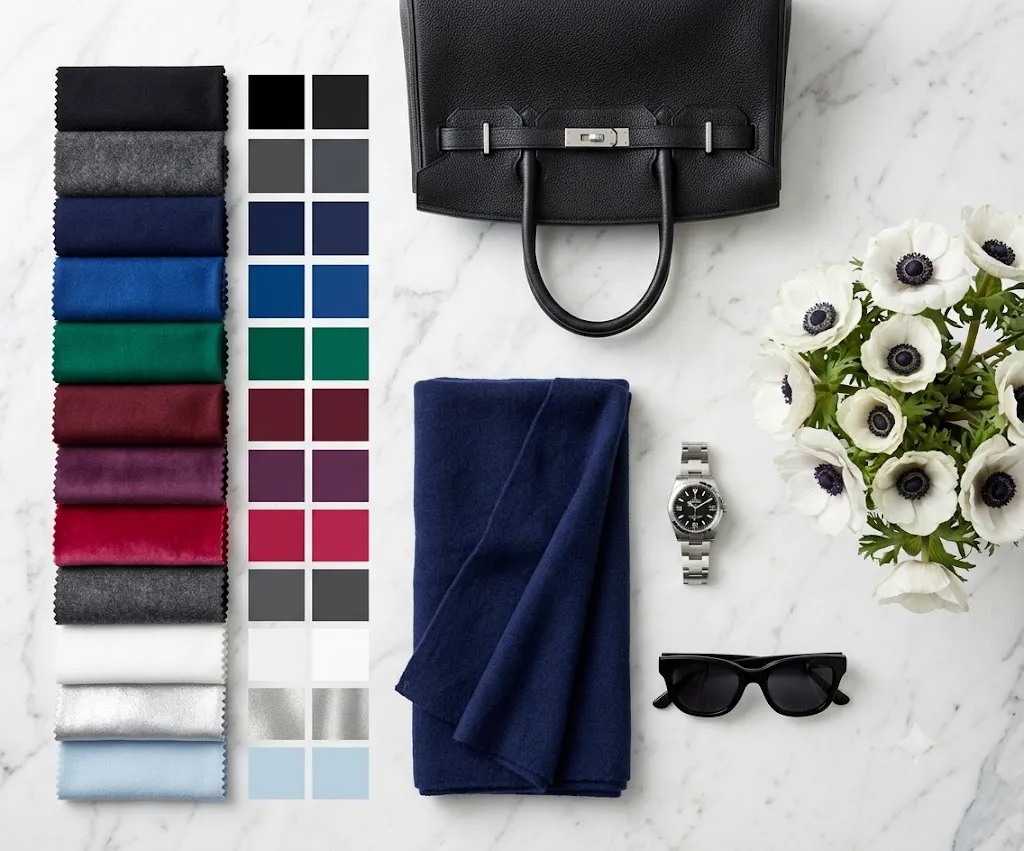
If you want the short version: the Deep Winter color palette is made up of cool, dark, and clear colors with strong contrast, and its signature shades include black, charcoal, navy, emerald, burgundy, plum, sapphire, and crisp white.
People who suit this palette typically show high contrast between their skin, hair, and eyes. That said, no single feature — dark hair or brown eyes alone, for instance — is enough to confirm your season on its own. The most dependable way to check is to hold different colors up beside your face in natural daylight and watch how your complexion responds.
Deep Winter at a Glance
| Feature | Deep Winter |
| Undertone | Cool to neutral-cool |
| Value | Deep |
| Chroma | Clear to moderately clear |
| Contrast | Medium to high |
| Best Neutrals | Black, charcoal, navy, crisp white |
| Best Accent Colors | Emerald, burgundy, sapphire, plum |
| Best Metals | Silver, platinum, white gold |
| Avoid | Camel, mustard, rust, cream, peach |
| Best Fabrics | Velvet, wool, silk, leather |
What Makes the Deep Winter Color Palette Unique?
The Deep Winter color palette rests on three defining qualities working in tandem: cool undertones, deep value, and medium-to-high contrast. Together, these qualities are what create the polished, elegant look this season is known for.
Deep Winter sits as the darkest season within the broader Winter family. While other Winter palettes might lean brighter or icier, Deep Winter is defined by richness and depth above all else.
The palette includes:
- Black
- Charcoal
- Deep navy
- Burgundy
- Plum
- Emerald green
- Sapphire blue
- Deep teal
- Raspberry
- Cool white
These shades work specifically to bring balance to naturally high-contrast features.
Why Contrast Matters
Contrast sits at the very core of the Deep Winter season, and high contrast is what gives an outfit its sense of energy. This is exactly why Deep Winters usually look their best when combining light and dark colors together, such as:
- White with black
- Emerald with charcoal
- Burgundy with cool white
- Navy with silver
- Plum with graphite
Deep Winter vs. Dark Winter: Is There a Difference?
This naming overlap trips up a lot of people, and the honest answer is that it depends entirely on which seasonal color system you’re using. In the widely used 12-season color analysis model, Deep Winter and Dark Winter refer to the exact same season.
In most 12-season colour analysis systems, Deep Winter and Dark Winter refer to the same palette. Some expanded systems separate them into slightly different sub-seasons, but both describe people who suit cool, deep, and rich colours.
Key Characteristics of a Deep Winter
People in the Deep Winter category tend to share a handful of visual traits, though you don’t need to check every box on this list for it to apply to you — most will simply resonate.
Skin Tone
Deep Winter skin tones can vary quite a bit and may show up as fair porcelain, cool beige, olive, medium cool, or deep cool brown. What ties them together is that many Deep Winters have a neutral-cool undertone rather than an intensely pink one.
Hair Color
Hair tends to run dark, commonly appearing as dark brown, espresso brown, soft black, blue-black, or cool dark ash brown, and any natural highlights are usually subtle rather than golden.
Eye Color
Eyes in this season typically carry real depth and clarity, showing up as dark brown, black-brown, cool hazel, deep green, dark grey, or deep blue — and many Deep Winters notice a striking contrast between the whites of their eyes and the iris itself.
Overall Appearance
The single biggest giveaway is contrast. Your skin, hair, and eyes naturally create a bold, defined look together, which is exactly why strong, saturated colors read as balanced on you instead of overwhelming.
Deep Winter Across Different Skin Depths
Deep Winter isn’t tied to one ethnicity or one skin depth — it shows up across the full spectrum of complexions. On fair skin, black and jewel tones tend to create clear, obvious contrast, and icy shades can also work beautifully when paired with a dark neutral.
On medium or olive skin, deep teal, navy, burgundy, and cool berry tones often strike the right balance, though olive skin should be tested carefully since its surface can look warm even when cooler colors are actually the better match. On brown or deep skin tones, rich shades like sapphire, emerald, blackberry, and cool red tend to create strong harmony, and crisp white can also produce a particularly striking contrast.
Because the same color can behave differently from one person to the next, personal draping will always tell you more than a general description ever could.
Do cool colours suit you?
│
▼
Yes
│
▼
Do dark colours suit you?
│
┌────┴────┐
│ │
Yes No
│ │
▼ ▼
Deep True/
Winter Bright Winter
How to Tell If You Are a Deep Winter
Plenty of people struggle to pin down their season, and while a professional color analysis remains the gold standard, there are several reliable clues you can check for at home.
You Look Great in Black
Most people can’t wear pure black without looking a little tired or washed out, but Deep Winters are the exception — black tends to make their eyes brighter and their skin appear smoother. If black is already your go-to neutral, that’s a strong signal on its own.
Silver Jewelry Looks Better Than Gold
Cool metals generally suit Deep Winters best. Try comparing silver against yellow gold in natural daylight, and if silver makes your skin look brighter and more even, that’s a good indicator of a cool undertone.
Bright Warm Colors Feel Too Strong
Warm shades like mustard, orange, camel, and tomato red often overpower a Deep Winter complexion. Rather than enhancing your face, these colors tend to create an uneven skin tone or make the eyes look dull by comparison.
Rich Jewel Tones Make You Glow
Deep Winters frequently get compliments in colors like emerald, burgundy, sapphire, plum, and deep teal — shades that naturally enhance facial contrast rather than compete with it.
Try a Simple Draping Test at Home
Professional color analysis relies on fabric drapes rather than quizzes for good reason: colors behave differently against every face. You can still run a simplified version of this test yourself.
Stand near a window in indirect daylight and remove heavy makeup if possible, then compare these color pairs one at a time: pure white vs cream, black vs camel, burgundy vs rust, emerald vs olive, and fuchsia vs coral.
As you go, keep your attention on your face rather than the fabric itself. Colors that genuinely suit you tend to make your complexion look clearer and your features more defined, while less suitable colors often draw attention to shadows, redness, or uneven tone. Keep in mind that phone filters, indoor lighting, and screen colors can all distort how a fabric actually looks, so natural daylight will always give you the most reliable read.
Signs You’re Probably a Deep Winter
| ✔ | Statement |
| ☐ | Black is one of my best neutral colours. |
| ☐ | Silver jewellery usually suits me better than yellow gold. |
| ☐ | Jewel tones often earn me compliments. |
| ☐ | Cream makes me look dull compared with crisp white. |
| ☐ | Warm oranges and mustard rarely flatter me. |
| ☐ | Dark wash denim looks better than faded jeans. |
| ☐ | I naturally have noticeable contrast between my features. |
f you answered “yes” to most of these statements, Deep Winter may be your closest seasonal palette. A professional draping session can confirm your results.
The Science Behind Seasonal Color Analysis
Seasonal color analysis borrows core ideas from color theory, namely temperature, depth, clarity, and contrast. It’s worth noting, though, that these named seasons aren’t official scientific categories — they’re part of a styling framework used by color consultants, and different consultants may apply different names, palettes, and testing methods.
At its core, the goal of color analysis is simply to compare how different colors look next to your face. Some will make your features appear clearer, while others will draw more attention to shadows, redness, or uneven areas.
Temperature
Deep Winter belongs firmly to the cool family, meaning its colors carry blue undertones rather than yellow ones.
Hue refers to the basic colour family, such as blue, green, or red. Deep Winter colours typically belong to cooler hues that lean towards blue rather than yellow, helping create harmony with naturally cool or neutral-cool colouring.
Value
Value refers to how light or dark a color is, and Deep Winter performs best when working with darker shades.
Chroma
Chroma describes color intensity, and Deep Winter colors are meant to read as clear and rich without tipping into neon or overly bright territory.
When temperature, value, and chroma all align with your natural coloring, your skin tends to look healthier and your features become noticeably more defined.
Common Myths
| Myth | Reality |
| Deep Winter means dark skin. | Deep Winter exists across all skin depths. |
| Black hair is required. | Many Deep Winters have dark brown hair. |
| Brown eyes can’t be Winter. | Brown eyes are common in Deep Winter. |
| Black suits everyone. | Black is flattering for some palettes but not all. |
| Online quizzes are enough. | Fabric draping is generally more reliable. |
Undertone, Overtone, and Skin Depth
Undertone and skin depth are two different things, even though people often use them interchangeably. Skin depth describes how light or dark the skin appears, while undertone describes whether the skin leans warm, cool, neutral, or olive.
Overtone, meanwhile, refers to the visible surface color of your skin, which can shift due to tanning, redness, dryness, or sun exposure — your underlying undertone tends to stay far more consistent through all of that.
A Deep Winter can have fair, medium, olive, brown, or deep skin, which means pale skin is never a requirement for this season. Olive skin, in particular, can belong to Deep Winter even when it appears golden on the surface, since it may still respond better to cool, deep colors. Because of this, it’s best not to choose a season based on skin depth alone — always look at how color behaves near the face as a whole.
Why Deep Winter Colors Work So Well
The goal of seasonal colour analysis is to create colour harmony between your clothing and your natural features. When colour harmony is achieved, people naturally notice your face before your outfit.
Deep Winter colors also tend to reduce the appearance of uneven skin tone, shadows, redness, and dullness. Worn well, the right shades can make your eyes look clearer and your smile appear brighter, even without any makeup at all.
Many people find that wearing the right colors makes their whole look feel more polished, without ever having to change their hairstyle, makeup routine, or wardrobe size. Rather than pulling focus toward the clothing itself, harmonious colors quietly let people notice your face first.
The Personality Behind the Deep Winter Palette
Although your colour season doesn’t determine your personality, Deep Winter colours often create a visual impression of confidence, elegance, sophistication, and timeless style. Their cool, rich tones are frequently used in luxury fashion because they feel refined rather than loud.
Common Mistakes Deep Winters Make
Many people unknowingly reach for colors that quietly undercut their natural contrast. Here are a few of the most common missteps.
Choosing Warm Browns
Chocolate brown might feel like a safe neutral, but many warm browns actually carry yellow undertones — cool charcoal is usually the stronger choice instead.
Wearing Dusty Pastels
Soft, muted pastel shades tend to belong to Summer palettes, and on a Deep Winter complexion they can end up looking faded rather than flattering.
Buying Cream Instead of White
Cream carries noticeable warmth, while cool white creates a far better harmony with Deep Winter coloring.
Wearing Washed Denim
Stonewashed jeans often read as too faded on this palette — dark indigo or blue-black denim tends to look considerably more flattering.
These pairings highlight your natural features while still keeping the overall outfit feeling polished and intentional.
The Complete Deep Winter Color Palette
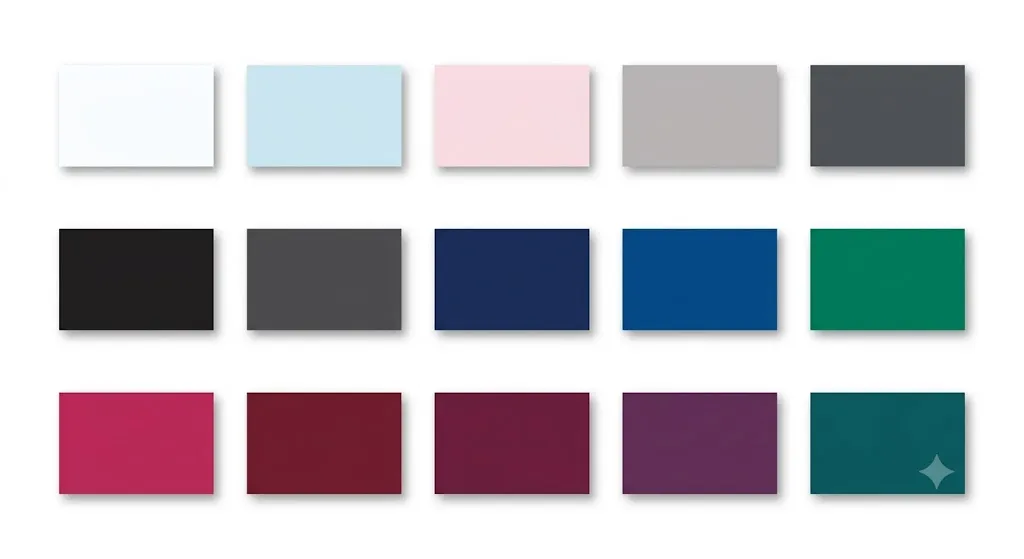
The Deep Winter color palette is rich, cool, and dramatic, with every shade carrying real depth and clarity. Unlike softer or warmer palettes, Deep Winter colors are meant to look crisp and powerful rather than muted.
One easy way to picture this palette is to imagine a snowy winter evening — dark forests, icy lakes, clear night skies, and sparkling snow all contain the same tones that flatter a Deep Winter.
The palette breaks down into four groups: neutrals, accent colors, icy colors, and metallics, each playing a distinct role in building out a balanced wardrobe.
A Note About Color Names
Color names aren’t always used consistently across brands. One retailer might call a shade “emerald,” while another uses the same name for a noticeably warmer green — the same inconsistency can crop up with burgundy, plum, navy, taupe, and teal as well.
Treat color names as general guides rather than exact standards, and always check the real fabric in natural daylight, since digital swatches are also affected by screen brightness and display settings and shouldn’t be treated as a universal reference point.
Why This Palette Makes Shopping Easier
One of the biggest perks of knowing your Deep Winter palette is that coordinating your wardrobe becomes far simpler. Because these colors all share a similar depth and cool undertone, most pieces naturally work together, which means fewer difficult outfit decisions and more clothing you’ll actually enjoy wearing.
Instead of buying colors at random, you can build a collection designed to mix and match all year round.
Best Neutral Colors for Deep Winter
Neutrals form the foundation of nearly every outfit, since they mix easily with brighter shades and hold up well as everyday staples.
The best Deep Winter neutrals include:
- Pure black
- Charcoal gray
- Graphite
- Cool navy
- Ink blue
- Cool espresso
- Cool dark taupe
- Crisp white
- Soft cool gray
These colors read as polished in every season of the year. Many color analysts consider black to be the true signature neutral of Deep Winter — a shade that can overwhelm other seasons but one that Deep Winters tend to wear effortlessly.
Everyday Wardrobe Staples
Start building your wardrobe with these wardrobe essentials in Deep Winter neutrals.
- Blazers
- Trousers
- Jeans
- Winter coats
- Leather jackets
- Sweaters
- Handbags
- Boots
These timeless pieces pair easily with almost any accent color from your broader palette.
Best Accent Colors for Deep Winter
Accent colors are what give your wardrobe its personality. Deep Winter tends to shine in jewel-inspired shades, since they add richness to an outfit without tipping into overly bright territory.
Excellent accent colors include:
- Emerald green
- Sapphire blue
- Deep teal
- Burgundy
- Wine red
- Cranberry
- Raspberry
- Plum
- Aubergine
- Eggplant
- Royal purple
- Deep magenta
- Pine green
- Forest green
- Blue-red
These shades work by making your skin appear brighter while further enhancing your natural contrast.
Best Deep Winter Colors by Color Family
Best Deep Winter Reds
Look for reds built on a blue or berry base, such as burgundy, cranberry, cherry red, wine, raspberry, or blue-red, while steering clear of orange-red, tomato red, and brick red or rust.
Best Deep Winter Blues
Blue stands out as one of the strongest color families for this season. Try navy, sapphire, ink blue, midnight blue, cobalt, or deep blue-violet, though very faded or dusty blues may end up looking too soft.
Best Deep Winter Greens
The most flattering greens are cool, dark, or blue-based, including emerald, pine, forest green, deep teal, petrol, and blue-green. Mustard green, warm olive, moss, and yellow-green are generally best avoided.
Best Deep Winter Pinks
Stick to clear or deep pinks such as raspberry, fuchsia, magenta, berry pink, and icy pink, while avoiding peach, salmon, coral, and dusty rose.
Can Deep Winter Wear Yellow?
Yellow can be a tricky color for this season, since so many shades run warm. A Deep Winter can still wear a cool, clear yellow in small doses, though mustard, golden yellow, and creamy yellow tend to be less harmonious overall — it works best as an accent rather than a dominant wardrobe color.
Beautiful Icy Colors for Deep Winter
It’s a common misconception that Deep Winters can only wear dark colors, but the palette also includes icy shades capable of creating beautiful contrast on their own.
These include:
- Icy pink
- Ice blue
- Ice lavender
- Cool mint
- Frosted lilac
- Ice gray
These colors perform best when paired with darker shades, for example ice blue with navy, ice lavender with plum, icy pink with charcoal, or cool mint with black — combinations that recreate the natural contrast Deep Winters already carry.
Best Metallics for Deep Winter
Metallic accessories are what pull an outfit together, and the best choices for this season include silver, platinum, white gold, rhodium, gunmetal, and polished steel — metals that echo the cool undertones running through the entire Deep Winter palette.
Highly polished finishes tend to look better than brushed metals here, since they reflect the crisp, icy quality that defines the season.
Colors Deep Winter Should Avoid
Certain colors quietly work against the natural harmony of a Deep Winter complexion, usually because they carry warm or muted undertones. It’s best to avoid wearing large amounts of:
- Mustard yellow
- Camel
- Warm beige
- Rust
- Burnt orange
- Peach
- Coral
- Tomato red
- Warm olive
- Golden brown
- Cream
- Ivory
- Dusty rose
These shades can leave your skin looking dull or tired. If you’re drawn to warm colors anyway, try wearing them away from your face or reserving them for small accessories instead.
Best Color Combinations for Deep Winter
Choosing the right color combinations matters just as much as choosing the right individual colors, and Deep Winter outfits generally look their best when light and dark shades are combined deliberately.
High-Contrast Combinations
- Black + White
- Navy + Ice Blue
- Burgundy + Cool White
- Emerald + Charcoal
- Plum + Silver
- Sapphire + Gray
These pairings feel elegant and genuinely timeless.
Monochromatic Looks
You can also build an outfit from different shades within the same color family, such as navy with sapphire, plum with eggplant, charcoal with graphite, or emerald with forest green. Monochromatic outfits read as sophisticated while still holding onto visual depth.
Monochromatic vs. Monochrome
These two terms are often used interchangeably, but there’s a useful distinction worth knowing. A monochromatic outfit pulls together several shades from one color family — combining navy, sapphire, and ice blue, for instance — while a monochrome outfit sticks to a single main color throughout, like black trousers, a black sweater, and a black coat.
Both approaches work well for Deep Winter, though varying the depth, fabric, or finish helps keep the look from falling flat.
Analogous Color Combinations
Analogous colours sit next to one another on the traditional colour wheel, creating naturally harmonious colour combinations. For Deep Winter, these neighbouring cool hues produce coordinated outfits without sacrificing contrast.
Build the look around one dominant shade, then bring in the supporting colors through a top, scarf, bag, or piece of jewelry — just make sure every shade stays cool and clear, since a warm or dusty version of the same color can throw off the whole effect.
Statement Combinations
For a bolder look, try burgundy with emerald, sapphire with raspberry, plum with navy, emerald with white, or charcoal with fuchsia. These pairings create strong visual interest without ever feeling overwhelming.
The 60–30–10 Colour Rule
A simple way to style Deep Winter colours is to divide your outfit into three parts:
- 60% dark neutral (black, charcoal, or navy)
- 30% jewel tone (emerald, burgundy, sapphire, or plum)
- 10% metallic or icy accent (silver, white gold, or ice blue)
This formula creates balanced outfits while keeping the focus on your natural contrast.
How to Build a Deep Winter Capsule Wardrobe
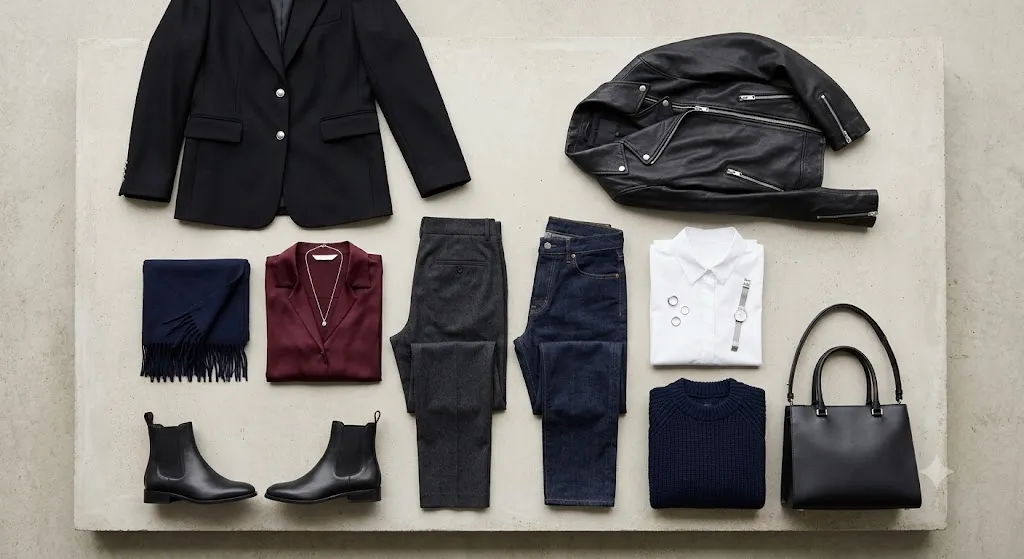
A capsule wardrobe saves time and takes the guesswork out of getting dressed, so it’s worth starting with a small set of versatile basics.
A Simple Deep Winter Wardrobe Formula
Choose two dark neutrals, three jewel tones, one icy light color, and one metallic finish. As an example, you might pick black and navy as your neutrals, then add burgundy, emerald, and plum on top, use ice blue as your light accent, and finish with silver as your metallic. This formula gives you plenty of variety without making the wardrobe difficult to coordinate.
Essential Tops
- Black T-shirt
- White blouse
- Navy knit sweater
- Burgundy blouse
- Charcoal turtleneck
Bottoms
- Black trousers
- Navy trousers
- Dark wash jeans
- Charcoal skirt
Outerwear
- Black wool coat
- Navy trench coat
- Charcoal blazer
- Black leather jacket
Shoes
- Black ankle boots
- Black loafers
- Navy heels
- Charcoal sneakers
Accessories
- Silver watch
- Black handbag
- Burgundy scarf
- Navy belt
Together, these pieces can generate dozens of different outfit combinations.
Best Fabrics for Deep Winter
Color matters most, but fabric plays a real role in how that color actually reads. Deep Winter shades tend to look richer in fabrics with a smooth or slightly shiny finish, so look toward velvet, satin, silk, leather, fine wool, cashmere, and structured cotton and that list overlaps almost exactly with evening fabrics, which is why Deep Winter colours translate so easily to the cocktail dress code. These fabrics reflect light in a way that enhances the palette’s natural depth.
Very faded, rough, or heavily distressed fabrics, on the other hand, tend to soften the dramatic effect this season relies on.
Outfit Ideas for Every Occasion
Casual Outfit
Dark wash jeans, a white T-shirt, a black leather jacket, white sneakers, and silver jewelry combine into a look that’s simple but polished.
Office Outfit
Charcoal trousers, a burgundy blouse, a black blazer, black pumps, and silver earrings create a professional, timeless combination.
Evening Outfit
A black dress paired with emerald earrings, a silver clutch, and black heels delivers effortless elegance. The same combination scales up cleanly for a black tie invitation; swap the dress for a floor-length version and the palette still works.
Winter Outfit
A navy wool coat, plum sweater, black trousers, black boots, and a burgundy scarf make for a perfect cold-weather look that stays entirely within the palette.
Outfit Builder Table
| Occasion | Base | Accent | Shoes | Jewellery |
| Casual | Black jeans | Emerald knit | White trainers | Silver |
| Office | Navy trousers | Burgundy blouse | Black loafers | White gold |
| Evening | Black dress | Sapphire earrings | Black heels | Platinum |
| Winter | Charcoal coat | Plum scarf | Black boots | Silver |
Best Accessories for Deep Winter
Accessories can genuinely strengthen your overall look, so aim for pieces with cool undertones — black leather handbags, navy handbags, burgundy handbags, silver sunglasses, black belts, and charcoal hats all work well.
Warm tan leather is generally worth avoiding, since cool black leather blends far more naturally with the rest of your wardrobe.
Best Prints and Patterns
Because Deep Winter already carries naturally high contrast, it can handle genuinely bold prints. The most flattering patterns include black and white stripes, geometric prints, houndstooth, plaid in cool colors, animal prints in black and gray, and abstract jewel-tone prints.
Faded floral prints with warm backgrounds tend to be the one pattern style worth avoiding, since sharper patterns generally complement this season far better.
Can Deep Winter Wear Black Every Day?
Yes — though mixing things up creates a more interesting wardrobe overall. Black remains one of the strongest colors for Deep Winter, but leaning on it exclusively can start to feel repetitive after a while.
Instead, try rotating in other dark neutrals like navy, charcoal, graphite, ink blue, and deep plum, which offer that same elegance while adding a bit more depth to your everyday style.
Shopping Tips for Deep Winter
Walking into a store full of racks in every imaginable color can feel overwhelming, but knowing your palette gives you an instant filter. Instead of having to consider every option, you can quickly spot which colors are worth your attention and which ones to skip entirely.
Keep these tips in mind while shopping:
- Buy basics in neutral colors.
- Add personality with jewel-tone tops.
- Check clothing in natural daylight.
- Avoid warm store lighting when comparing colors.
- Build around versatile pieces before buying trendy items.
Over time, your wardrobe naturally becomes more coordinated, which makes mixing and matching outfits considerably easier.
Deep Winter Shopping Checklist
Before buying new clothing, ask yourself:
- □ Is this colour cool rather than warm?
- □ Is it deep rather than pastel?
- □ Does it have enough richness?
- □ Will it match my existing wardrobe?
- □ Would I wear it with black or navy?
If the answer is “yes” to most of these questions, it’s likely a strong addition to your wardrobe.
When to Consider a Professional Color Analysis
An at-home test can offer useful clues, but judging your own coloring without bias is genuinely difficult. A trained consultant works with controlled lighting and a much larger set of fabric drapes, comparing temperature, depth, clarity, and contrast directly against your face.
A professional analysis may be worth considering if you appear close to both Deep Winter and Dark Autumn, if black works for you but some bright Winter colors feel too strong, if your skin reads as olive or neutral, if your hair is dyed, or if online quizzes keep giving you conflicting results and you want a more precise shopping palette.
Since color-analysis systems aren’t standardized across the industry, it’s worth asking any consultant which system they use and how they specifically define Deep Winter.
Best Makeup Colors for Deep Winter
Your makeup should echo the cool, rich tones already present in your Deep Winter palette rather than introducing extra warmth — the goal is to enhance your natural contrast and sharpen your features, not soften them. Deep Winter makeup should read as bold without tipping into heavy, aiming instead for a clean, polished finish.
Best Foundation
Look for a foundation with cool or neutral-cool undertones in a satin or natural finish, and avoid anything that turns yellow or orange once it’s blended in.
Best Blush Colors
Cool blush shades tend to suit Deep Winter complexions best, including cool rose, berry, raspberry, plum rose, and deep mauve — peach, coral, and warm terracotta blushes are best left aside.
Best Lipstick Colors
The right lipstick can instantly brighten your whole face. Strong options for Deep Winter include blue-based red, cherry red, burgundy, wine, cranberry, berry, plum, raspberry, deep fuchsia, and blackberry, and even nude lipsticks should lean cool rather than beige or peach.
Best Eyeshadow Colors
Deep Winter eyes come alive in cool jewel tones like charcoal, cool taupe, navy, deep plum, emerald, gunmetal, silver, and cool gray — shades that add depth without making the eyes look tired.
Best Eyeliner and Mascara
Stick with black, charcoal, navy, or deep plum for eyeliner, and reach for black mascara as your everyday go-to, since it plays directly into the naturally high contrast that defines this season.
Best Nail Colors for Deep Winter
Deep Winter nail colors can swing dark, bold, or icy, with strong options including burgundy, blackberry, black cherry, blue-red, deep plum, navy, graphite, cool fuchsia, silver, and blue-black. For something lighter, icy pink, icy lavender, or cool gray also work well.
Warm coral, peach, orange-red, caramel, and yellow-beige tend to clash with the cooler direction of the palette and are best avoided.
Best Hair Colors for Deep Winter
Hair color plays a bigger role in your overall look than most people expect, and Deep Winter hair should stay cool and rich rather than warm.
Natural Hair Colors That Work Well
Many Deep Winters naturally carry soft black, blue-black, espresso brown, dark ash brown, or deep cool brunette shades, all of which create natural harmony with cool skin and deep eyes.
Hair Colors to Try
If you do color your hair, look for cool-toned shades such as cool espresso, dark mocha, blue-black, cool dark chocolate, or ash brunette, since these maintain your natural contrast rather than fighting it.
Hair Colors to Avoid
Overly warm shades like golden blonde, honey blonde, copper, auburn, caramel, and warm chestnut tend to work against this season, often making the skin look less even and softening the crisp contrast that defines Deep Winter.
Best Jewelry for Deep Winter
Jewelry should echo your cool undertones, so the best metals to reach for are silver, white gold, platinum, stainless steel, rhodium, and gunmetal; all of which create a clean, elegant finish.
Best Gemstones
Deep Winter colors pair beautifully with gemstones such as sapphire, emerald, amethyst, garnet, black diamond, onyx, and tanzanite, each of which echoes the jewel tones already running through the palette.
It’s worth noting that gemstone names don’t always reveal the exact undertone — garnet, for instance, can appear cool red, brown-red, or orange-red, while emerald can lean blue-green or yellow-green. Choose gemstones that read as clear, cool, and rich, such as blue sapphire, blue-green emerald, cool ruby, violet amethyst, tanzanite, black onyx, or cool red garnet, and steer away from stones that look strongly orange, yellow, brown, or dusty.
Deep Winter vs. True Winter
Although both seasons share cool undertones, they diverge in a few important ways, as outlined below.
| Deep Winter | True Winter |
| Darker overall | Cooler overall |
| Rich jewel tones | Bright icy colors |
| Influenced by Autumn depth | Pure Winter coolness |
| Best in black | Best in crisp cool colors |
| Slightly softer chroma | Clearer chroma |
If very bright, icy colors tend to overpower you, Deep Winter is usually the better fit.
Deep Winter vs. Bright Winter
Bright Winter prioritizes brightness above all else, while Deep Winter prioritizes richness first. Bright Winter tends to wear electric blue, bright pink, lemon yellow, and bright turquoise, whereas Deep Winter looks stronger in burgundy, emerald, plum, navy, and charcoal.
If bright colors tend to feel too loud on you, Deep Winter is very likely your season.
Deep Winter vs. Dark Autumn
These two seasons share a similar depth but differ sharply in temperature — Deep Winter runs cool, while Dark Autumn runs warm.
Deep Winter: cool undertones, silver jewelry, black, burgundy, sapphire, emerald.
Dark Autumn: warm undertones, gold jewelry, olive, rust, camel, chocolate brown.
This comparison matters more than most, since many people find themselves genuinely torn between these two palettes.
Deep Winter Celebrity Examples
Looking at celebrity examples can help make the palette feel more concrete, though it’s worth remembering that lighting, makeup, editing, and hair color can all shape how someone appears in any given photo.
People often associated with the Deep Winter palette include Anne Hathaway, Courteney Cox, Megan Fox, Eva Green, Liv Tyler, and Katie McGrath. Notice how they tend to look strongest in black, jewel tones, and cool, dramatic colors.
Can Deep Winter Wear Gold?
Yes, though cool-toned gold generally performs better than bright yellow gold. If you’re drawn to gold jewelry, look for white gold, champagne gold, or antique gold with cooler undertones — silver still remains the safest overall choice for most Deep Winters.
Can Deep Winter Wear Brown?
Yes, but not every brown works. Cool browns like espresso, coffee, cool cocoa, and dark taupe tend to suit this season, while warm chocolate, caramel, and camel shades are best avoided.
Can Deep Winter Wear Beige?
Most warm beige shades read as too soft and warm for this palette. Cool taupe, mushroom, gray-beige, and stone offer a similar neutral effect without introducing unwanted warmth.
Can Deep Winter Wear Pastels?
Yes, but only icy pastels — think ice blue, ice pink, cool lavender, or frosted mint — and these lighter shades work best when paired with a darker color like navy, charcoal, or black.
Frequently Asked Questions
Can Deep Winter wear cream?
Cream is usually too warm for this palette; pure white is a much better substitute.
Is black always the best Deep Winter color?
Black is one of the strongest options, but navy, charcoal, emerald, and burgundy are equally flattering.
Can Deep Winter have brown eyes?
Yes — many Deep Winters have dark brown eyes, and eye color alone never determines your season.
Can Deep Winter have olive skin?
Absolutely. Olive skin with cool or neutral-cool undertones is common among Deep Winters.
Can Deep Winter tan?
Yes. Some Deep Winters tan easily while others burn first, since skin depth doesn’t determine your seasonal palette.
Can Deep Winter wear denim?
Yes — dark indigo, blue-black, and black denim all work well, while heavily faded or stonewashed jeans are best avoided.
Can Deep Winter Wear Grey?
Yes. Cool greys such as charcoal, graphite, and slate are excellent neutrals for the Deep Winter palette. Warm greys with brown undertones are usually less flattering.
Is Deep Winter Rare?
Deep Winter is one of the recognised seasonal colour palettes and isn’t considered especially rare. The proportion of people who fit this palette varies depending on the colour-analysis system used and the population being assessed.
Expert Styling Tips for Deep Winter
If you’re looking to make your wardrobe feel more polished, a few simple habits go a long way:
- Build your wardrobe around cool neutral basics.
- Add jewel-tone tops for variety.
- Wear silver accessories instead of warm gold.
- Create contrast by pairing dark and light colors.
- Choose structured clothing over soft, faded styles.
- Invest in timeless pieces instead of chasing trends.
- Keep makeup cool and defined.
- Select rich fabrics such as velvet, silk, wool, and leather.
These small adjustments add up to a noticeably more polished result over time.
How to Start Using Your Deep Winter Palette
You don’t need to overhaul your entire wardrobe overnight — a gradual approach works just as well. Start by choosing black, navy, or charcoal as your main neutral, then add one top in burgundy, emerald, plum, or sapphire.
From there, compare pure white with cream near your face, replace warm tan accessories with black, navy, or burgundy, and try silver or white gold near your face to see how it responds. Choose dark indigo instead of heavily faded denim, and take photos in daylight to compare full outfits as you build them out.
Above all, pay attention to which colors genuinely make you feel comfortable and confident — seasonal color analysis is meant to support your style, not dictate it.
Key Takeaways
- Deep Winter is a cool, deep, high-contrast colour season.
- Black, navy, charcoal, emerald, burgundy, and plum are core colours.
- Cool jewel tones generally create the most harmonious appearance.
- Warm earthy colours are usually less flattering near the face.
- Building a capsule wardrobe makes shopping easier.
- Seasonal colour analysis is a guide, not a strict rule.
- Professional draping provides the most accurate assessment.
Who Benefits Most from the Deep Winter Color Palette?
Example:
The Deep Winter palette is especially helpful for anyone who wants to simplify shopping, build a cohesive wardrobe, reduce colour mistakes, or create a polished personal style. While the palette provides useful guidance, the best results come from combining seasonal colour analysis with your lifestyle, personal preferences, and individual style goals.
This naturally incorporates several valuable semantic entities:
- personal style
- cohesive wardrobe
- wardrobe planning
- shopping
- seasonal colour analysis
without sounding forced.
Final Thoughts
The Deep Winter color palette is more than a collection of beautiful colours—it’s a practical framework for making everyday style decisions with greater confidence. When your clothing, accessories, and makeup work in harmony with your natural colouring, getting dressed often becomes simpler because you spend less time second-guessing your choices.
One pattern that appears repeatedly in professional colour analysis is that people often don’t need an entirely new wardrobe. Small, thoughtful changes—such as choosing a cooler neutral, replacing a warm accessory, or introducing a few jewel-toned pieces—can make a noticeable difference over time. Building your wardrobe gradually is usually more practical and sustainable than replacing everything at once.
Remember that seasonal colour analysis is a guide, not a rulebook. Seasonal colour analysis should support your personal style, not replace it. Your lifestyle, preferences, and confidence are just as important as following a colour palette. , comfort, lifestyle, and confidence should always remain part of the decision-making process. If a favourite colour falls outside your palette, you don’t necessarily have to stop wearing it. Instead, experiment with wearing it away from your face or balancing it with colours that naturally suit you.
If you’re still uncertain whether you belong to the Deep Winter palette, don’t feel discouraged. Many people sit close to neighbouring seasons such as Dark Autumn or True Winter, and those differences are often easiest to identify through professional fabric draping under controlled lighting.
The goal isn’t perfection—it’s understanding how colour works with your natural features so you can shop more intentionally, build a wardrobe that feels cohesive, and feel more confident in the clothes you wear every day.