Textured Fringe: The Complete Guide to Styles, Taper Fades & Care Tips
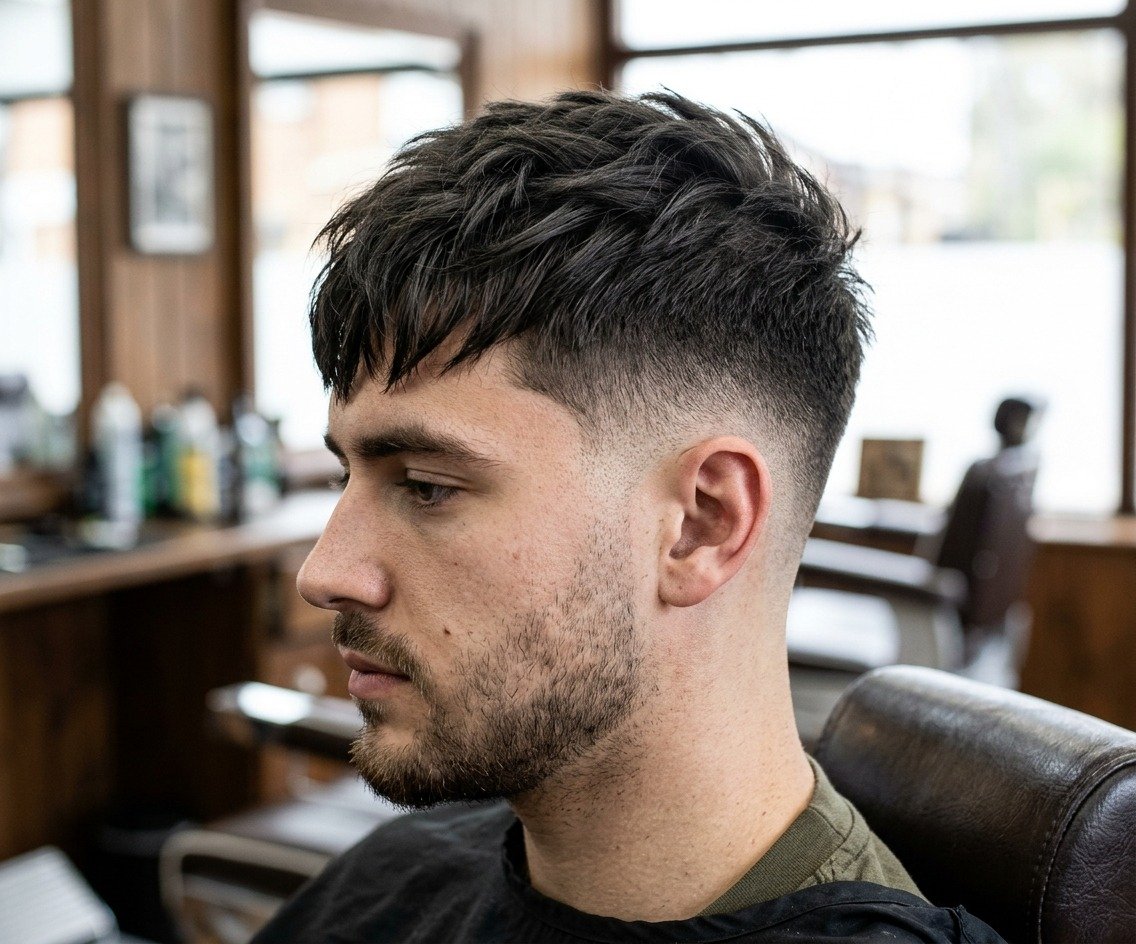
A textured fringe is a fringe cut with uneven, point-cut layers instead of one blunt line, so the front falls in soft, separated pieces across the forehead. It looks deliberately undone: relaxed, modern, and easy to style. It pairs naturally with a taper fade, which keeps the sides clean while the textured top does the work. This guide explains what a textured fringe is, which taper fade suits it, the best styles to try, and exactly what to tell your barber.
Textured Fringe at a Glance
| Length on top | 2 to 4 inches |
| Finish | Matte, piecey, lived-in |
| Sides | Low or mid taper fade |
| Trims | Every 3 to 4 weeks |
| Best for | Straight, wavy, and thick hair |
What Is a Textured Fringe?
A textured fringe is a fringe, or bangs, cut to create softness and movement rather than a solid, even line. Your barber builds it with layers of different lengths, using point cutting or texturizing scissors to remove bulk and feather the ends. The result looks tousled by design: light, airy, and full of movement, instead of heavy and blocky.
It is not the same as a heavy fringe. A heavy fringe is dense and blunt. It sits like a solid block across the forehead and needs precise cutting to look right. A textured fringe is forgiving. If the length is slightly off, the texture hides it, and a bad hair day just looks more intentional. That forgiveness is why it suits first-time fringe wearers so well.
Textured Fringe With a Taper Fade
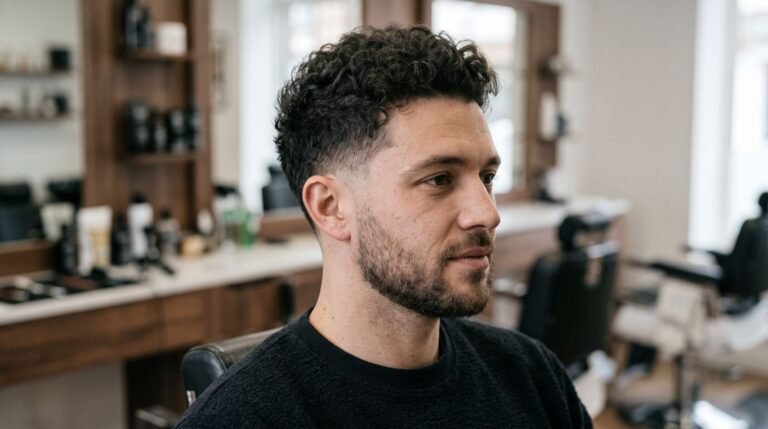
A taper fade shortens the sides and back in a smooth gradient while the top keeps its length. The taper fade textured fringe combination is popular because the clean sides make the messy top stand out. The contrast frames the fringe and keeps the whole cut looking intentional instead of overgrown.
Low Taper Fade With a Textured Fringe
A low taper fade with a textured fringe starts just above the ear. The change is subtle, and most of the sides keep their length. It is the easiest version to wear: neat enough for school and offices, and soft as it grows out. If this is your first fringe, start here.
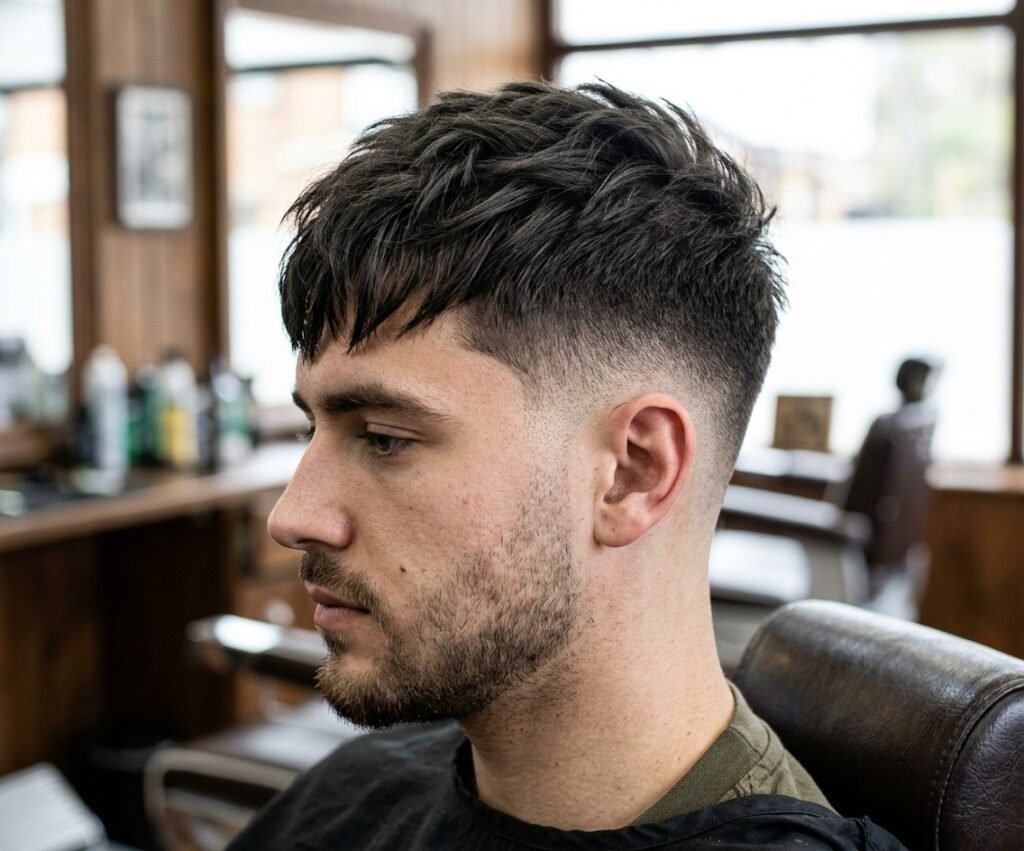
Mid Taper Fade Fringe
A mid taper fade fringe starts around the temple. It gives more contrast than a low taper while staying balanced. The sides look clearly shorter, which suits thick hair and stronger jawlines. It is the middle ground: sharper than low, softer than high.
| Taper | Where it starts | Contrast | Grow-out |
| Low taper | Just above the ear | Subtle | Most forgiving |
| Mid taper | Around the temple | Moderate | Balanced |
| High taper | Above the temple | Bold | Shows regrowth fastest |
Best Textured Fringe Styles to Try
The fringe does most of the work, but the length and finish change the look completely.
Short and Choppy
About two inches on top, cut heavily textured and pushed into loose, irregular points. This is the sharpest, lowest-maintenance version. Work a little matte clay through dry hair and pinch the ends for separation.
Messy Forward Fringe
The top is pushed forward with fingers, so choppy layers fall toward the forehead in an undone finish. It works best on straight or slightly wavy hair. Ask your barber for point-cut texture without a heavy, blunt front edge.
Side-Swept and Curtain Fringe
The fringe sweeps to one side, or splits in the middle like curtains. Both versions frame the eyes and cheekbones and soften angular faces. Blow-dry the front pieces away from the part, then let them fall back naturally.
Wavy and Curly Fringe
Wavy hair brings natural movement, so the fringe needs less styling. Curly hair can work too, but keep more length and ask for a specialist cut: curls shrink as they dry, so a fringe cut too short will sit higher and wider than planned.
Two-Block With a Low Taper
This Korean-inspired cut keeps a longer, layered top that hangs over short sides, with a low taper cleaning up the edges. The fringe falls to the brows, and the step between top and sides is part of the style. Keep enough top length to cover the disconnected line when the hair falls down.
Who Should Get a Textured Fringe?
The cut adapts well because the fringe length, texture, and sides are chosen separately.
Hair Type
Straight hair shows the texture clearly and holds the shape with little effort. Wavy hair is the easiest match, since the natural wave does half the styling. Thick hair benefits most from point cutting, which removes bulk and stops the fringe from turning blocky. Fine hair needs care: keep enough density on top, and do not over-thin, or the fringe will look flat and separated.
Face Shape
Oval faces suit almost every version. Round faces benefit from height on top and a longer fringe, which adds length. Square faces suit softer, wispy pieces that ease a strong jaw. Long faces suit a fringe that covers more forehead, with less height on top. Heart-shaped faces suit a longer, layered fringe that balances a wider forehead with a narrower chin.
Cowlicks and Widow’s Peaks
A cowlick is a swirl at the hairline that fights the direction you comb. Do not fight it. Cut the fringe to follow its natural direction, or keep the fringe longer so its weight holds the swirl down. A widow’s peak creates a natural V shape: cut the fringe to follow the V, or choose a side-swept style. Product alone cannot fix a cut that works against your growth pattern.
How to Ask Your Barber for a Textured Fringe
Tell your barber three things: how long the fringe should be, how much texture you want, and which taper fade you want on the sides. Bring photos from the front, side, and back, ideally of someone with your hair type. Note that barbers use different names for this cut, such as textured crop or French crop with texture, so describe the finish, not just the name.
Here is a simple script you can use:
“I would like a textured fringe. Keep about three inches on top, heavily point-cut for texture, with the fringe falling just above my eyebrows. Give me a low taper on the sides, blended, not skin. Matte finish.”
Repeat the plan back before the cutting starts. It takes ten seconds and catches most miscommunication.
How to Style a Textured Fringe
Styling takes about two minutes. Start with towel-damp hair and apply sea salt spray or a light volumizing mousse. Blow-dry forward with your fingers, pointing the nozzle downward, so the fringe sets in the direction you want it to fall. Then warm a pea-sized amount of matte clay or paste between your palms, work it through from back to front, and pinch the ends into separated pieces. Leave the finish slightly irregular: once every strand looks placed, the relaxed character is gone.
Matte clay or paste suits most hair. Sea salt spray adds grip and volume for fine hair, texture powder lifts the roots, and a light cream suits longer or wavier fringe. Avoid heavy gels and greasy pomades. They turn texture stiff and shiny, which is the opposite of this cut.
Cost, Time, and Maintenance
A textured fringe cut usually costs between $25 and $50 in a typical barbershop. In bigger cities or premium shops, it can run $40 to $70 or more. A skin finish or sharp line-up may add a little extra. The appointment usually takes 20 to 40 minutes, including the consultation.
Book a trim every three to four weeks. The fringe loses its shape fast, and once the sides grow heavy, the whole cut blurs. Between visits, tidy only the neckline. Snipping the fringe yourself is risky: one wrong cut leaves a visible step, so leave fringe trims to the barber unless you are confident with small snips.
Growing one out is gentle. Because the edge is layered rather than blunt, it blends into longer hair as it lengthens. Push it to the side, grow it into a curtain fringe, or let it become a longer crop, and tell your barber you are growing it out so they only clean the edges.
Common Mistakes to Avoid
- Walking in and just saying “a fringe,” which can mean ten different cuts.
- Fighting a cowlick instead of cutting with its direction.
- Using too much product, which turns texture stiff and greasy.
- Over-thinning fine hair until the fringe looks flat and stringy.
- Asking for a blunt line when you wanted soft texture.
- Waiting too long between trims until the shape disappears.
Frequently Asked Questions
What is a textured fringe?
A textured fringe is a fringe cut with uneven, point-cut layers instead of one blunt line. The front falls in soft, separated pieces, giving a relaxed, tousled finish rather than a solid block.
Should I get a textured fringe?
Yes, if you want a low-maintenance style with movement. It suits straight, wavy, and thick hair, most face shapes, and anyone willing to trim every three to four weeks. It is less suited to very tight curls without a specialist cut.
What is the difference between a textured fringe and a French crop?
A French crop is a short cut with a blunt, straight-across fringe. A textured fringe keeps more length and uneven layers, so the front looks softer, messier, and less uniform.
Does a textured fringe suit curly hair?
Yes, with adjustments. Keep the fringe longer to allow for shrinkage, and ask for a cut that follows your curl pattern. A specialist cut matters, so the fringe does not sit too short or too wide once dry.
How do I style a textured fringe?
Apply sea salt spray to damp hair, blow-dry forward with your fingers, then work a pea-sized amount of matte clay through and pinch the ends. Leave the finish slightly irregular.
How often should I trim a textured fringe?
Every three to four weeks. The fringe and the taper both lose their shape quickly, and soft tapers grow out more gracefully than skin fades.
Can I cut a textured fringe at home?
A tiny tidy-up is possible, but a full fringe cut is risky. The layered edge is hard to judge on yourself, and one wrong snip shows clearly. Leave it to your barber.
Which taper fade goes best with a textured fringe?
A low taper fade is the safest first choice: subtle, neat, and easy to grow out. A mid taper fade fringe gives more contrast and suits thick hair. Both keep the sides clean so the textured top stands out.
Conclusion
A textured fringe is the easiest way to make a short cut look modern. It suits most hair types and face shapes, grows out softly, and takes two minutes to style. Pair it with a low taper fade for a subtle, wearable look, or a mid taper fade fringe for more contrast. Tell your barber the length, the texture, and the taper, bring a photo, and keep the trims regular. Do that, and the fringe will look intentional every day, not accidental.