Taper vs Fade: Key Differences and How to Choose the Right Haircut for You
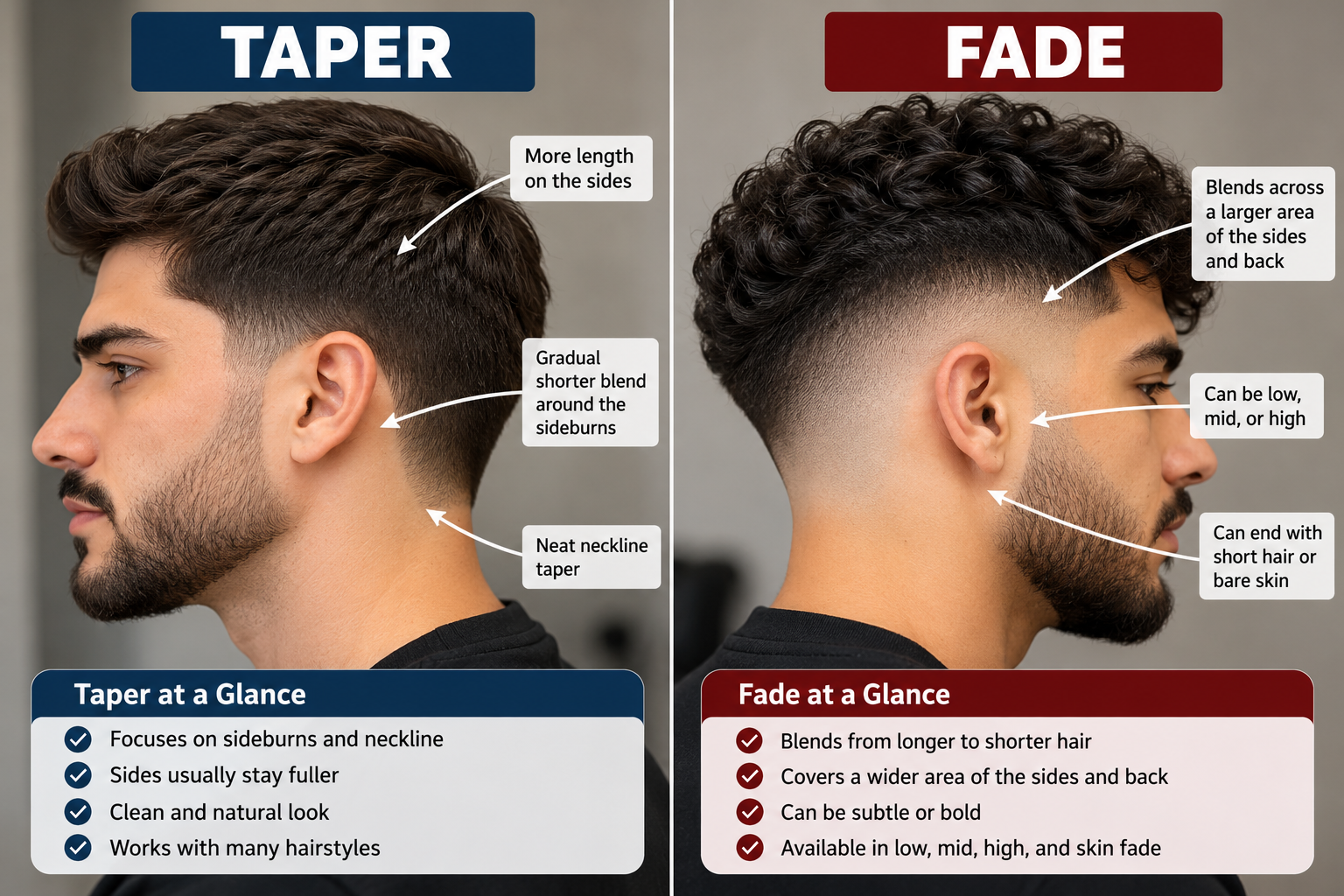
Choosing between a taper and a fade can be confusing, especially when both haircuts create a gradual change in hair length. However, they are not exactly the same. A taper usually focuses on the sideburns and neckline, while a fade often blends a larger area of the sides and back.
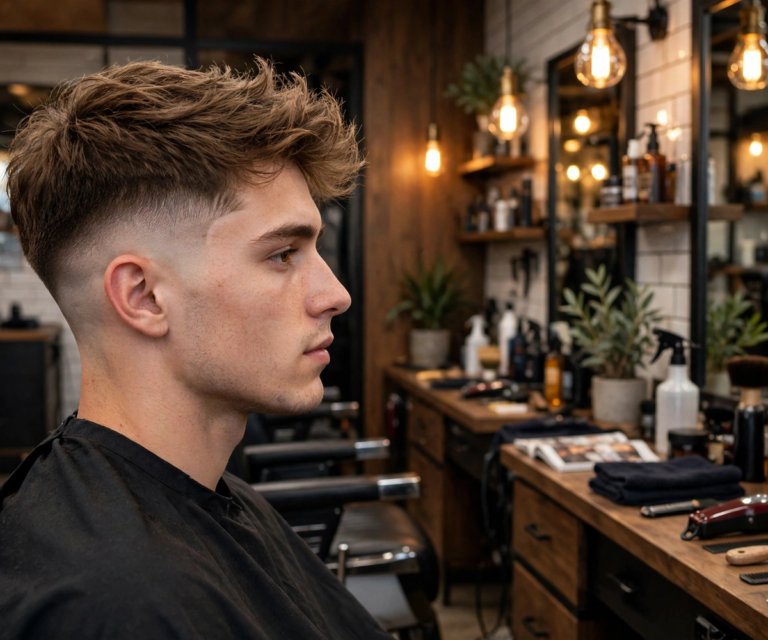
Understanding these differences can help you choose a haircut that matches your personal style, hair type, and daily routine. In this guide, you will learn about popular taper and fade styles, compare their differences, and discover how to explain your preferred haircut to your barber. If you prefer a subtle and clean appearance, a low taper fade haircut can be a great option because it keeps the shorter blend close to the ears and neckline.
What Is the Difference Between a Taper and a Fade?
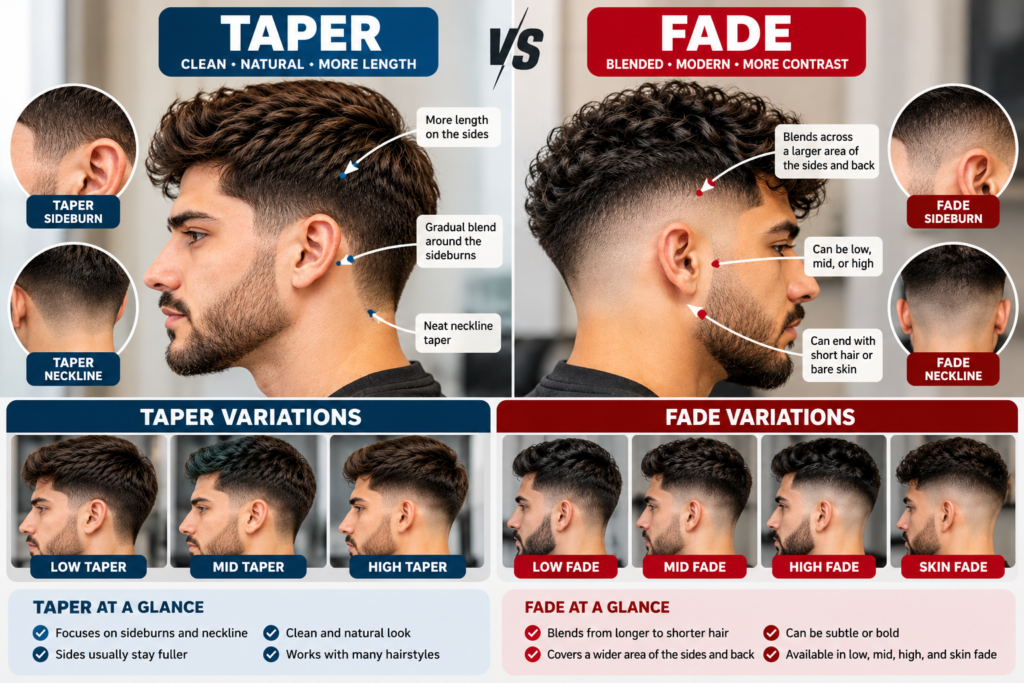
The main difference between a taper and a fade is the area where the hair becomes shorter.
A taper haircut gradually shortens the hair around the sideburns and neckline. Most of the hair on the sides remains longer, giving the haircut a clean and natural finish.
A fade haircut blends the hair from longer to shorter across the sides and back. The blend can cover a small or large area, depending on whether you choose a low, mid, or high fade.
Here is a quick comparison:
| Feature | Taper | Fade |
| Main area | Sideburns and neckline | Sides and back |
| Hair on the sides | Usually stays fuller | Often becomes shorter over a wider area |
| Overall appearance | Natural and subtle | Can be subtle or bold |
| Blend placement | Focused around the edges | Low, mid, or high |
| Shortest length | Depends on the style | Can end with short hair or bare skin |
| Maintenance | Often grows out softly | Very short fades may need frequent touch-ups |
These are general differences rather than strict rules. Some barbers use haircut names differently, so explain the exact result you want before the haircut begins.
What Is a Taper Haircut?
A taper haircut gradually reduces hair length around the sideburns and neckline. Unlike many fades, it does not usually remove as much hair from the entire side of the head.
This makes it a practical choice if you want neat edges while keeping more length and volume. A taper can also complement different hairstyles, including side parts, quiffs, short cuts, and curly tops.
There are three common taper variations.
Low Taper
A low taper keeps the shorter blend close to the ears and neckline. Most of the hair on the sides stays full.
It is a good option if you want a clean haircut without making a major change to your overall hairstyle. It can work with both short and longer hair on top.
Mid Taper
A mid taper places the shorter blend slightly higher than a low taper. This creates a more noticeable shape around the sides while keeping much of the original length.
The exact height can vary between barbers, so explain how far up you want the shorter section to go.
High Taper
A high taper brings the shorter area farther up around the temples or sides. It creates a more noticeable finish while keeping the shorter blend focused around selected areas.
A high taper is not automatically the same as a high fade. The amount of hair being shortened and the coverage of the blend are important differences.
What Is a Fade Haircut?
A fade haircut gradually blends longer hair into shorter hair across the sides and back. The blend can begin at different heights and finish at different lengths.
Fades are commonly paired with buzz cuts, textured crops, pompadours, and curly hairstyles. The final appearance depends on the blend placement, shortest length, and amount of hair left on top.
Here are the most common types of fades.
Low Fade
A low fade starts close to the ears and neckline. The shorter section stays near the bottom of the head, leaving more length above it.
Choose this style if you want a defined blend without taking the shorter section too high.
Mid Fade
A mid fade starts around the middle of the sides. It creates a balance between a low fade and a high fade.
This option is useful if you want the blend to be clearly visible but do not want it to start too high.
High Fade
A high fade starts higher on the sides of the head. It creates a stronger contrast between the longer hair on top and the shorter sides.
It can work well with buzz cuts and textured hairstyles. However, the result also depends on your head shape, hair texture, and preferred appearance.
Skin Fade
A skin fade blends the hair down to bare skin at its shortest point. The skin-short area can cover a larger section of the sides and back.
Not every fade is a skin fade. If you want the hair completely removed at the bottom, tell your barber that you want a skin finish.
What Is a Taper Fade Haircut?
A taper fade combines elements of a taper and a fade. The term often describes a gradual, short blend around the temples, sideburns, and neckline.
However, the meaning can vary between barbers. Some use the term for a neat blend around the edges, while others create a more noticeable fade.
Mid Taper Fade
A mid taper fade places the shorter blend around the middle area of the temples and sides, while keeping the finish focused on selected areas.
It can be a good option if you want more definition than a low taper but do not want a wide fade across the sides.
High Taper Fade
A high taper fade brings the shorter blend higher around the temples and sides. It gives the edges a more noticeable finish while keeping the overall coverage different from a traditional high fade.
The exact result depends on the barber’s technique and how much hair you want to keep.
Taper Fade vs Regular Fade
A taper fade usually focuses on smaller areas, such as the temples, sideburns, and neckline. A regular fade often blends a wider section of the sides and back.
For example, a taper fade can keep most of the sides fuller while cleaning up the edges. A regular low or mid fade may create a shorter transition across more of the head.
The names are not always used consistently by barbers. Explain the coverage and blend height you want instead of relying only on the term.
Skin Fade vs Skin Taper
A skin fade reaches bare skin at the shortest point and may cover a wider area of the sides and back.
A skin taper usually describes a skin-short finish around smaller areas, such as the sideburns and neckline. However, not every barber uses this term in exactly the same way.
Before the haircut begins, ask your barber to show you which areas will be taken down to bare skin.
What Do Low, Mid, and High Mean?
Low, mid, and high describe the position where the shorter blend starts. These terms do not tell you how short the hair will be at the bottom.
- Low: The blend stays closer to the ears and neckline.
- Mid: The blend starts around the middle of the sides.
- High: The blend starts higher up on the sides.
The shortest finish is a separate choice. For example, you can have a low fade that also reaches bare skin at the bottom.
Low Taper vs Low Fade: Which Should You Choose?
A low taper and a low fade can look similar because both keep the shorter area near the bottom of the head. The difference is usually how far the blend extends.
A low taper focuses mainly on the sideburns and neckline. More length remains on the sides, so the haircut keeps a fuller appearance.
A low fade blends a wider section of the lower sides and back. This creates a more visible transition between the shorter and longer hair.
Choose a low taper if you want to keep more length. Choose a low fade if you prefer a more noticeable blend around the lower sides.
Taper vs Skin Fade: Which One Is Right for You?
A regular taper and a skin fade create different results.
A taper usually keeps more hair on the sides and focuses on cleaning up the edges. It is suitable if you prefer a fuller appearance and do not want a large area of your head shortened.
A skin fade takes the hair down to bare skin at its shortest point. It creates a stronger contrast between the sides and the hair on top.
Choose a taper if you want to preserve more length around the sides. Choose a skin fade if you prefer very short sides with a clean skin finish.
Remember that a taper can also include a skin-short finish around the sideburns and neckline. The important difference is how much of the head is blended down to skin.
Which Haircut Is Best for Your Hair Type and Lifestyle?
There is no single best option for everyone. Your preferred appearance, hair texture, and maintenance routine should all influence your decision.
Choose a Taper for a Natural Style
A taper may suit you if you want to keep more length on the sides or prefer a classic haircut for work, school, or everyday wear.
It can also complement longer hairstyles because the edges can be cleaned up without removing too much hair from the sides.
Choose a Fade for More Contrast
A fade may be a good choice if you prefer shorter sides and a more noticeable blend. You can choose a low, mid, or high fade depending on how much contrast you want.
A low fade can look relatively subtle, while a high fade or skin fade creates a stronger difference between the top and sides.
What About Curly, Coily, or Thick Hair?
Both tapers and fades can work with straight, wavy, curly, and coily hair. The best option depends on the shape you want and how your barber works with your hair texture.
A taper can keep curls full while cleaning up the sideburns and neckline. A fade can create a clearer contrast between the top and sides.
If you have thick hair, discuss how much weight should be removed from the sides. If your hair is tightly curled or coily, explain how much volume you want to keep on top.
Your hair texture does not automatically determine which haircut is best. Your preferred style and your barber’s experience also matter.
Burst Fade vs Taper: What Is the Difference?
A burst fade blends the hair in a curved shape around the ear. It is often paired with longer hair on top, curls, or a mohawk-style haircut.
A taper usually focuses on the sideburns and neckline instead of creating a curved blend around the ear.
Another popular variation is the drop fade. Its blend curves downward toward the back of the head.
Burst and drop describe the shape of the blend, while low, mid, and high describe its placement. If you want one of these styles, show your barber a reference photo to make the desired shape clear.
How to Choose the Right Fade Height
Choosing a fade height depends on how much of the sides you want shortened and how noticeable you want the blend to look.
- Low fade: Consider this if you want the shorter blend to stay near the ears and neckline.
- Mid fade: Consider this if you want a more visible blend that starts around the middle of the sides.
- High fade: Consider this if you prefer a shorter look higher up the sides and stronger contrast with the top.
There is no universal best height. Your preferred hairstyle, hair length, and the result you want should guide your choice.
How to Ask Your Barber for the Right Haircut
The easiest way to avoid confusion is to describe the result you want instead of relying on a haircut name alone.
Here are two examples you can use:
If you want a taper:
“I want a low taper. Keep most of the length on the sides and clean up the sideburns and neckline.”
If you want a fade:
“I want a low fade. Keep the blend low and leave some hair at the bottom. I do not want a skin fade.”
Before the haircut begins, discuss these four details:
- Blend height: Do you want a low, mid, or high blend?
- Shortest length: Should some hair remain, or do you want bare skin?
- Coverage: Should the short area stay near the edges or extend across the sides and back?
- Top length: How much hair do you want to keep on top?
A reference photo showing the front, sides, and back can also help your barber understand the shape you want.
What Do Clipper Guard Numbers Mean?
Clipper guard numbers help describe how much hair a barber should leave. However, the final length can depend on the clipper, guard, and cutting technique.
If you have a particular length in mind, ask your barber which guard they plan to use. Do not assume that a guard number alone will guarantee the exact result shown in a reference photo.
How Long Does a Taper or Fade Haircut Last?
Both haircuts change as your hair grows, but they may look different during the growing process.
A taper often grows out softly because the shorter area is limited to the edges. This can make the change less noticeable over time.
A very short fade may show regrowth more quickly because the difference between the short sides and longer top becomes less sharp.
Your maintenance schedule depends on your hair growth, the length of your haircut, and how neat you want it to look. Ask your barber when you may need your next touch-up.
Frequently Asked Questions
Is a taper the same as a fade?
No. A taper usually focuses on the sideburns and neckline, while a fade often blends short hair across a larger area of the sides and back.
Which is better, a taper or a fade?
A taper may suit you if you prefer a natural look and more length on the sides. A fade may suit you if you want shorter sides and a more noticeable blend. The best choice depends on your personal preference.
Is a taper fade different from a low fade?
It can be. A taper fade often focuses on the edges, while a low fade may extend across more of the lower sides and back. Explain the coverage you want to your barber.
Does a skin taper go down to the skin?
The term usually refers to a skin-short finish around the tapered areas. Since barbers may use the term differently, confirm exactly where the hair will be taken down to bare skin.
Which haircut is easier to maintain?
A taper often grows out softly, while a very short fade may need more frequent touch-ups. Your hair growth and preferred finish affect maintenance.
Can you change a drop fade into a low taper?
Sometimes, but the hair may need time to grow before the shape can be changed. A barber can check your current haircut and explain what is possible.
Which haircut works best with curly hair?
Both can work well. A taper keeps the edges neat, while a fade creates more contrast between the top and sides. Choose based on the shape you prefer.
How do I know if I want a skin fade?
Choose a skin fade if you want the hair to reach bare skin at its shortest point. If you want some hair left at the bottom, ask for a fade with a longer finish.
What is the difference between a taper fade and a regular fade?
A taper fade usually focuses on the temples, sideburns, and neckline, while a regular fade may blend a wider area of the sides and back. The exact result depends on the barber’s technique and the style you request.
Final Thoughts: Taper or Fade?
The main difference between a taper vs fade is where the hair becomes shorter and how much of the sides and back are blended.
A taper usually keeps more length on the sides, while a fade often creates a wider blend. A taper fade combines elements of both, although the exact result depends on the barber.
Before choosing, consider your preferred haircut shape, blend height, shortest length, and maintenance routine. Explain these details to your barber so you can get a haircut that matches your style.