Black Men Taper Fade Guide: Low, Mid & High Fades, Styles and Care Tips
A taper fade for Black men is a clean, gradual blend on the sides and back that keeps the natural texture on top. It suits waves, curls, coils, twists, and afros. If you want one short answer: start with a mid taper fade. Go low for a subtle look, and go high for a bold one.
People search for this cut in many ways — “low taper fade black male,” “high taper fade black male,” “mid taper fade black male,” “taper fade black men,” “taper fade black,” and “black taper fade.” They all point to the same family of cuts. This guide covers every version, so you can pick the right one and ask for it with confidence.
Taper Fade at a Glance
| Fade height | Where the blend starts | Best for | Upkeep |
| Low taper fade | Just above the ear | Subtle, professional looks | Touch-up every 1–2 weeks |
| Mid taper fade | Halfway up the side | Most hair types and styles | Touch-up every 1–2 weeks |
| High taper fade | Near the temple | Bold contrast, volume on top | Touch-up every 1–2 weeks |
What Is a Taper Fade for Black Men?
A taper fade gradually shortens the hair from the top down toward the sideburns, temples, and neckline. The shortest point sits at the edges, and the length increases smoothly as it moves up.
For Black men, this cut works so well because afro-textured hair holds its shape. Coils and curls keep volume and structure on top, while the tapered sides frame the face. A lineup, also called an edge-up or shape-up, often finishes the look: the crisp line along the forehead, temples, and beard.
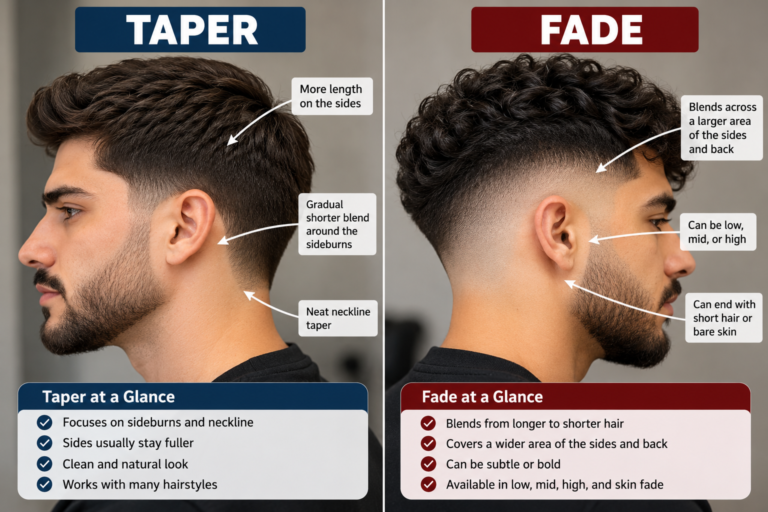
A taper is not the same as a fade. A taper only shortens the hair at the edges, around the sideburns and neckline, and it does not have to go down to the skin. A fade blends much further up the head and often ends at the skin. A taper fade blends like a fade but keeps more hair around the edges than a full skin fade. That makes it softer, easier to grow out, and simpler to maintain.
Low, Mid, and High Taper Fades
The height of the blend changes the whole look. The top can stay the same. Only the sides change.
Low Taper Fade
The low taper fade for Black men starts just above the ear and follows the natural hairline. The change is subtle. Most of the sides keep their length, and only the edges get shorter.
This is the best choice if you want a clean cut that stays quiet. It suits offices, first fades, and short styles like a buzz cut, a short afro, or waves. It also grows out well because the blend sits low.
Mid Taper Fade
The mid taper fade for Black men starts about halfway up the side of the head, roughly an inch or two above the ear. It gives a clear, balanced shape without going too bold.
This is the most versatile height. It works with curls, coils, waves, twists, and afros because it shows off the texture on top while keeping the sides tidy. If you cannot decide, choose this one.
High Taper Fade
The high taper fade for Black men starts near the temple and clears more hair from the sides. The contrast between the sides and the top is strong, so the top stands out.
This is the boldest choice. It suits defined curls, high-volume afros, sculpted waves, and styles with height, like a frohawk. It can also make a round face look longer. It needs more frequent touch-ups, since growth shows faster on the higher blend. For more hairstyle ideas and details on choosing the right blend, explore our high taper fade guide.
Best Taper Fade Styles for Black Men
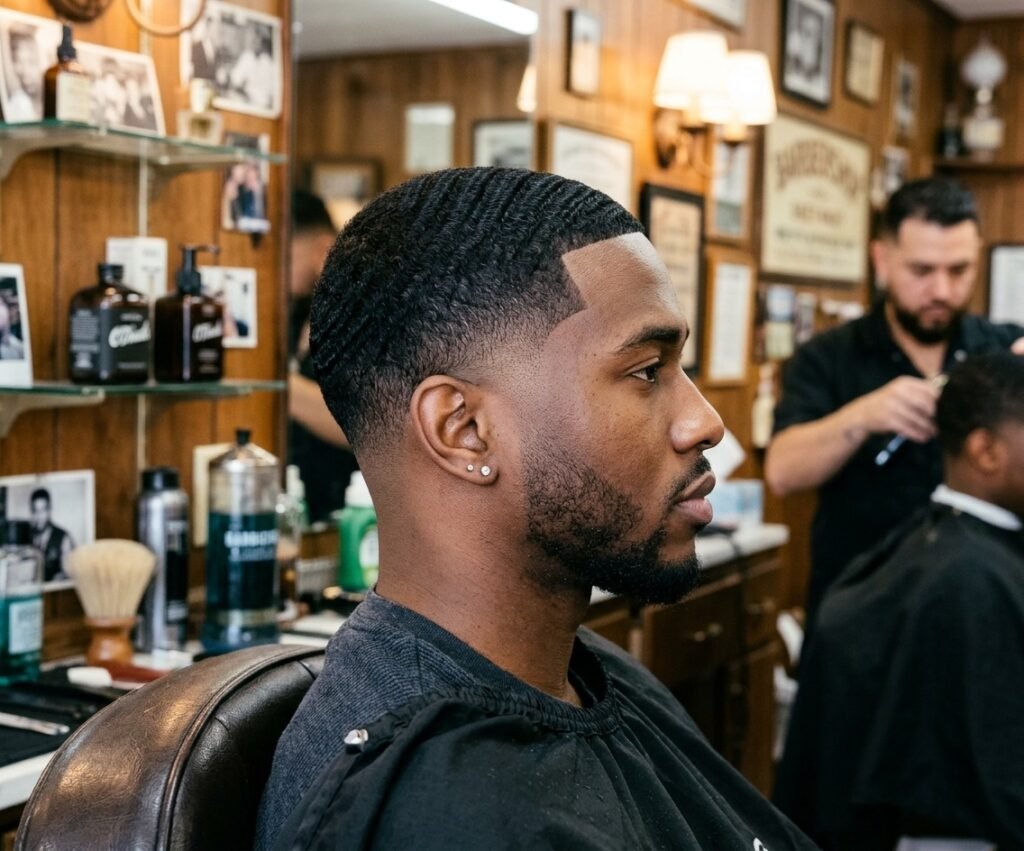
The fade is only the base. The top decides the style. Here are the combinations barbers see most.
360 waves. A low or mid taper keeps the wave pattern intact while the temples and neckline stay clean. Brush daily, use a light pomade, and wear a durag at night.
Curls and coils. A taper fade removes bulk from the sides and leaves curls structured on top. For tight 3C to 4C curls, a curl cream or leave-in conditioner keeps definition and fights dryness.
Afro. A taper shapes an afro by controlling volume at the edges. The top stays rounded and full, and the sides stop it from looking heavy. Use a pick or afro comb to keep the shape, and moisturize so the hair stays soft.
Twists and sponge twists. Twists add texture and depth on top, and a mid taper is the classic partner.
Braids and locs. A taper fade pairs well with cornrows, braids, and locs. The fade keeps the edges sharp while the braided or locked top carries the style. Tell your barber not to cut into the braided sections.
Blowout. A blowout taper lifts and stretches the curls for a fluffy, full look. The taper keeps the edges sharp.
Burst and temple variations. A burst taper curves around the ear in a half-circle and suits curly tops and frohawks. A temple taper focuses the blend at the temples and pairs with a longer top.
With a beard. Blend the sideburns into the beard with a lower guard so the fade flows into the beard line. Beard oil and a brush keep it soft and neat.
How to Choose: Hair Type and Face Shape
Start with your hair, then check your face shape.
Coily 4C hair holds shape well, so any taper height works. Moisture matters most, because tight coils dry out fast. Wavy hair needs a low or mid taper so the brush pattern stays intact. Looser curls suit a mid taper, which shows the curl pattern without too much contrast.
For face shape, high tapers add height and suit round faces. Low and mid tapers suit square faces. Oval faces suit nearly every height. Low tapers soften the temple area on heart-shaped faces. These are guides, not rules.
What to Tell Your Barber
Clear words and a photo beat a vague request. Say these four things:
- The height: low, mid, or high taper.
- The finish: tapered to the skin, or kept slightly longer at the edges.
- The top: the style and length you want to keep.
- The lineup: how sharp you want the edge-up, and how natural the hairline should look.
Bring two or three photos of the same cut from different angles. Photos show the blend height better than words do. Ask your barber to check both sides before finishing.
Do not let the lineup push your hairline back. A sharp edge-up should follow your natural hairline, not reshape it. If your hairline is thinning or receding, tell your barber. A softer lineup and a lower taper usually look better than a hard, pushed-back line.
How to Style and Care for a Taper Fade
Daily care is simple, but it has to be consistent. Moisture comes first. Afro-textured hair dries out easily, so use a leave-in conditioner, curl cream, shea butter, or a light oil on damp hair.
For waves, brush in the direction of the pattern every day, and wear a durag or wave cap at night. For curls and afros, use a pick or a curl sponge, and sleep with a durag or bonnet to protect the shape. Wash with a gentle shampoo and condition regularly.
Keep the edges fresh between cuts. A quick lineup touch-up every few days holds the shape, but do not edge the same line again and again.
Cost, Cut Time, and How Long It Lasts
A taper fade usually costs $25 to $50 at a local barbershop. Premium shops and big cities often charge $40 to $70 or more, and a cut with a beard trim or design costs extra. Prices vary by city and barber, so treat these as typical ranges.
The cut itself takes about 30 to 45 minutes. A first visit, or a cut with twists, braids, or a design, takes longer.
A taper fade stays sharp for about 7 to 14 days. The blend grows out first, so book a touch-up every 1 to 2 weeks if you want it crisp. A full re-cut every 2 to 4 weeks keeps the shape right.
Common Problems and Mistakes
Razor bumps and ingrown hairs are the most common problem with close tapers and sharp lineups. They show up as sore red bumps along the neckline, jaw, or hairline. Shaving too close, cutting against the grain, and dirty blades make them worse. Use a clean blade, shave with the grain where you can, and moisturize after. Do not pick or squeeze the bumps. If bumps keep coming back, spread, or scar, see a dermatologist.
Other mistakes are easy to avoid. Cutting too high at home turns a low taper into a mid or high fade. Skipping moisturizer leads to dry, dull hair. Overusing heavy products makes the top look greasy.
Growing Out a Taper Fade
A taper fade grows out better than a skin fade because more hair stays at the edges. Let the top grow first and keep the taper trimmed a little longer each visit. Ask your barber to soften the blend instead of re-cutting it sharply. After 6 to 8 weeks, the sides catch up enough for a longer style.
Frequently Asked Questions
What is a taper fade for Black men?
It is a gradual blend on the sides and back that shortens toward the edges while keeping the natural texture on top. It is finished with a clean neckline and often a lineup.
Is a taper fade good for 4C hair?
Yes. Tight coils hold shape well, so the taper frames them cleanly. Moisture is the key, since 4C hair dries out fast. Use a leave-in conditioner or curl cream.
Should I get a low, mid, or high taper fade?
Choose low for a subtle, professional look, mid for the most versatile option, and high for bold contrast. If you are unsure, start with a mid taper fade.
How is a taper fade different from a regular fade?
A taper only shortens the hair at the edges and does not have to reach the skin. A fade blends further up the head and often ends at the skin.
How long does a taper fade last?
It stays sharp for about 7 to 14 days. Book a touch-up every 1 to 2 weeks and a full re-cut every 2 to 4 weeks to keep the blend clean.
What should I tell my barber for a taper fade?
Say the height, the finish, the top style and length, and how sharp you want the lineup. Bring two or three photos from different angles.
Can I cut a taper fade at home?
You can touch up the edges with clippers and a trimmer, but a full taper is hard to do on yourself. The back blend needs a second mirror or a second person. A barber is the safer choice for the first cut.
Does a taper fade work with waves, twists, or locs?
Yes. Low and mid tapers keep wave patterns intact, and tapers pair well with twists, braids, and locs. Just tell your barber not to cut into the styled sections on top.
Conclusion
The taper fade is one of the most reliable haircuts for Black men because it adapts to every texture and every setting. A low taper keeps things subtle, a mid taper balances clean edges with styling freedom, and a high taper makes a bold statement. Pick the height that fits your hair, your face, and your routine. Give your barber a clear brief and a photo, keep the hair moisturized, and touch up the edges on time.