Curly Hair for Men: Best Types, Hairstyles, Styling, and Easy Care Tips
Curly hair can look stylish, full, and natural. However, it can also become dry, frizzy, or difficult to manage. Choosing the right haircut and using suitable hair products can make your curls easier to style and maintain.
Whether you have loose waves, defined curls, or tight coils, understanding your hair is a good place to start. This guide covers curly hair types, popular hairstyles for men, taper fade options, styling products, and simple care tips.
What Is Curly Hair?
Curly hair has a natural pattern that bends, twists, or forms spirals. Some people have loose waves, while others have springy curls or tight coils. Genetics plays a major role in determining your natural curl pattern.
Curly hair also varies in thickness, density, and moisture needs. Fine curls may lose volume when heavy products are used. Thick or tightly coiled hair may need more conditioning and gentle detangling.
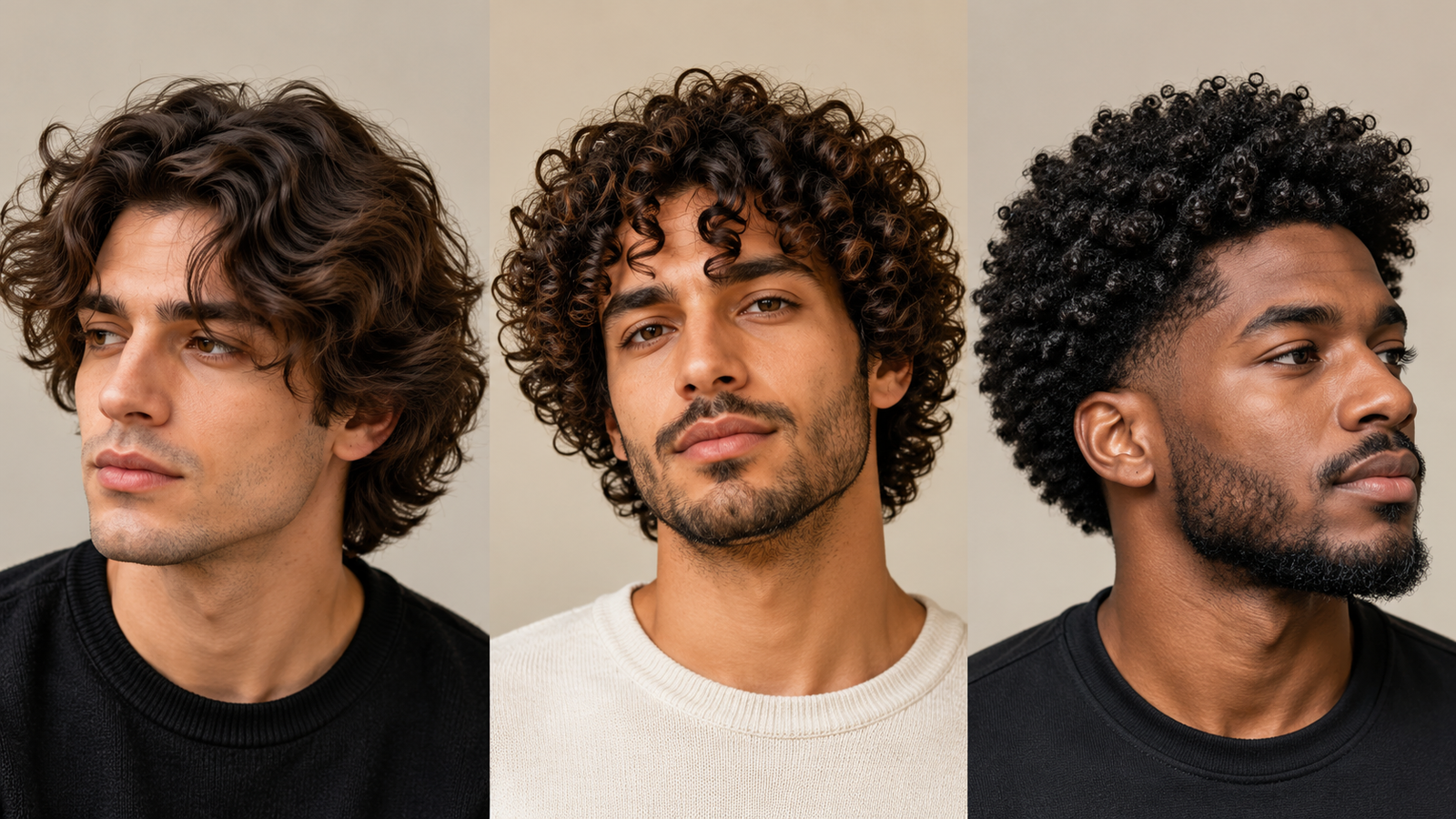
There are three common texture groups:
- Wavy hair: Forms loose or defined S-shaped waves.
- Curly hair: Forms visible loops, spirals, or ringlets.
- Coily hair: Forms very tight curls or zigzag patterns.
Knowing these basic texture groups can help you understand the differences between wavy, curly, and coily hair.
What Are the Different Types of Curly Hair?
A widely used hair classification system groups textures into Types 1 through 4. Type 1 is straight, Type 2 is wavy, Type 3 is curly, and Type 4 is coily. Each group has three subtypes, labeled A, B, and C.
This system is a useful starting point, but it does not describe every feature of your hair. Thickness, density, and porosity can also affect how your curls respond to different products.
Type 2: Wavy Hair
Type 2 hair forms an S-shaped pattern rather than complete curls.
- Type 2A: Loose, soft waves that may look almost straight.
- Type 2B: More noticeable waves that may become frizzy.
- Type 2C: Deep waves that often begin near the roots and have a more defined shape.
Men with Type 2B or 2C hair may benefit from a lightweight mousse or styling cream. Start with a small amount to define your waves without making them feel heavy.
Type 3: Curly Hair
Type 3 hair forms visible curls or spirals. The pattern can range from loose loops to tight corkscrews.
- Type 3A: Large, loose curls with a soft shape.
- Type 3B: Tighter, springier curls with more volume.
- Type 3C: Small, dense corkscrew curls.
A suitable styling product can help Type 3 curls maintain their shape and look more defined.
Type 4: Coily Hair
Type 4 hair has very tight coils or zigzag-shaped patterns. It may look shorter than its actual length because of shrinkage.
- Type 4A: Small, visible coils with an S-shaped pattern.
- Type 4B: Tighter bends that may form a Z-shaped pattern.
- Type 4C: Very tight coils that may have less visible definition without stretching.
Coily hair can be more prone to breakage during rough handling. Gentle detangling, regular conditioning, and careful styling can help protect the hair.
How to Identify Your Curl Type
Wash your hair and allow it to dry naturally without forcing it into a particular shape. Look at the pattern that forms on its own. It may appear as waves, loose spirals, tight curls, or small coils.
You may have more than one curl type on your head. Pay attention to other features too. Hair thickness describes how fine or coarse each strand is. Density refers to how much hair grows on your scalp. Porosity describes how readily your hair absorbs and retains moisture.
These characteristics can be just as useful as curl type when choosing a haircut or styling routine. Once you understand your curl pattern, learn how to style curly hair to define your curls and make them easier to manage.
Best Curly Hairstyles for Men
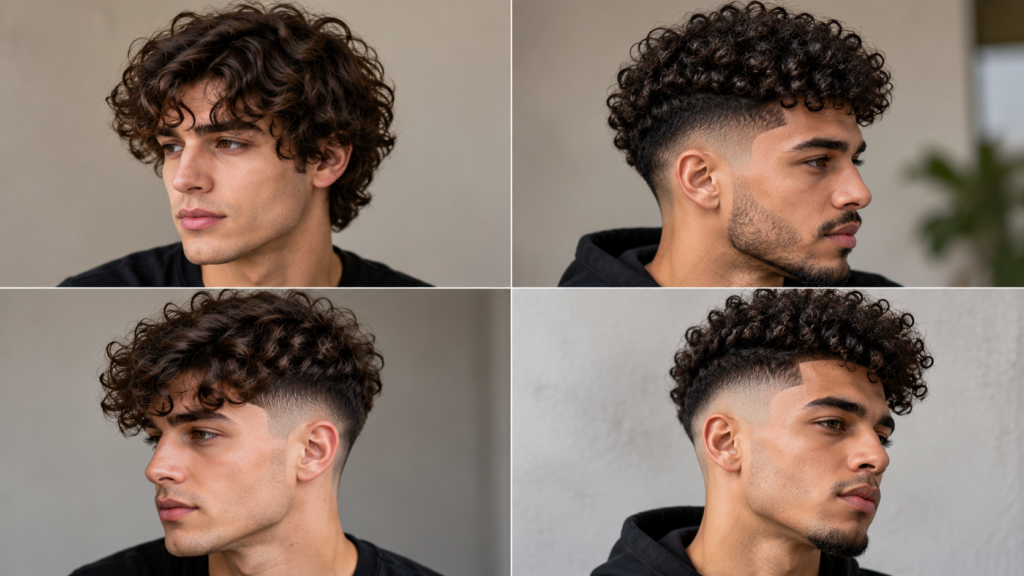
The best hairstyle depends on your curl pattern, hair length, personal style, and the amount of time you want to spend styling your hair. Here are some popular options to consider.
1. Short Curly Hair
Short curly hair is a practical choice if you prefer a simple daily routine. Keeping some length on top allows your natural curls to remain visible, while shorter sides create a neat finish.
Work the cream through your curls with your fingers to help them keep their natural shape.
2. Medium-Length Curly Hair
Medium length curls offer more styling options. You can wear them naturally, add volume at the front, or style them into a loose fringe.
Ask your barber to remove excess bulk while preserving enough length for your curls to form properly. This is particularly important if different sections of your hair have different curl patterns.
3. Long Curly Hair
Long curly hair creates a fuller look and gives you more freedom to style your hair. You can leave your curls loose or tie them back when needed.
Long curls usually require more attention during detangling. Use your fingers or a wide-tooth comb and work gently from the ends toward the roots.Work through knots slowly to avoid pulling on the hair or disturbing the curl pattern.
4. Curly Hair with a Taper Fade
A taper fade gradually shortens the hair around the sideburns and neckline. The hair on top stays longer, allowing your natural curls to stand out.
This haircut works with different curl patterns and can look neat without removing too much volume. Tell your barber how much length you want to keep on top and how subtle or noticeable you want the taper to look.
5. Low Taper Fade Curly Hair
A low taper fade keeps the shorter blend close to the sideburns and neckline. Most of the natural volume remains on top, creating a clean finish without a dramatic change.
The result is a clean outline that keeps most of the attention on your natural curls.
The result is a clean outline that keeps most of the attention on your natural curls.
6. Mid Taper Fade Curly Hair
A mid taper fade starts higher around the sides than a low taper. This creates a more noticeable contrast between the shorter sides and the curls on top.
It can suit men who want a sharper outline while keeping their natural texture. The right taper height depends on your preferred look, hairline, and curl volume.
7. High Taper Fade Curly Hair
A high taper fade places the shorter blend higher around the temples. This creates a sharper appearance and draws more attention to the curls on top.
The higher blend creates a stronger contrast between the sides and the curls on top.
8. Curly Hair with a Drop Fade or Burst Fade
A drop fade curves lower toward the back of the head, following its natural shape. A burst fade creates a rounded fade around the ear.
Both styles work with curly tops, but they create different outlines. A drop fade gives the back of the haircut a curved shape, while a burst fade emphasizes the area around the ears. Choose the option that best matches your preferred style and top length.
How to Care for Curly Hair
A good curly hair routine does not need to be complicated. Start with basic care and adjust your routine based on your scalp, hair texture, and how your curls respond.
Wash and Condition Your Hair
Use a shampoo that cleans your scalp without leaving your hair feeling excessively dry. Focus on cleaning the scalp, then rinse thoroughly.
Apply conditioner to help soften the hair and make detangling easier. The amount you need depends on your hair length, thickness, and condition.
There is no single washing schedule that works for everyone. Fine or oily hair may need more frequent washing, while dry or tightly coiled hair may do better with less frequent shampooing. Consider your activity level and product buildup when deciding how often to wash.
Detangle Gently
Curly hair can become tangled, especially when it is dry or has been exposed to friction. If brushing dry hair causes frizz or breakage, try detangling it while wet and coated with conditioner.
Use your fingers or a wide tooth comb. Begin at the ends and gradually work upward instead of pulling through knots from the roots.
Reduce Frizz While Drying
After washing, gently squeeze excess water from your hair. A soft cotton T-shirt or microfiber towel can reduce friction compared with rough towel rubbing.
Apply your styling product while your hair is damp or wet, depending on the product instructions. Let your curls air-dry or use a diffuser on a low setting if you prefer faster drying.
Humidity, hair condition, and styling methods can all affect frizz. Avoid repeatedly touching your curls while they dry if doing so causes them to lose their shape.
Protect Your Curls While Sleeping
Friction from bedding can disturb curls overnight. A satin or silk pillowcase may help reduce friction and keep your hair easier to manage.
If your hair is long enough, you can loosely tie it back before sleeping. Avoid pulling it tightly, as repeated tension can contribute to breakage.
In the morning, refresh flattened curls with a little water or a suitable leave in product. You usually do not need to wash your hair again just to restore its shape.
Best Curly Hair Products for Men
The best curly hair products depend on what your hair needs. You do not have to buy every product available. Start with one or two products and see how your hair responds.
- Curl cream: Helps soften curls and improve their appearance.
- Gel: Provides hold and helps curls maintain their shape.
- Mousse: Offers lightweight hold and may help add volume.
- Leave in conditioner: Helps soften dry hair and makes it easier to manage.
- Regular conditioner: Helps reduce tangles and improve softness after washing.
If you have fine curls, start with lightweight products and use a small amount. Heavy creams may weigh your hair down. Thick or dry curls may benefit from a richer conditioner or styling cream.
Choose products based on your hair’s needs rather than curl type alone. Introduce one product at a time so you can tell which products help and which may leave your hair feeling heavy or greasy.
How to Style Curly Hair at Home
You can style curly hair at home with a few simple steps.
- Wet your hair and shampoo when your scalp needs cleaning.
- Apply conditioner and gently detangle your hair.
- Rinse the conditioner and apply a small amount of your chosen styling product.
- Shape your curls with your fingers without pulling them straight.
- Scrunch gently if you want to encourage curl definition.
- Let your hair air-dry or use a diffuser on a low setting.
Adjust your routine based on the results. If your hair feels greasy, check for product buildup. If it becomes difficult to detangle, review your conditioning and washing routine.
Common Curly Hair Mistakes to Avoid
Using too much product: Excess product can leave buildup and make curls look greasy.
Rubbing hair with a rough towel: Rough rubbing creates friction and can make frizz more noticeable. Gently squeeze out excess water instead.
Ignoring curl shrinkage: Curls may appear shorter after drying. Ask your barber to consider your natural curl pattern when deciding how much length to remove.
Following someone else’s routine exactly: Your hair may have different needs, even if your curl pattern looks similar. Adjust your routine based on your own results.
Changing too many products at once: Trying several new products together makes it difficult to know which one is helping. Introduce changes gradually.
Frequently Asked Questions About Curly Hair
What are the different types of curly hair?
The commonly used classification system includes wavy Type 2, curly Type 3, and coily Type 4 hair. Each group has A, B, and C subtypes based on the curl pattern.
How do I identify my curly hair type?
Wash your hair and observe its natural pattern as it dries. Look for waves, loose spirals, tight curls, or coils. You may have more than one curl type, so also consider your hair’s thickness and density.
Which products are best for curly hair?
Conditioner, curl cream, gel, mousse, and leave in-conditioner can all be useful. Choose products based on your hair’s texture, dryness, and styling needs.
How often should I wash curly hair?
It depends on your scalp and hair. Wash when your scalp needs cleaning or products begin to build up. Adjust the frequency if your hair becomes too dry or your scalp feels oily.
Which taper fade is best for curly hair?
A low taper creates a subtle finish, a mid taper adds more contrast, and a high taper gives the sides a sharper outline. Choose the style that matches your preferred look and explain the desired length to your barber.
How can I reduce frizz in curly hair?
Condition regularly, detangle gently, avoid rough towel drying, and use a suitable styling product. Humidity and hair condition can also affect frizz, so results may vary.
Final Thoughts
Start by identifying your curl pattern, choosing a haircut that suits your preferred look, and testing a simple styling routine. Adjust your products and techniques based on how your hair responds.
You do not need a complicated routine or a large collection of products. Small, consistent changes can help your curls look more defined and feel easier to manage.