Ingrown Hair Cyst: Causes, Symptoms, Treatment & Prevention
You finish shaving, look in the mirror, and notice a small red bump. At first, it doesn’t seem like a big deal. A day or two later, the bump becomes larger, more painful, and tender to the touch. Now you’re wondering if it’s an ingrown hair, a boil, or something more serious.
This situation is more common than many people realize. Healthcare providers regularly see patients who become worried after an ingrown hair turns into a painful lump. One of the biggest mistakes is trying to squeeze or dig out the trapped hair at home. While that may seem like a quick solution, it can increase inflammation, introduce bacteria, and raise the risk of infection or scarring.
The good news is that most ingrown hair cysts are not dangerous. Many improve with proper home care when treated early. The challenge is knowing when simple self-care is enough and when professional medical attention is the safer choice.
In this guide, you’ll learn what an ingrown hair cyst is, why it forms, how to recognize the warning signs, the safest treatment options, and practical ways to prevent it from coming back. You’ll also discover when it’s time to stop treating the cyst at home and seek medical advice.
Why You Can Trust This Guide
This article is based on guidance from recognized medical organizations and dermatologist-reviewed educational resources. It combines current clinical recommendations with practical prevention strategies to help you understand ingrown hair cysts, recognize warning signs, and make informed decisions about home care and when to seek professional treatment.
Quick Answer
An ingrown hair cyst is a swollen lump that forms when a hair grows back into the skin instead of growing through it. The trapped hair causes inflammation inside the hair follicle, and over time, fluid and inflamed tissue may collect around it, creating a painful cyst. Mild cases often improve with home care, while infected or recurring cysts may require medical treatment.
Table of Contents
- What Is an Ingrown Hair Cyst?
- How Does an Ingrown Hair Become a Cyst?
- How to Identify an Ingrown Hair Cyst
- What Causes an Ingrown Hair Cyst?
- Who Is More Likely to Get an Ingrown Hair Cyst?
- Symptoms to Watch For
- Home Treatment Options
- Medical Treatments
- When to See a Doctor
- Prevention Tips
- Frequently Asked Questions
Quick Facts About Ingrown Hair Cysts
| Question | Answer |
| What is an ingrown hair cyst? | A painful lump that forms when a trapped hair grows beneath the skin and causes inflammation. |
| Is it dangerous? | Usually not, but an infected cyst can become more serious if left untreated. |
| Can it heal on its own? | Yes. Many small cysts improve with proper home care. |
| Should you pop it? | No. Popping the cyst can increase the risk of infection and scarring. |
| Is it contagious? | No. Ingrown hair cysts cannot spread from one person to another. |
| When should you see a doctor? | If the cyst becomes infected, keeps returning, or does not improve with home treatment. |
Is an Ingrown Hair Cyst an Emergency?
In most cases, no. Most ingrown hair cysts are harmless and improve with simple home care. However, if the cyst becomes increasingly painful, drains pus, causes fever, or the redness spreads quickly, you should seek medical care as soon as possible.
What Is an Ingrown Hair Cyst?
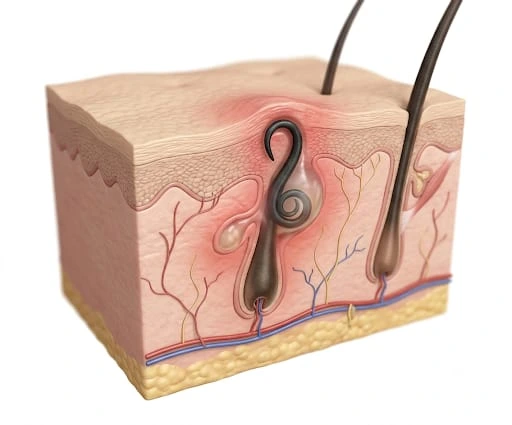
An ingrown hair cyst is a painful lump that develops beneath the skin when a hair becomes trapped inside the hair follicle. Instead of growing out through the skin, the hair curls back or grows sideways into the surrounding tissue.
Your body treats the trapped hair as a foreign object, and this triggers an immune response that causes redness, swelling, and tenderness. If the hair remains trapped, fluid and inflamed tissue can collect around it, forming a cyst-like lump beneath the skin.
Unlike a small ingrown hair, a cyst usually grows deeper under the skin and may take much longer to heal. Ingrown hair cysts can develop anywhere hair grows, but they are most common in areas where people regularly shave, wax, or experience friction. These areas include:
- Face and beard
- Neck
- Underarms
- Legs
- Bikini line
- Pubic area
- Chest
People with thick, coarse, or curly hair are more likely to develop ingrown hair cysts because curved hairs naturally bend back toward the skin after shaving or cutting.
Where Do Ingrown Hair Cysts Commonly Occur?
An ingrown hair cyst can develop anywhere hair grows, but it is most common in areas where hair is regularly removed or where friction irritates the skin.
Beard and Neck
People who shave frequently, especially those with coarse or curly facial hair, often develop ingrown hairs in the beard and neck. Repeated shaving can cause hairs to curl back into the skin and form painful cysts.
Bikini Line
The bikini line is highly prone to ingrown hair cysts because shaving, waxing, tight clothing, and friction often irritate hair follicles.
Pubic Area
Curly hair and repeated hair removal make the pubic region especially prone to trapped hairs and recurring cysts. The dense hair growth and delicate skin in this area make irritation more likely with every removal session.
Underarms
Sweat, skin friction, and regular shaving can irritate hair follicles in the underarm area, increasing the chance of ingrown hairs. Moisture trapped against the skin can also make inflammation linger longer than in drier areas.
Legs
Close shaving with dull blades or shaving against the direction of hair growth can cause hairs on the legs to grow back into the skin. Because leg hair is often shaved quickly and over large surface areas, technique matters even more here.
Chest
People with thick chest hair may occasionally develop ingrown hair cysts after trimming or shaving, particularly when hair is cut very short against naturally curved growth patterns.
How Does an Ingrown Hair Become a Cyst?
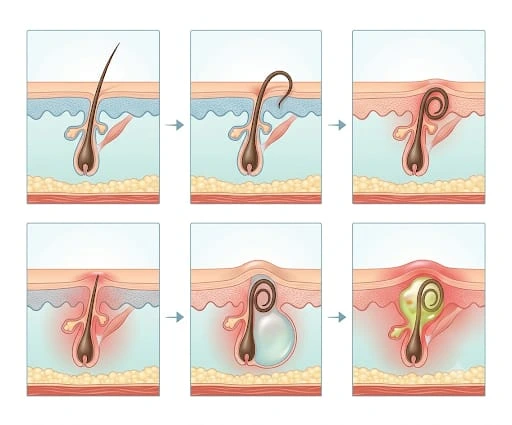
An ingrown hair cyst does not appear overnight. It usually develops through several stages, and understanding this process can help you recognize the problem early and reduce the chance of complications.
Step 1: The Hair Gets Trapped
After shaving, waxing, or tweezing, a new hair starts to grow. Instead of breaking through the skin, it curls back or grows sideways beneath the surface.
Step 2: The Immune System Reacts
Your body recognizes the trapped hair as something that should not be there, and white blood cells move into the area to try to remove the irritation.
Step 3: Inflammation Begins
As immune cells gather around the trapped hair, the skin becomes red, swollen, warm, and tender, and you may notice a small bump beginning to form.
Step 4: A Cyst Develops
If the hair remains trapped, fluid and inflamed tissue build up around it. This creates a deeper lump beneath the skin that feels firm or painful when touched.
Step 5: Infection May Occur
If bacteria enter the damaged skin, the cyst may become infected. At this stage, it may contain pus and become noticeably more painful.
How an Ingrown Hair Cyst Forms:
- Hair grows back after shaving or waxing.
- Hair curls into the skin instead of growing outward.
- The body reacts with inflammation.
- Fluid collects around the trapped hair.
- An ingrown hair cyst develops.
- In some cases, bacteria cause an infection.
Understanding the process makes it easier to prevent future cysts and recognize when early treatment may help.
Expert Insight: Although the term “ingrown hair cyst” is widely used, it is not always a true cyst in the medical sense. In many cases, the lump is an inflammatory reaction caused by a trapped hair inside the follicle. However, if inflammation continues or bacteria enter the area, the lesion may enlarge, collect fluid or pus, and behave like a cyst. This distinction explains why some ingrown hair cysts heal on their own while others require medical treatment.
Reference:
- Cleveland Clinic – Ingrown Hair Cyst
- American Academy of Dermatology (AAD) – Ingrown Hairs
How to Identify an Ingrown Hair Cyst
An ingrown hair cyst may look similar to a pimple or boil, but there are a few important differences worth knowing before you decide how to treat it.
Common signs include:
- A round or oval lump beneath the skin
- Red, pink, or dark-colored skin around the bump
- Pain or tenderness
- Mild swelling
- Itching before the bump appears
- A trapped hair that may be visible
- A firm or soft lump depending on the amount of inflammation
Some cysts stay small, while others slowly grow larger over several days. If the cyst becomes infected, additional symptoms may appear, including:
- Pus or yellow drainage
- Increased redness
- Warm skin around the lump
- Throbbing pain
- Swelling that continues to grow
- Fever in severe cases
Unlike a pimple, an ingrown hair cyst usually develops deeper beneath the skin and often lasts longer if the trapped hair is not released.
A Common Example
After shaving your beard or bikini line, you may notice a small red bump that gradually becomes larger and more tender over several days. This is a common way an ingrown hair cyst develops.
This is a common way an ingrown hair cyst develops, and recognizing these early changes can help you start treatment before the inflammation gets worse.
What Causes an Ingrown Hair Cyst?
An ingrown hair cyst develops when a growing hair cannot leave the hair follicle normally. Several factors increase this risk.
Shaving Too Closely
Close shaving creates sharp hair tips that can easily curl back into the skin instead of growing outward, which makes very close shaves one of the most common triggers.
Waxing or Tweezing
Removing hair from the root changes how new hair grows back. Sometimes the new hair becomes trapped before it ever reaches the skin surface.
Dead Skin Buildup
Dead skin cells can block the hair follicle, and as a result, the growing hair becomes trapped underneath the skin instead of pushing through it.
Friction From Clothing
Tight clothing creates constant rubbing against the skin, and this pressure can force newly growing hairs back into the skin rather than letting them grow out normally.
Thick or Curly Hair
Curly and coarse hair naturally bends as it grows, which makes it much easier for the hair to curve back and re-enter the skin after removal.
Poor Shaving Technique
Certain shaving habits greatly increase the risk of ingrown hairs. These include:
- Shaving against the direction of hair growth
- Using a dull razor
- Shaving the same area several times
- Dry shaving
- Stretching the skin while shaving
People who experience frequent razor bumps may have pseudofolliculitis barbae, a condition commonly seen in individuals with coarse or tightly curled hair.
Who Is More Likely to Get an Ingrown Hair Cyst?
Anyone can develop an ingrown hair cyst, but some people have a much higher risk than others based on hair type and grooming habits. You may be more likely to develop one if you:
- Have curly or coarse hair
- Shave every day
- Wax or tweeze body hair regularly
- Wear tight clothing
- Sweat heavily
- Have a history of razor bumps
- Frequently develop ingrown hairs
- Have chronic skin irritation after shaving
People with recurring ingrown hair cysts should consider changing their hair removal routine or discussing long-term skin care and self-care options with a healthcare professional.
Symptoms of an Ingrown Hair Cyst
The symptoms of an ingrown hair cyst can vary depending on whether the cyst is simply inflamed or has become infected. Some people notice only a small tender bump, while others develop a larger, painful lump that interferes with daily activities. Recognizing the symptoms early can help you start treatment before the condition becomes worse.
Common Symptoms
A typical ingrown hair cyst may cause:
- A firm or soft lump beneath the skin
- Redness around the affected area
- Mild to moderate pain
- Tenderness when touched
- Swelling
- Itching before the bump appears
- A visible trapped hair in some cases
The lump may slowly increase in size over several days if the trapped hair remains beneath the skin.
Signs of an Infected Ingrown Hair Cyst
Sometimes bacteria enter the damaged hair follicle, and when this happens, the cyst becomes infected and needs closer attention. Common signs of infection include:
- Thick yellow or green pus
- Increasing redness
- Warm skin around the cyst
- Severe or throbbing pain
- Bad-smelling drainage
- Rapid swelling
- Fever or chills in severe cases
An infected cyst should never be ignored, because the infection can spread into nearby skin tissue if it is left untreated.
Clinical Note: An infected ingrown hair cyst should not be confused with simple inflammation. Redness and mild tenderness are common during the early stages, but rapidly increasing pain, pus, spreading redness, or fever may indicate a bacterial infection that requires medical evaluation.
Reference:
- Cleveland Clinic
- Mayo Clinic
- EmilMD competitor article
How Serious Is an Ingrown Hair Cyst?
Most ingrown hair cysts are mild and improve with simple home care. However, some become infected or continue growing, which makes medical treatment necessary.
| Severity | Common Signs | Recommended Action |
| Mild | Small bump, little pain, mild redness | Home care and observation |
| Moderate | Larger lump, swelling, tenderness | Continue home treatment and monitor closely |
| Severe | Pus, spreading redness, severe pain, fever, or recurring cyst | Seek prompt medical evaluation |
This simple guide can help readers decide whether home care is enough or if they should see a healthcare professional.
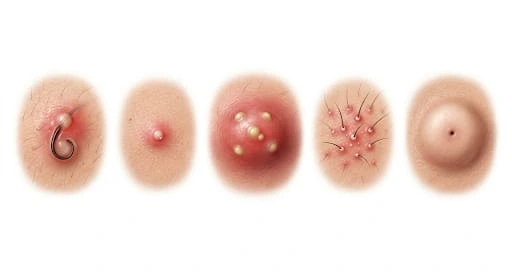
Ingrown Hair Cyst vs Other Skin Conditions
Many skin problems look similar, so knowing the differences can help you understand what you are dealing with before seeking treatment.
| Condition | Appearance | Pain | Common Cause | Contains Hair? |
| Ingrown Hair Cyst | Deep, round lump | Mild to severe | Hair trapped under skin | Usually |
| Pimple | Small raised bump | Mild | Clogged pore | No |
| Boil | Large, pus-filled lump | Severe | Bacterial infection | No |
| Epidermoid Cyst | Slow-growing lump | Usually painless | Trapped skin cells | No |
| Razor Bumps (Pseudofolliculitis Barbae) | Multiple small bumps | Mild | Hair growing back into skin | Yes |
If you are unsure about the lump, it is always safer to have it examined by a healthcare professional.
What Happens If You Leave an Ingrown Hair Cyst Untreated?
Many ingrown hair cysts heal without causing long-term problems. However, ignoring a cyst that continues to grow or becomes infected may increase the risk of:
- More pain
- Skin infection
- Abscess formation
- Permanent scarring
- Dark spots after healing
- Recurring cysts
Watching the cyst closely and starting proper care early can often prevent these complications from developing.
Can an Ingrown Hair Cyst Go Away on Its Own?
Yes, many ingrown hair cysts heal without medical treatment. Small cysts often improve when the trapped hair naturally works its way out of the skin, and this process may take several days or even a few weeks.
However, larger cysts usually heal more slowly, and if the trapped hair stays beneath the skin, the inflammation may continue for longer. You should avoid squeezing or popping the cyst because this can:
- Push bacteria deeper into the skin
- Increase inflammation
- Cause infection
- Leave permanent scars
- Delay healing
Instead, focus on gentle home care that encourages the hair to come out naturally on its own.
Home Treatment for an Ingrown Hair Cyst
Most mild ingrown hair cysts can be treated safely at home with a few consistent habits.
Apply a Warm Compress
Place a warm, clean washcloth over the cyst for 10 to 15 minutes, and repeat this three or four times each day. The warmth helps soften the skin, improve blood flow, and may encourage the trapped hair to move closer to the surface.
Gently Exfoliate the Skin
Gentle exfoliation removes dead skin cells that may be blocking the hair. You can use a soft washcloth, a gentle exfoliating glove, or a mild chemical exfoliant containing salicylic acid or glycolic acid. Avoid scrubbing aggressively, because it can worsen irritation instead of helping.
Keep the Area Clean
Wash the area with a mild cleanser once or twice a day. Clean skin lowers the chance of bacteria entering the irritated hair follicle and turning inflammation into infection.
Stop Shaving the Area
Give the skin time to heal. Continuing to shave over the cyst may cause more irritation and make the inflammation worse rather than helping it resolve.
Use Over-the-Counter Products
Some non-prescription products may help reduce inflammation and unclog the hair follicle. These include:
- Salicylic acid
- Glycolic acid
- Benzoyl peroxide
- Hydrocortisone cream (for short-term use)
Always follow the product instructions, and avoid using several active ingredients at the same time unless advised by a healthcare professional.
Do’s and Don’ts
Do:
- Apply warm compresses several times a day.
- Wash the area gently with a mild cleanser.
- Exfoliate carefully to remove dead skin cells.
- Stop shaving until the skin has healed.
- Watch for signs of infection.
Don’t:
- Pop or squeeze the cyst.
- Dig into the skin with tweezers or needles.
- Scratch or pick at the bump.
- Dry shave over the affected area.
- Ignore worsening redness, swelling, or pain.
Following these simple habits can reduce irritation and lower the risk of infection or permanent scarring.
Home Treatments: What Works Best?
Not every home remedy has the same level of evidence behind it. The table below can help you choose safer options.
| Treatment | Can It Help? | Best For |
| Warm compress | ✅ Yes | Reducing swelling and helping the hair surface |
| Gentle exfoliation | ✅ Yes | Removing dead skin cells |
| Salicylic acid | ✅ Yes | Preventing clogged follicles |
| Glycolic acid | ✅ Yes | Improving skin turnover |
| Benzoyl peroxide | ✅ Sometimes | Reducing bacteria on the skin |
| Hydrocortisone cream | ✅ Short-term | Reducing inflammation |
| Tea tree oil | ⚠ Limited evidence | Mild antibacterial support |
| Squeezing the cyst | ❌ No | Can worsen infection and scarring |
| Using needles at home | ❌ No | High risk of infection |
When Should You Avoid Home Treatment?
Do not rely on home treatment alone if:
- The cyst continues growing rapidly.
- You develop a fever.
- Red streaks spread away from the cyst.
- Pain becomes severe.
- The cyst repeatedly returns.
- The lump is near the eye or another sensitive area.
These symptoms should be evaluated by a healthcare professional rather than managed at home.
When Should You See a Doctor?
Many ingrown hair cysts improve with home care, but some require professional treatment. You should schedule a medical appointment if:
- The cyst continues to grow.
- Home treatment has not helped after one to two weeks.
- The pain becomes severe.
- Large amounts of pus develop.
- The redness spreads into the surrounding skin.
- You develop a fever.
- The cyst keeps returning in the same location.
- The cyst is near the eye, genitals, or another sensitive area.
Early treatment is often easier than treating a long-standing or infected cyst. Several of these warning signs are also emphasized in the competitor article from EmilMD, particularly rapid enlargement, pus, spreading redness, persistent pain, and recurring cysts.
At-Home vs Doctor Care
| Situation | Home Care | See a Doctor |
| Small bump with mild pain | ✅ | ❌ |
| Mild redness without pus | ✅ | ❌ |
| No improvement after 1–2 weeks | ⚠️ | ✅ |
| Thick yellow or green pus | ❌ | ✅ |
| Fever or chills | ❌ | ✅ |
| Red streaks spreading from the cyst | ❌ | ✅ |
| Repeated cysts in the same area | ❌ | ✅ |
How Do Doctors Diagnose an Ingrown Hair Cyst?
Most ingrown hair cysts can be diagnosed during a physical examination. Your healthcare provider will look at the affected area and ask about your symptoms, shaving habits, and how long the lump has been present. In most cases, no special tests are needed.
However, if the lump is unusually large, keeps returning, or does not look like a typical ingrown hair cyst, your healthcare provider may recommend additional evaluation to rule out other skin conditions, such as an epidermoid cyst, abscess, or another type of skin lesion.
Medical Treatment for an Ingrown Hair Cyst
If home care does not improve your symptoms, your healthcare provider may recommend medical treatment. The right treatment depends on the size of the cyst, whether it is infected, and how often it comes back.
Sterile Hair Removal
If the trapped hair is close to the surface, a healthcare provider may use a sterile needle or small instrument to gently lift the hair out. This is a simple procedure that should only be performed under clean, sterile conditions.
Incision and Drainage
Large or painful cysts may need a small incision to drain the trapped fluid or pus. This procedure relieves pressure, reduces pain, and helps the cyst heal faster. A healthcare provider may also remove the trapped hair during the same procedure.
Antibiotics
Antibiotics are not needed for every ingrown hair cyst. They are usually prescribed only when there is a bacterial infection present. Your healthcare provider may recommend topical antibiotics for mild infections or oral antibiotics for larger or spreading infections.
Corticosteroid Treatment
If the cyst is inflamed but not infected, a corticosteroid cream or injection may help reduce swelling, redness, and pain.
Topical Retinoids
Prescription retinoid creams help remove dead skin cells and prevent clogged hair follicles. These medications are often recommended for people who develop recurring ingrown hairs.
Laser Hair Removal
People who experience repeated ingrown hair cysts may benefit from laser hair removal. Laser treatments reduce future hair growth by damaging the hair follicle, which lowers the chance of hairs growing back into the skin.
Several of these treatment options, including steroid therapy, retinoids, antibiotics, and incision and drainage, are also discussed in the competitor articles you shared.
Evidence-Based Treatment: Treatment depends on whether the cyst is inflamed, infected, or recurring. Healthcare professionals may recommend warm compresses and skin care for mild cases, while persistent or infected cysts may require antibiotics, corticosteroids, or a minor drainage procedure. People who experience repeated ingrown hairs may also benefit from laser hair removal, which can reduce future episodes by decreasing hair growth.
Reference:
- American Academy of Dermatology
- Cleveland Clinic
- Orlando Dermatology Center competitor
Healing Timeline
Healing depends on the size of the cyst and whether it becomes infected.
| Stage | What You May Notice |
| Day 1–3 | Redness, swelling, tenderness |
| Day 4–7 | Swelling begins to decrease in mild cases |
| Week 2 | Most uncomplicated cysts improve significantly |
| Week 3–4 | Skin continues healing and discoloration fades |
| Several Weeks | Large or infected cysts may take longer to heal |
Healing times vary from person to person, so it’s best to avoid shaving or picking at the area while it heals.
Recovery Checklist
During recovery:
☐ Keep the area clean.
☐ Avoid shaving over the cyst.
☐ Do not squeeze or scratch it.
☐ Apply warm compresses as recommended.
☐ Watch for signs of infection.
☐ Resume shaving only after the skin has healed.
Will an Ingrown Hair Cyst Leave a Scar?
Most mild ingrown hair cysts heal without leaving permanent scars. However, the risk of scarring increases if you:
- Pop or squeeze the cyst
- Scratch the area repeatedly
- Delay treatment for an infected cyst
- Develop repeated inflammation in the same location
People with darker skin tones may also notice temporary dark marks after the cyst heals. These usually fade with time but can take several months to disappear completely.
Possible Complications
Most ingrown hair cysts heal without causing permanent problems. However, delaying treatment or repeatedly squeezing the cyst can lead to complications, including:
- Skin infection
- Abscess formation
- Cellulitis
- Permanent scarring
- Dark spots (post-inflammatory hyperpigmentation)
- Recurring cysts
- Damage to the hair follicle
Early treatment greatly reduces the chance of long-term skin damage.
How to Prevent an Ingrown Hair Cyst
Good skin care and proper shaving techniques can greatly reduce your risk of developing future cysts.
Shave Correctly
For the best results, always shave in the direction of hair growth, use a sharp and clean razor, and apply shaving cream or gel before you begin. Rinse the razor after every stroke and avoid repeated passes over the same area, since going over the skin multiple times increases irritation.
Consider using a single-blade razor if you frequently develop ingrown hairs, since a single blade may reduce the chance of cutting the hair too short. Leaving a small amount of stubble instead of shaving extremely close to the skin also helps, and applying a cool, clean towel after shaving can calm the skin and reduce irritation. It also helps to replace razor blades regularly, because dull blades can pull on the hair and increase irritation.
Avoid Very Close Shaving
Leaving a small amount of stubble reduces the chance of the hair curling back into the skin after it grows.
Exfoliate Regularly
Gentle exfoliation removes dead skin cells that can block hair follicles. Try to exfoliate two or three times each week using a soft washcloth, a gentle scrub, salicylic acid, or glycolic acid.
Moisturize Daily
Healthy, well-hydrated skin is less likely to become irritated after shaving. Use a fragrance-free moisturizer if your skin is sensitive or prone to reacting to hair removal.
Wear Loose Clothing
Tight clothing increases friction, especially around the bikini line, groin, underarms, and inner thighs. Loose clothing helps reduce this friction and gives irritated skin room to heal.
Consider Alternative Hair Removal Methods
If you frequently develop ingrown hair cysts, ask your healthcare provider whether laser hair removal may be a better long-term option for you.
Myths vs Facts About Ingrown Hair Cysts
| Myth | Fact |
| Every ingrown hair cyst is infected. | Many cysts are inflamed without being infected. |
| Popping the cyst helps it heal faster. | Popping it increases the risk of infection and scarring. |
| Antibiotics are needed for every cyst. | Antibiotics are only used when a bacterial infection is present. |
| Only men develop ingrown hair cysts. | Anyone who removes body hair can develop them. |
| Once healed, the cyst will never return. | Recurring cysts are common if the underlying cause is not addressed. |
Prevention Checklist
Use this quick checklist to lower your risk of future ingrown hair cysts.
☐ Shave in the direction of hair growth.
☐ Use a clean, sharp razor.
☐ Avoid shaving too closely.
☐ Exfoliate two or three times each week.
☐ Moisturize after shaving.
☐ Wear loose clothing when possible.
☐ Replace dull razor blades regularly.
☐ Consider laser hair removal if cysts keep returning.
Frequently Asked Questions
Is an ingrown hair cyst dangerous? Most ingrown hair cysts are not dangerous. However, an infected cyst can become more serious if left untreated.
Can I pop an ingrown hair cyst? No. Popping or squeezing the cyst can push bacteria deeper into the skin, increase inflammation, and cause permanent scarring.
How long does an ingrown hair cyst last? Small cysts often improve within one to three weeks. Larger or infected cysts may take several weeks to heal.
Can an ingrown hair cyst come back? Yes. People who shave frequently or have curly, coarse hair may develop recurring cysts.
Will an ingrown hair cyst leave a scar? Most mild cysts heal without scarring. Picking, squeezing, or delaying treatment increases the risk of permanent scars and dark spots.
Is an ingrown hair cyst contagious? No. An ingrown hair cyst cannot spread from one person to another.
Can laser hair removal prevent ingrown hair cysts? Yes. Laser hair removal can significantly reduce recurring ingrown hairs by reducing hair growth from the affected follicles.
Key Takeaways
- An ingrown hair cyst forms when a hair grows back into the skin instead of growing outward.
- Most cysts are inflamed but not infected.
- Warm compresses, gentle exfoliation, and proper skin care help many mild cases heal.
- Never squeeze or pop the cyst.
- Seek medical care if you develop severe pain, spreading redness, pus, fever, or recurring cysts.
- Good shaving habits and regular exfoliation are the best ways to prevent future ingrown hair cysts.
Reference:
- Cleveland Clinic
- Mayo Clinic
- American Academy of Dermatology
What This Means for You
If you’ve found a painful bump after shaving or waxing, don’t panic. Most ingrown hair cysts improve with simple home care and patience. Focus on keeping the area clean, avoiding the urge to squeeze it, and watching for signs of infection. If the cyst worsens or keeps coming back, seeking medical advice early can help prevent unnecessary pain and scarring.
The Bottom Line
Finding a painful lump after shaving can be stressful, especially if you’ve never experienced one before. Fortunately, most ingrown hair cysts improve with proper care and do not cause lasting problems.
Knowing the early warning signs, avoiding common mistakes, and seeking medical advice when needed can help you recover safely and reduce the risk of future cysts.
Conclusion
An ingrown hair cyst can be uncomfortable, frustrating, and sometimes worrying, especially if you’ve never experienced one before. Fortunately, most cases improve with patience, proper skin care, and avoiding common mistakes such as squeezing or picking at the affected area.
One pattern healthcare professionals frequently see is that small ingrown hairs often become bigger problems only after repeated irritation or attempts at self-removal. Understanding how the condition develops—and recognizing the early warning signs of infection—can help you make better decisions before complications occur.
If your symptoms continue to worsen, the cyst keeps returning, or you notice signs of infection, don’t hesitate to seek medical advice. Early evaluation is often simpler than treating a more advanced infection and can reduce the risk of permanent scarring.
The best long-term approach is prevention. Using proper shaving techniques, reducing friction, exfoliating gently, and caring for your skin consistently can greatly lower the chance of future ingrown hair cysts. With the right habits and timely treatment, most people can manage this condition successfully and maintain healthier skin.
Medical Disclaimer
This article is for educational purposes only and should not replace professional medical advice, diagnosis, or treatment. If you develop severe pain, fever, spreading redness, or a cyst that does not improve with home care, consult a qualified healthcare professional for an evaluation.
References
- American Academy of Dermatology Association. Ingrown hairs: Symptoms, treatment, and prevention.
- Cleveland Clinic. Ingrown Hair Cyst.
- Mayo Clinic. Ingrown Hair – Diagnosis and Treatment.
- Orlando Dermatology Center. Removal of Ingrown Hair Cysts.
- EmilMD. When Should I See a Professional for an Ingrown Hair Cyst?