
Cocktail Dress Code: What It Means and What to Wear
You open the invitation. The date works. The venue looks beautiful. Then you reach the last line: cocktail dress code.
And suddenly you are standing in front of your closet with no idea what qualifies.
This is the strangest part of the cocktail dress code. You can fail in two directions. Show up in a floor-length gown and you have overshot. Show up in a nice work outfit and you have undershot. Most dress codes only let you be wrong one way. This one lets you be wrong twice.
The confusion is not your fault. The rules genuinely changed. Twenty years ago the answer was short dress, dark suit, done. Today midi lengths pass, jumpsuits pass, and ties are optional.
Different guides froze at different moments. So they now contradict each other. One tells you to avoid maxi dresses. The next says a simple maxi is fine. Both are ranking on Google right now, and both sound confident.
We reviewed how this dress code is explained across wedding platforms, menswear brands, fashion magazines, and museum archives. The same three questions came up again and again. Does a jumpsuit count? Does a man need a tie? What shoes actually work on grass?
This guide answers all three. It also gives you one test that settles most outfit questions in seconds. Then it walks you through the four things that truly decide your outfit: the occasion, the venue, the time of day, and the season.
No shopping list. No guessing.
Quick Answer
The cocktail dress code is a semi-formal dress code. It sits between smart casual and black tie. Women wear a knee-length or midi dress, a dressy jumpsuit, or elegant separates. Men wear a tailored suit or a blazer with dress pants. A tuxedo is too formal. Jeans are too casual.
Here is the fastest test: check the fabric first. Silk, satin, crepe, and velvet read as evening wear. Cotton and denim read as daywear. That one rule solves most cocktail party outfit questions.
Key Takeaways
- Cocktail attire sits between semi-formal and black tie optional
- Fabric matters more than length — silk, satin and crepe read evening; cotton and denim read daytime
- Women: knee-length or midi dress, dressy jumpsuit, or elegant separates
- Men: tailored suit or blazer with dress pants — tie optional, but recommended after dark
- A simple maxi in an evening fabric usually passes; a beaded gown does not
- Outdoor venues change your shoes, not your dress code
- Four things decide your outfit: occasion, venue, time of day, season
What Is the Cocktail Dress Code?
A cocktail party is the original setting for this dress code, and it still sets the standard. It is the most common dress code on invitations today. It is also the most misunderstood one.
You will see it on wedding invitations, gala tickets, and holiday party emails. The words sound simple. The gray area is huge.
Think of it as a middle setting. You should look polished and intentional. However, you should not look like you are heading to a red carpet.
The goal is respect for the event. Your outfit should show that you made an effort.
The Fabric Test: The Fastest Way to Judge an Outfit
Most guides start with hemlines. That is the wrong starting point.
Fabric decides formality more than length does. A knee-length dress in silk georgette works perfectly. The same shape in a cotton blend does not.
Here is the test. Hold the item up and ask one question: does this fabric belong to daytime or evening?
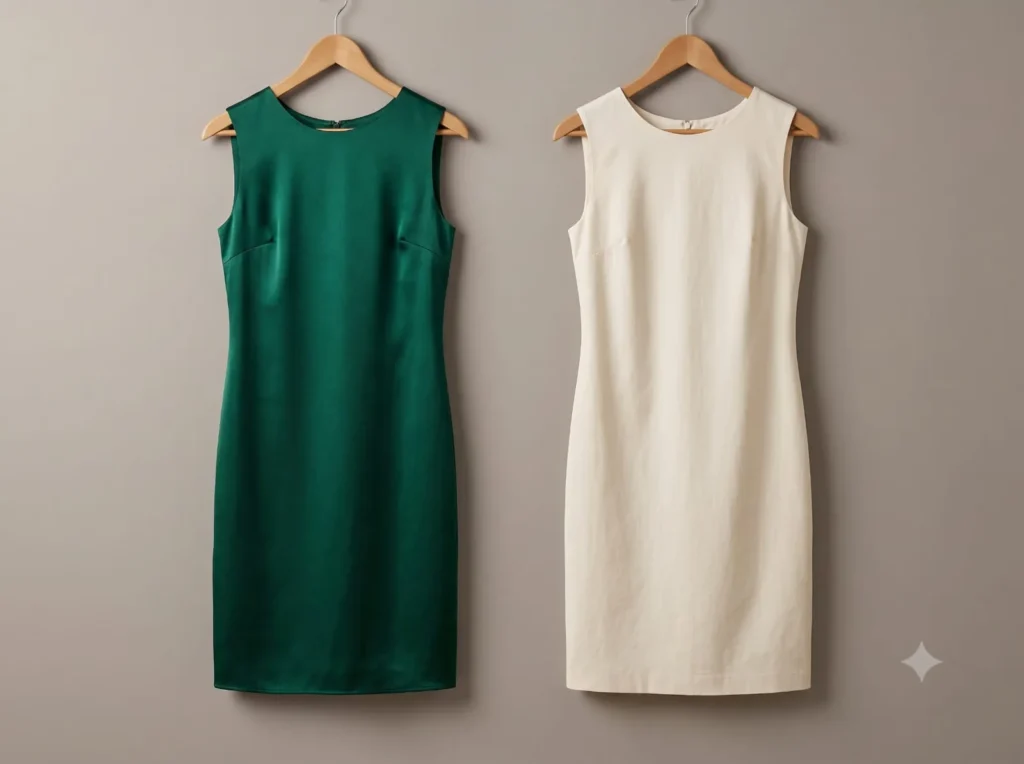
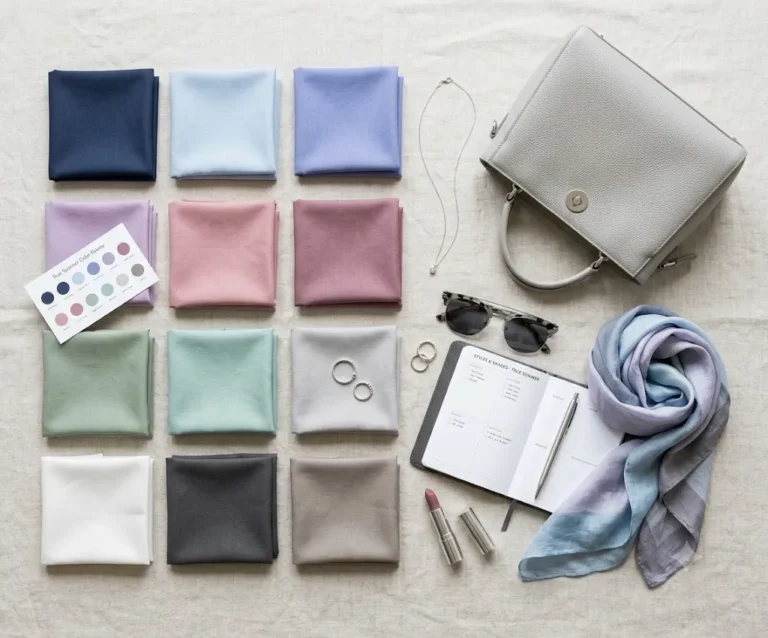
Evening fabrics:silk, satin, crepe, velvet, chiffon, georgette, lace, organza, taffeta, jacquard, brocade, tropical wool.
Daytime fabrics: cotton, denim, jersey knit, seersucker, linen (with exceptions for warm-weather outdoor events).
Because of this rule, a maxi dress in silk can work at a cocktail event. Meanwhile, a short dress in cotton often will not. Fabric beats length every time.
Never Worn Cocktail Attire? Start Here
If you own nothing suitable, buy one flexible outfit rather than a perfect one. You will wear it many times.
For women: a plain midi dress in black or navy crepe. Add simple heels or dressy flats and one pair of earrings.
This works at weddings, work events, and dinners.For men: a navy suit in mid-weight wool. Add a white dress shirt and brown leather shoes. This covers almost every cocktail event you will attend.
Get both tailored. Fit changes how an outfit reads more than price does. A $150 suit that fits beats a $700 suit that does not.
Where the Cocktail Dress Code Sits Among Other Dress Codes
Dress codes form a ladder. The cocktail dress code sits near the middle. This table shows the full range.
| Dress Code | Women | Men | Common Events |
| Dressy Casual | Sundress, skirt and blouse | Chinos, blazer optional | Brunch, casual parties |
| Semi-Formal | Midi dress, tailored separates | Dark suit, tie expected | Daytime weddings, dinners |
| Cocktail | Knee or midi dress, jumpsuit | Suit or blazer, tie optional | Evening weddings, parties |
| Festive | Cocktail plus sparkle and rich color | Suit with seasonal touches | Holiday parties, New Year’s Eve |
| Black Tie Optional | Gown or elevated midi dress | Tuxedo or dark formal suit | Galas, formal weddings |
| Black Tie | Floor-length gown | Tuxedo | Charity balls, formal evenings |
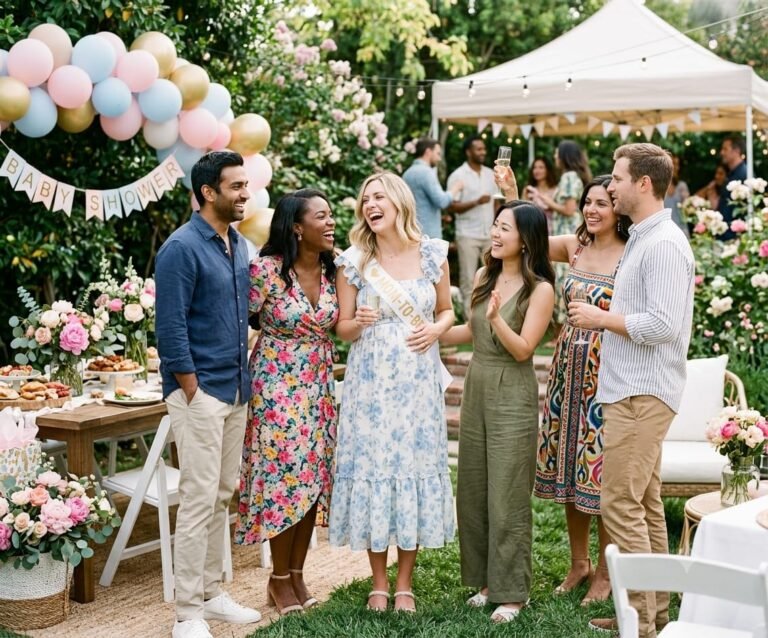
The bottom rung matters as much as the top. Daytime celebrationS, brunches, showers, garden parties and usually sit at dressy casual, which is why baby shower attire follows a different set of rules entirely.
Cocktail Dress Code vs Semi-Formal
These two get confused constantly. Invitations often use them as if they mean the same thing. They do not.
Semi-formal is more conservative. It leans toward dark suits, classic shirts, and expected ties. Colors stay neutral.
Cocktail is more festive. It allows lighter suit colors, bolder patterns, and more personality. Ties become optional rather than required.
In short: semi-formal plays it safe, while cocktail lets you have fun.
Cocktail Dress Code vs Black Tie Optional
Black tie optional is one full step up. Men may wear a tuxedo. Women lean toward gowns or very elevated midi dresses.
Here is a simple rule of thumb. If your outfit would look underdressed standing next to a tuxedo, it belongs at a cocktail event instead.
Cocktail Dress Code vs Festive Attire
Festive attire is cocktail attire with holiday flair. The formality level is identical. Only the styling changes.
Festive invites sequins, velvet, jewel tones, metallics, and tartan. As a result, you can treat your usual cocktail outfit as the base. Then add sparkle.
Cocktail Dress Code for Women
Best Dress Styles and Lengths
Knee-length, midi, and tea-length all look modern and polished. Lace and crepe are both flattering and easy to find with sleeves.
The little black dress remains the most reliable choice of all. It works at almost every cocktail event, photographs well in any light, and never looks dated.
A-line, sheath, and wrap silhouettes all work well. Choose whichever suits your shape.
Mini dresses can work, but the fabric has to carry them. A silk mini reads dressy. A cotton mini does not.
What about maxi dresses? Guides disagree here, and that confuses people. The honest answer is that a pared-back maxi in an evening fabric usually passes. However, a heavily beaded, floor-sweeping gown belongs at a black tie event.
Alternatives to Dresses
You do not need a dress at all. A tailored jumpsuit in crepe or chiffon looks excellent.
Chic separates also work. Try a silk blouse with wide-leg trousers, or a fitted top with a midi skirt.
The pieces just need to look intentional together. Above all, the fabric must read dressy rather than business casual.
Shoes
Heels are not required. That surprises many guests.
Block heels, kitten heels, and stilettos all work indoors. Dressy flats work too, as long as they look elevated. Satin or patent finishes help.
Outdoor venues change things. Stilettos sink into grass and catch in gravel. Therefore, choose block heels or wedges for lawn ceremonies.
Accessories
Keep it simple. Coco Chanel advised removing one accessory before leaving the house, and that rule still holds. Pick one standout piece and let everything else stay quiet.
A clutch or small bag reads elegant. An oversized tote does not.
Two more details matter. First, steam out wrinkles before you leave. Second, check that bra straps and shapewear stay hidden.
Cocktail Dress Code for Men
Choosing the Right Suit
A well-fitted suit is the backbone of the look. Navy, charcoal, and gray all work year-round.
Season should guide your fabric. Wool suits suit autumn and winter. Meanwhile, linen and tropical wool work far better in summer heat.
Fit matters more than price. A modest suit that fits well beats an expensive suit that does not.
Blazer and Dress Pants
You do not always need a matching suit. A blazer with coordinating trousers is a strong alternative.
This combination works especially well for outdoor and warm-weather events. It reads polished without the bulk of full suiting.
Keep the pieces coordinated rather than matched. A navy blazer with gray trousers looks intentional.
Accessories
A pocket square adds personality without adding bulk. Match it to the print in your tie, or the other way round — never match both exactly.
Cufflinks work well with French-cuff shirts. Keep them simple. Silver or subtle enamel beats anything novelty.
Do not forget your belt. Guests overlook it constantly, especially when changing after work. Match the leather to your shoes.
A clean dress watch finishes the look. Bold socks are fine at cocktail events, though they suit relaxed venues better than corporate ones.
The Tie Question
Sources contradict each other on this point, so here is a clear answer.
Ties are optional under the cocktail dress code. That is the main difference from semi-formal, where ties are expected.
That said, a tie always adds polish. Use these cues to decide:
- Wear a tie for evening events, indoor venues, and formal weddings.
- Skip the tie for daytime events, outdoor venues, and warm weather.
If you skip it, the rest of the outfit has to work harder. A crisp shirt and polished shoes carry the look.
Shoes
Leather dress shoes are the standard. Oxfords, derbies, loafers, and brogues all qualify.
Match your shoe color to your suit. Black suits black or charcoal. Cognac and tan suit navy and lighter shades.
Sneakers do not belong here. Clean and polished is the baseline.
Cocktail Attire Variations Explained
Not every invitation means exactly the same thing. Here are the common variations.
Formal or elevated cocktail is the dressiest version. Choose midi lengths, classic fabrics, and darker suit colors.
Casual cocktail relaxes the rules. Lighter colors, softer patterns, and breezier fabrics all work.
Evening cocktail leans darker and simpler. Skip loud patterns and choose solid shades.
Beach formal suits coastal events. Think lightweight suits without ties, and flowing midi dresses with sandals.
Farm or garden cocktail keeps the same formality level. Only the footwear changes, because the ground does.
Cocktail Dress Code for Work Events
Work events follow the same dress code with one extra rule. You still have to look professional on Monday.
So dial the risk down. Choose deeper colors over bright ones. Keep necklines and hemlines conservative. Save the bold statement piece for a private party.
| Work Event | Men | Women | Watch Out For |
| Corporate gala or fundraiser | Dark suit, tie on | Midi dress, classic fabric | Sits at the formal end — dress up, not down |
| Office holiday party | Suit with festive touch | Velvet, satin, jewel tones | Festive, not costume |
| After-work reception | Dark suit, swap the tie | Sheath dress, swap shoes | You arrive straight from the office |
After-work receptions are the trickiest. You arrive with no time to change. Therefore, plan one outfit that works for both.
A dark suit with a swapped tie does this easily. A sheath dress with different shoes and jewelry works just as well.
One rule covers all three. Your colleagues will see these photos.
How Season Changes the Cocktail Dress Code
Season affects fabric and color more than it affects formality.
| Season | Best Fabrics | Best Colors | Notes |
| Spring | Chiffon, georgette, light crepe | Blush, sage, pastels | Bring a light wrap for cool mornings |
| Summer | Chiffon, linen blends, tropical wool | Champagne, light neutrals, navy | Breathability matters most |
| Fall | Satin, crepe, light velvet | Burgundy, forest green, rust | Richer textures start to work |
| Winter | Velvet, wool, heavy satin | Deep jewel tones, black | Layer with a shawl or tailored coat |
One color rule helps across all seasons. Match your color intensity to the formality of the event. Bright fuchsia suits a birthday party. It suits a corporate fundraiser far less.
How Venue and Terrain Change Your Outfit
This is the detail most guides skip. Yet it causes more discomfort than anything else.
A ballroom has smooth floors. A farm has grass, gravel, and uneven ground. The dress code stays the same, but the execution must change.
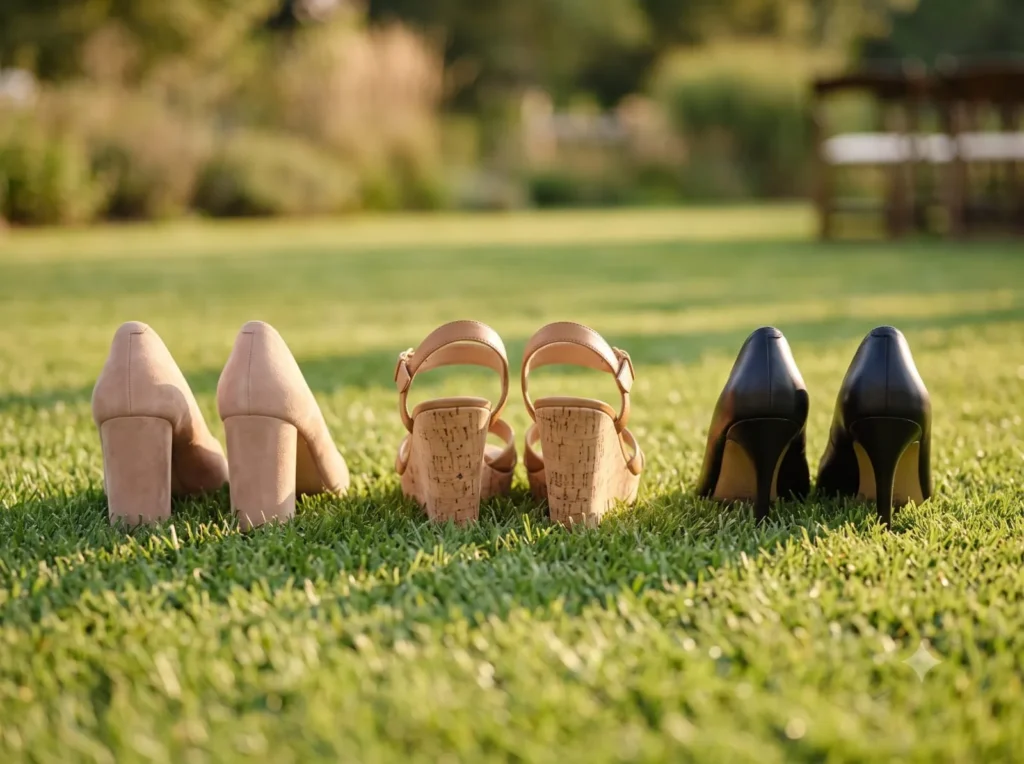
For grass and gravel: choose block heels, wedges, or dressy flats.
For sand: wear strappy flat sandals during the ceremony. Then change into heels for the reception if there is a solid floor.
For full sun: prioritize breathable fabric above everything else. Heavy wool in August ruins an otherwise great outfit.
Many guests bring a second pair of shoes. That is smart planning, not overpacking.
What to Wear and What to Skip
Wear This
- Knee-length or midi dresses in evening fabrics
- Tailored jumpsuits and elegant separates
- Well-fitted suits or blazer-and-trouser combinations
- Block heels, wedges, or polished flats for outdoor venues
- Leather dress shoes in oxfords, loafers, or brogues
- One standout accessory
- Jewel tones, classic neutrals, and soft metallics
Skip This
- Jeans and denim of any kind
- Sneakers and flip-flops
- Shorts and t-shirts
- Floor-length gowns, unless the invitation says black tie
- White or ivory at a wedding
- Cotton-blend fabrics that read casual
- Stiletto heels at outdoor venues
- Oversized bags and stacked accessories
Why Cocktail Dress Code Guides Disagree
You may notice that advice varies from site to site. That is not sloppiness. There is a real reason.
The cocktail dress code has loosened over the past twenty years. Different sources froze their rules at different moments.
Older guides say short dresses and dark suits only. Newer guides allow midi lengths, jumpsuits, and optional ties.
Here are the three biggest disagreements and a practical answer for each.
Ties: Some sources call them essential. Others call them optional. Treat them as optional but recommended for evening events.
Maxi dresses: Some sources ban them. Others allow simple ones. Judge by fabric and ornamentation, not by length.
Where cocktail sits: Some place it above semi-formal. Others place it below formal. It sits between semi-formal and black tie optional.
When guides conflict, default to the invitation itself. Then consider the venue, the time, and the season.
Cocktail Dress Code on a Budget
You do not need to spend a fortune. Here is roughly what each tier gets you.
| Budget | What You Get | Best Spent On |
| Under $100 | High-street crepe and satin | Fabric over brand name |
| $100–$300 | Better construction and lining | Tailoring — budget for it |
| $300+ | Natural fibres, lasting finish | Pieces you’ll wear for years |
| Rental | Access to higher tiers | One-off and black tie optional events |
One more tip. Choose pieces you can wear again. A navy suit and a simple black midi dress both work for years.
Special Situations
Plus size. Wrap and fit-and-flare shapes flatter many bodies. Look for lined fabrics with some structure. Bold colors and prints work well.
Petite. Above-the-ankle hems keep proportions balanced. Avoid heavy tiered skirts, which can overwhelm a smaller frame.
Over 50. Knee-length, midi, and tea-length all look modern and polished. Sleeves are easy to find and always appropriate.
Maternity. Empire waists and stretch panels give room to move. Skip heavy embellishment and choose comfortable fabrics.
Modest dressing. Long sleeves, higher necklines, and midi lengths all meet the cocktail dress code. A silk blouse with wide-leg trousers is an elegant option.
Hosting. Dress at the same level as your guests, or one small step below. Your job is to make others feel comfortable.
Where the Cocktail Dress Code Came From
The history explains why the rules exist. It also explains why the fabric test works.
The garment came first. In the 1920s, during Prohibition, women began socializing far more publicly. They needed clothing that bridged daywear and evening gowns. The cocktail dress filled that gap, and the cocktail hour became a fixed part of social life.
The name came later. Christian Dior was the first to call an early-evening dress a “cocktail” dress in the late 1940s, around the time of his New Look collection of 1947. That collection reshaped evening dressing with cinched waists and fuller skirts. The label spread quickly through magazines and department stores.
One historical detail is especially useful. These dresses were made for gatherings held roughly between six and eight in the evening. Guests stood and mingled rather than sitting. Because of that, designers used detailed skirts that would have creased if worn seated.
That origin still shapes the code today. Cocktail events involve standing, moving, and talking. So comfort and mobility were built into the dress code from the start.
Fabric also carried the distinction historically. Silks and satins marked cocktail dresses apart from day dresses in wool and gabardine. In other words, the fabric test is not a modern shortcut. It is the original rule.
You can explore the full history through The Metropolitan Museum of Art and the Victoria and Albert Museum.
FAQs
What does the cocktail dress code mean?
It means semi-formal, polished evening wear. Women wear knee-length or midi dresses, dressy jumpsuits, or elegant separates. Men wear a suit or a blazer with dress pants.
Can I wear a maxi dress to a cocktail party?
Usually yes, if it is simple. Choose an evening fabric and skip heavy beading. A dramatic floor-length gown belongs at a black tie event instead.
Can women wear pants to a cocktail event?
Yes. Tailored jumpsuits and pantsuits are fully appropriate. The fabric just needs to read dressy rather than office-ready.
Are jeans ever acceptable?
No. Even well-styled denim reads too casual. Choose tailored trousers instead.
Can I wear sneakers?
No. Stick with dress shoes, heels, or elevated flats.
Can you wear black to a cocktail wedding?
Yes, especially for evening events. Add metallic or colorful accessories to keep it celebratory.
What is the difference between cocktail and black tie?
Cocktail means a suit for men and a shorter dress for women. Black tie means a tuxedo and a floor-length gown.
Is a linen suit appropriate?
Yes, for spring and summer outdoor events. Make sure it is well-fitted and pressed.
What colors should I avoid at a wedding?
Avoid white, ivory, and anything close to the bridal palette. Everything else is generally fine.
Final Thoughts
The sources that disagree most about the cocktail dress code are arguing about the wrong thing.
They argue about hemlines. Length is the visible detail, so it feels like the rule. But length was never the rule.
Fabric was. That is not a modern shortcut. It is the original distinction. When these garments first appeared, silks and satins are what separated them from day dresses made in wool and gabardine. The same test still works today, which is why it settles the maxi-dress argument that everyone else is still having.
There is a pattern worth noticing at real events. The guests who look most comfortable are rarely the ones who spent the most. They are the ones who matched their fabric and their shoes to the actual setting. A breathable dress at an outdoor summer wedding beats an expensive one that traps heat. A block heel on a lawn beats a stiletto every single time.
A few honest limits are worth stating.
Regional expectations differ. A cocktail invitation in the American South often reads more formally than the same words in California. Cultural and religious events carry their own conventions that override general guidance. And some hosts use “cocktail attire” simply to mean please make an effort, with no strict expectation behind it.
When the wording is genuinely unclear, ask the host. That is not a failure. It is the fastest and most reliable answer available, and hosts almost always appreciate the question.