Dark Winter Color Palette: Complete Guide to Colors, Wardrobe & Style
A Dark Winter color palette also known as Deep Winter color palette is a collection of cool, deep, and high-contrast colors that enhance people with strong natural contrast in their features. It is part of the 16-season color analysis system and is known for colors that are deep, cool, rich, and dramatic.
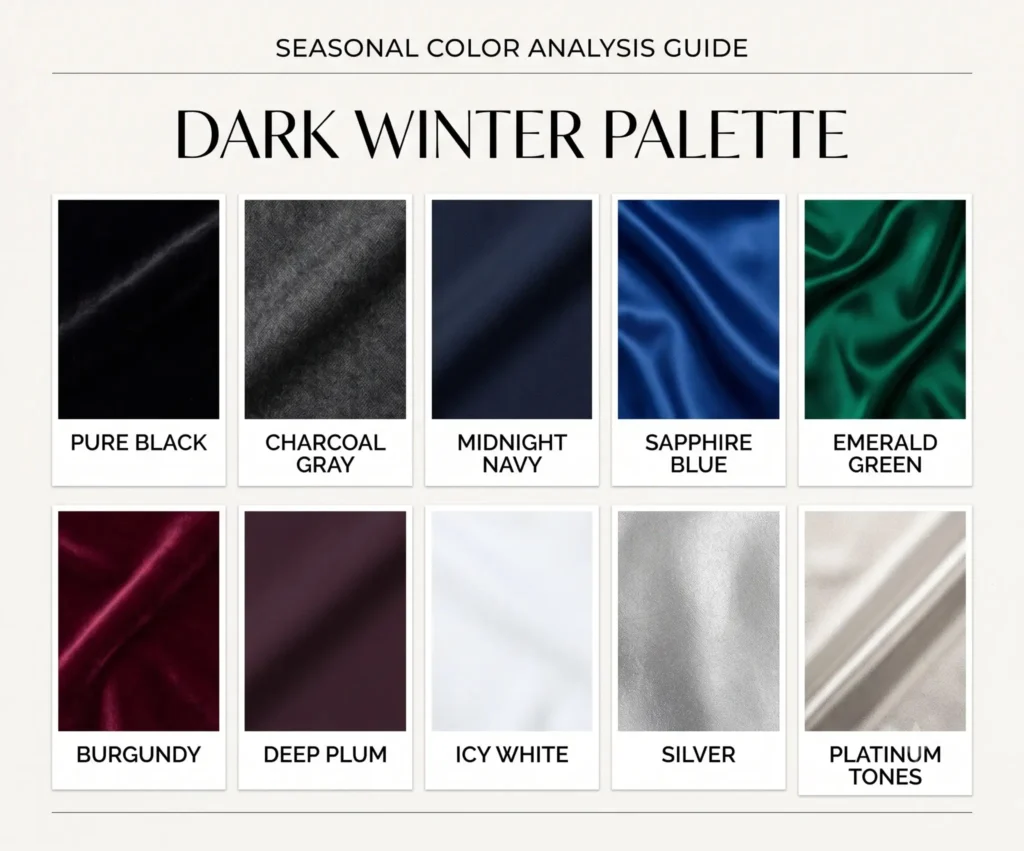
The Dark Winter palette includes shades like pure black, emerald green, sapphire blue, burgundy, deep plum, midnight navy, and charcoal gray. Unlike soft seasonal palettes, Dark Winter colors are not muted or faded — they carry depth and clarity, which creates an elegant and powerful appearance.
Seasonal color analysis is a personal styling method that groups people into color palettes based on their natural skin tone, hair color, eye color, and overall contrast. While several systems exist, the 12-season and 16-season color analysis frameworks are the most widely used by professional image consultants, and the Dark Winter palette is one of the deep, cool palettes within these systems.
If you’re new to seasonal color analysis, don’t worry — you don’t need to understand color theory to get started. This guide explains everything in simple terms, from identifying your season to building a wardrobe that works with your natural coloring.
Dark Winter Color Palette at a Glance
| Feature | Dark Winter |
| Season Family | Winter |
| Main Characteristics | Deep, Cool, High Contrast |
| Best Neutrals | Black, Charcoal, Midnight Navy |
| Best Colors | Emerald, Sapphire, Burgundy, Plum |
| Best Metals | Silver, Platinum, White Gold |
| Avoid | Warm Beige, Orange, Mustard |
| Style Vibe | Elegant, Bold, Sophisticated |
Dark Winter Color Palette: A Complete Guide
Have you ever stood in front of your wardrobe feeling like something was missing, even though it’s full of clothes? Many people experience this frustration because they choose colors they like rather than colors that naturally suit them. That’s where seasonal color analysis can help. If you think you might be a Dark Winter, this guide will explain the colors, wardrobe choices, makeup, and styling techniques that can help you make more confident decisions.
This guide will help you understand:
- What Dark Winter means
- How to know if you are a Dark Winter
- The best Dark Winter colors
- Colors to avoid
- Dark Winter wardrobe ideas
- Makeup and hair suggestions
- Difference between Dark Winter and other seasons
Dark Winter Seasonal Color Type
Dark Winter, also known as Deep Winter Color Palette, is a seasonal color type that belongs to the Winter family and is part of the 16-season color analysis system. The Winter family includes Dark Winter, True Winter, Bright Winter, and in some systems — Soft Winter. Dark Winter is the deepest Winter season and sits between True Winter and Dark Autumn.
The main features of Dark Winter are cool undertones, deep colors, strong contrast, and a rich, dramatic appearance. The palette creates a look that feels elegant, sophisticated, bold, and timeless. Dark Winter colors are never soft or dusty; they always carry depth and clarity.
Profile of a Deep Dark Winter
A Dark Winter person usually shows natural contrast between their features — for example, dark hair paired with lighter skin, deep eyes with clear contrast, and strong facial features.
However, appearance alone cannot confirm your season. A professional color analysis uses draping and compares how different colors affect your skin. The goal is to find colors that make your face look fresh, balanced, bright, and healthy.
Understanding Contrast in Dark Winter
Contrast is one of the most important features of the Dark Winter color type. It describes the difference between your natural features, such as skin and hair, eyes and skin, or hair and eyes. Dark Winter is usually a high-contrast season, often showing very dark hair with lighter skin, deep eyes with clear whites, and strong facial definition. Because of this natural contrast, Dark Winter looks best with strong color combinations.
Some flattering combinations include:
- Black and pure white
- Emerald green and black
- Burgundy and charcoal
- Sapphire blue and icy white
Low-contrast combinations with soft or dusty colors may make Dark Winter features look less defined.
In personal color analysis, contrast is evaluated by comparing the natural lightness and darkness of the skin, hair, and eyes. Stylists often use contrast levels to recommend clothing combinations that create harmony with a person’s natural features.
Reference:
- Colour Me Beautiful
- International Image Institute
How to Know If the Dark Winter Palette is for You
Dark Winter is identified through personal color analysis, which evaluates undertone, contrast, value, and chroma to find the most flattering colors.
Key Characteristics
Dark Winter Skin Tone and Cool Undertones
Dark Winter skin usually has a cool or neutral-cool undertone. Common signs include skin looking better with silver jewelry than yellow gold, cool colors making the skin appear clearer, and warm earthy colors making the complexion look tired. Skin tones can range from fair to medium to deep — the important factor is the cool undertone, not the skin’s depth.
Hair Color
Dark Winter hair is usually naturally deep and cool, showing up in shades like black, soft black, dark brown, espresso brown, or cool brunette. This hair often has little golden or orange warmth, so warm shades like honey, copper, and golden brown may overpower the natural contrast.
Eye Color
Dark Winter eyes often look deep and clear, commonly appearing as dark brown, black-brown, deep green, or cool hazel. The eyes usually show strong contrast against the whites of the eyes.
Quick Color Analysis Quiz: Is Dark Winter Your Best Palette?
You may be a Dark Winter if:
✔ You look amazing in black
✔ Emerald green makes your features stand out
✔ Burgundy and berry colors suit you
✔ Silver jewelry looks better than gold
✔ Warm beige and orange make you look dull
✔ Deep colors feel natural on you
If bright Winter colors feel too strong and Autumn colors feel too warm, Dark Winter may be your best match.
Dark Winter Palette Characteristics
These concepts come from basic color theory principles used in professional color analysis.
Hue
Hue describes whether a color is warm or cool, and Dark Winter colors are mostly cool, usually containing blue or neutral undertones. Examples include sapphire blue, deep purple, emerald green, cool red, and burgundy. Even the red shades in this palette are usually blue-based rather than orange-based.
Chroma
Chroma describes how bright or muted a color is. Dark Winter colors sit at medium to high intensity, making them rich, clear, and strong rather than dusty, soft, or muted.
Value
Value describes how light or dark a color is, and Dark Winter is a deep palette through and through — its colors read as dark, powerful, and dramatic. Black works especially well because Dark Winter naturally supports strong contrast.
The Dark Winter Color Palette
The Dark Winter color palette is inspired by deep, cool, and dramatic shades. These colors create a strong visual impact because they match the natural depth and contrast of this season. The palette includes deep jewel tones, cool dark neutrals, rich accent colors, and icy shades for contrast.
A Dark Winter wardrobe should feel polished, modern, elegant, and confident. Deep, cool colors are often associated with confidence, elegance, authority, and sophistication in color psychology. While personal preferences vary, these colors are frequently used in fashion and branding to create a polished and powerful impression.
Dark Winter Color Palette Chart
The Dark Winter palette contains cool, deep, and sophisticated colors.
Dark Winter Outfit Formula
Formula 1:
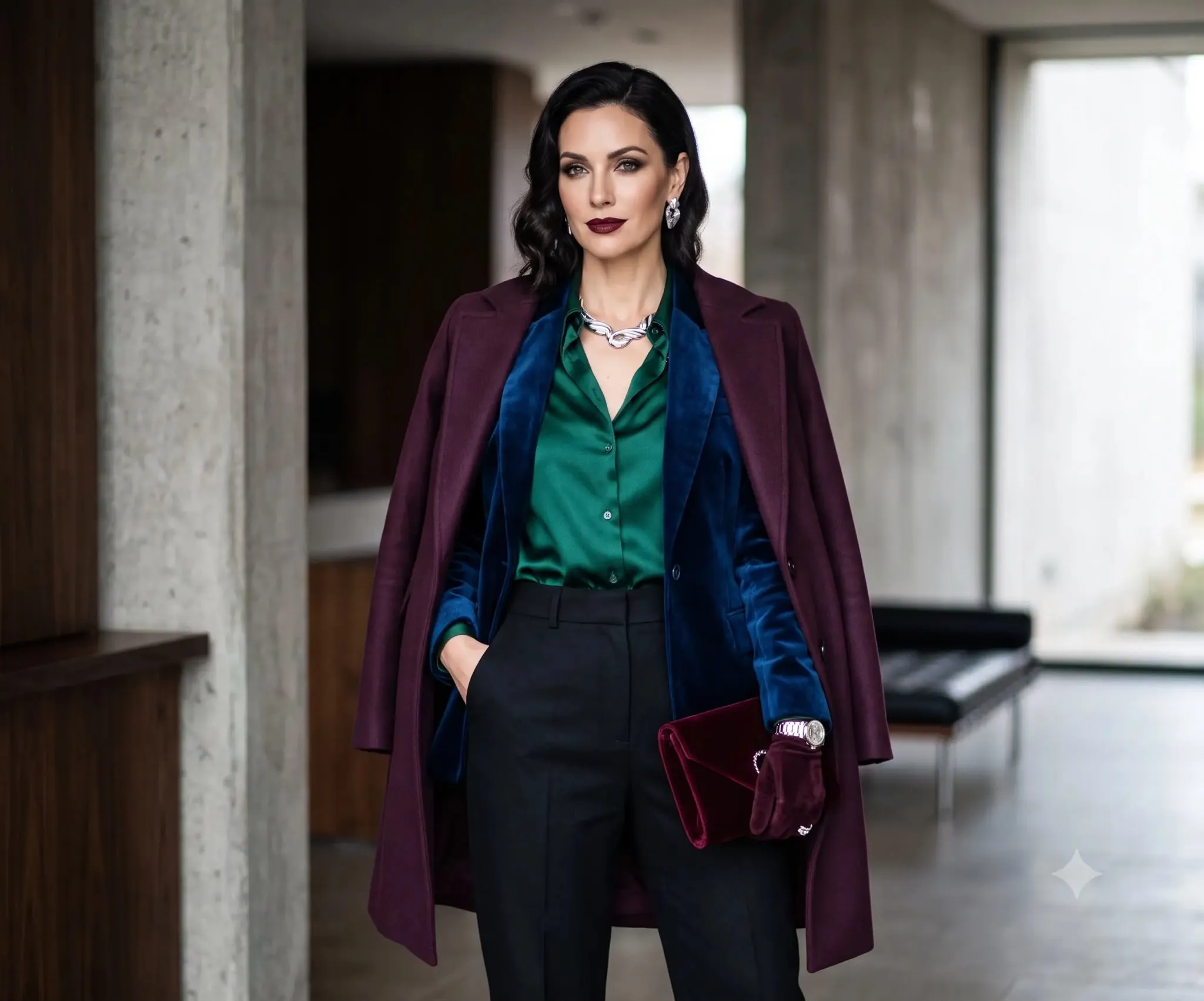
Black + Jewel Tone + Silver Accessories
Example: Black trousers + Emerald top + Silver jewelry
Formula 2:
Dark Neutral + Icy Contrast
Example: Navy blazer + White shirt
Formula 3:
Monochrome Look
Example: Different shades of blue or purple
These shades work well because they match the depth and coolness of Dark Winter coloring.
Best Shades for Dark Winter
These colors support the natural contrast of Dark Winter features.
Choosing a Color Scheme for Your Wardrobe
A good wardrobe isn’t only about individual colors — it’s also about how colors work together, and Dark Winter looks best with strong color combinations.
Light + Dark
Pairing icy white with black, or silver gray with navy, creates the high contrast that suits Dark Winter.
Dark Neutrals + Accent Colors
Combining black with emerald green, charcoal with burgundy, or navy with sapphire blue creates an elegant and expensive look.
Monochromatic Color Scheme
A monochromatic outfit uses different shades of one color, such as varying shades of blue or purple, which creates a clean and stylish appearance.
Analogous Color Scheme
Analogous colors sit close together on the color wheel, such as blue with teal or purple with burgundy. These combinations look balanced while still keeping the Dark Winter effect.
Colors to Avoid for Dark Winters
Some colors fight against the cool and deep nature of Dark Winter.
| Avoid | Better Choice |
| Warm beige | Cool taupe |
| Mustard yellow | Icy yellow |
| Rust orange | Cool red |
| Camel brown | Charcoal gray |
| Peach | Cool pink |
| Golden brown | Espresso brown |
| Warm olive | Deep emerald |
Warm and muted colors can make Dark Winter features look less bright. The problem isn’t the darkness of the color — it’s the warm undertone.
Sister Palettes
Every seasonal color type has related palettes, and Dark Winter sits between True Winter and Dark Autumn. Understanding these differences can help you find your best colors.
What If You’re Not a Dark Winter?
If Dark Winter doesn’t feel like the right fit, don’t worry. Many people discover they belong to another season, such as True Winter, Bright Winter, or Deep Autumn. Seasonal color analysis is about finding the palette that naturally enhances your features rather than forcing yourself into one category.
Dark Winter vs Other Seasons Comparison
Example:
| Feature | Dark Winter | True Winter | Dark Autumn |
| Undertone | Cool | Cool | Warm |
| Colors | Deep & Rich | Bright & Icy | Warm & Earthy |
| Best Shades | Emerald, Burgundy | Black, Ice Blue | Olive, Rust |
| Metals | Silver | Silver | Gold |
Dark Winter vs True Winter
Both seasons are cool, but they diverge in intensity. True Winter is brighter, more icy, and more clear, while Dark Winter is deeper, more dramatic, and more intense. If bright colors overpower you, Dark Winter may suit you better.
Dark Winter vs Soft Winter
Dark Winter and Soft Winter are different because they have different levels of depth and contrast.
| Dark Winter | Soft Winter |
| Deep and dramatic colors | Softer and blended colors |
| Higher contrast | Lower contrast |
| Rich jewel tones | Muted shades |
| Pure black works well | Softer dark neutrals work better |
Dark Winter needs stronger colors because the season is based on depth and contrast, while Soft Winter usually looks better with softer shades that create a gentle effect.
Dark Winter vs Dark Autumn
Both seasons are deep, but the difference is temperature. Dark Winter is cool, blue-based, and crisp, while Dark Autumn is warm, earthy, and golden.
For example, Dark Winter prefers burgundy, sapphire, and emerald, while Dark Autumn prefers rust, olive, and chocolate brown.
Styling Your Dark Winter Palette
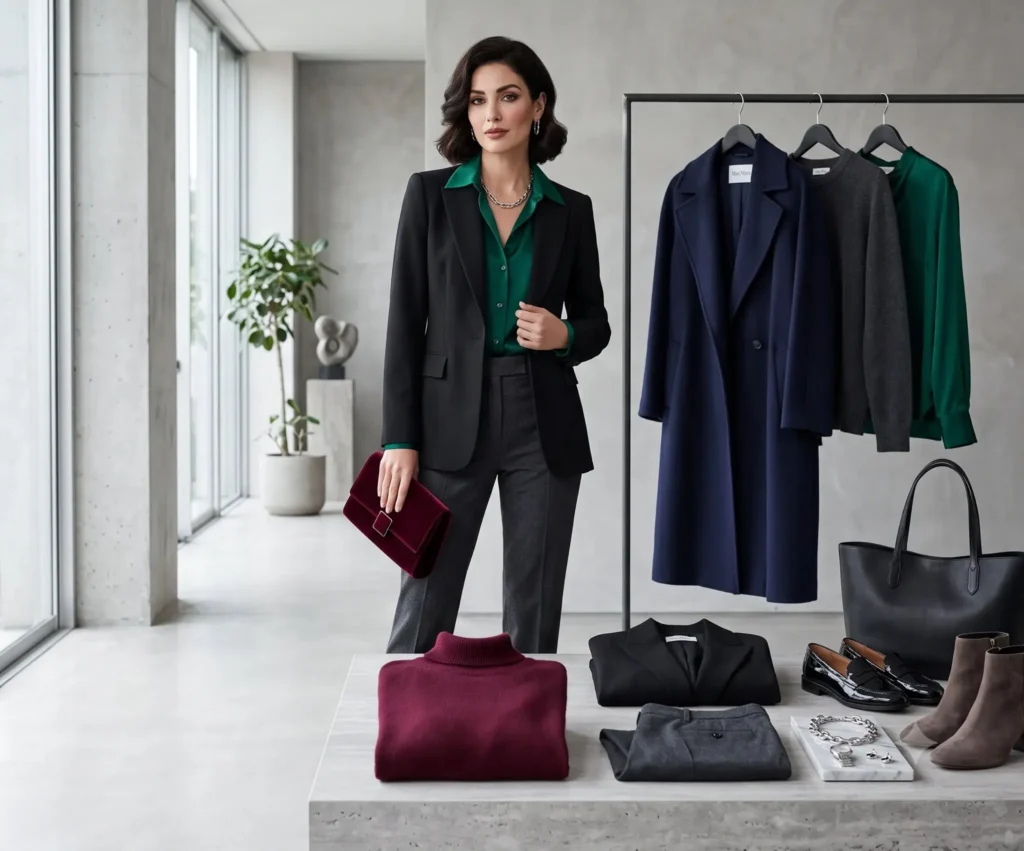
Dark Winter clothing focuses on deep, cool colors, strong contrast, and elegant styling choices. Dark Winter clothing works well with clean lines, structured shapes, high-quality fabrics, and strong contrast.
Good fabric choices include velvet, leather, satin, wool, and silk, since these textures increase the richness of Dark Winter colors.
Best Outfit Combinations
Casual Outfit Ideas
A casual Dark Winter outfit can include a burgundy sweater with black jeans, a charcoal jacket with dark blue denim, or an emerald top with black trousers. Add silver jewelry for a cool finishing touch.
Workwear Outfit Ideas
For professional looks, try a sapphire blue blouse with black pants, an emerald blazer with charcoal trousers, or a navy suit with a white shirt. Navy and charcoal happen to be the safest suits for semi-formal events too, which is why they anchor most men’s cocktail outfits. These combinations look confident and polished.
Dark Winter Office Style Tips
For a professional appearance, choose structured clothing in deep neutral colors. Black, navy, charcoal, and burgundy create a polished look without being overpowering. Keep accessories simple and choose silver or white gold for a refined finish.
Evening Outfit Ideas
For formal events or think weddings, receptions, and any invitation calling for cocktail attire; a black dress with silver accessories, a cool red dress with berry lipstick, or a deep plum outfit with platinum jewelry all work beautifully. Dark Winter can handle dramatic styles very well.
Everyday Dark Winter Outfit Formula
A simple formula is to pair one dark neutral with one rich accent color — for example, black trousers with an emerald blouse, a navy blazer with a white shirt, or charcoal jeans with a burgundy sweater. Finish the outfit with silver accessories to maintain the cool-toned look.
Dark Winter Makeup Palette: Lipstick, Eyeshadow, and Blush
Dark Winter makeup should match the depth and contrast of the palette. The best makeup looks are defined, cool-toned, and rich. Application matters as much as shade and then clean makeup brushes blend deep, pigmented colours far more evenly than brushes clogged with old product.
Dark Winter Lipstick Colors
Best lipstick shades include blue-red, burgundy, wine, berry, and plum. A classic red lip can look especially beautiful on Dark Winter.
Avoid peach lipstick, warm coral, and orange-red shades.
Dark Winter Eyeshadow
Best eyeshadow colors include charcoal, navy, deep purple, emerald green, and gunmetal. Smokey eyes often work well because they match the dramatic nature of this season.
Dark Winter Blush
Best blush shades include cool rose, deep pink, berry, and plum. Avoid very warm orange blush tones.
Hair Colors for Dark Winter
Dark Winter hair colors should stay cool and deep. Best choices include soft black, blue-black, espresso brown, and cool dark brunette.
If coloring your hair, avoid golden blonde, honey highlights, copper, and warm caramel, since these shades may reduce the natural contrast of the Dark Winter palette.
How to Truly Understand if You’re Dark Winter?
Finding your seasonal color type can be exciting, but it isn’t always easy. Many people try to identify their season by looking only at hair color, eye color, and skin tone — but seasonal color analysis is more detailed than that.
A professional color analysis looks at how different colors affect your face. The correct palette should make your skin look clearer, more even, healthier, and brighter, while the wrong colors may create shadows under the eyes, dull skin, or an uneven appearance.
Although online quizzes and DIY tests can provide useful clues, they cannot replace an in-person or virtual draping session with a trained color consultant. Professional color analysis evaluates undertone, value, chroma, and contrast under controlled lighting to identify your most flattering palette.
DIY Dark Winter Color Tests
You can try simple tests at home.
- Wear silver and gold jewelry near your face. If silver makes your skin look brighter, you may have a cool undertone; if gold looks better, you may have a warmer undertone. Dark Winter usually looks best with silver, platinum, and white gold.
- Compare black and brown clothing. Dark Winter usually looks better in pure black, charcoal, and cool dark shades, while warm brown may look heavy or dull.
- Try comparing cool colors like emerald, sapphire, burgundy, and blue-red against warm colors like orange, rust, mustard, and camel. If cool colors make your face look more alive, Dark Winter may be a possibility.
Dark Winter Wardrobe Essentials
Building a wardrobe around your season makes shopping easier. Here are essential pieces for a Dark Winter closet.
Dark Winter Capsule Wardrobe Checklist
Creating a capsule wardrobe helps you build outfits easily because every item works together. A Dark Winter capsule wardrobe should include deep colors, cool neutrals, and strong contrast pieces.
You don’t need to replace your entire wardrobe at once. Start by adding versatile basics like a black blazer, charcoal trousers, or a burgundy sweater, then replace older items gradually as you shop. This approach keeps your wardrobe practical while reducing unnecessary spending.
Tops
Essential tops include a black turtleneck, crisp white shirt, emerald green blouse, burgundy sweater, and sapphire blue top.
Bottoms
Best choices are black trousers, charcoal pants, dark blue denim, and black jeans.
Outerwear
Choose a black wool coat, navy blazer, burgundy coat, or charcoal jacket.
Dresses
Great options include a black evening dress, emerald green dress, deep red dress, and plum dress.
A small wardrobe with the right colors can create many elegant outfit combinations.
Dark Winter Basics
Black Blazer
A black blazer is a powerful wardrobe item that works for office outfits, casual looks, and evening style.
White Shirt
Choose a crisp white shirt instead of cream — pure white creates the contrast Dark Winter needs.
Dark Denim
The best denim choices are dark blue, blue-black, and black jeans. Avoid faded or warm-toned denim.
Statement Coat
Good choices include a black wool coat, burgundy coat, emerald green coat, or navy coat. A deep coat can become the focus of your outfit.
Dark Winter Accessories
Accessories can complete your look. The best metals are silver, platinum, and white gold, paired with gemstones like sapphire, emerald, amethyst, and ruby.
Avoid yellow gold, warm bronze, and orange gemstones.
Frequently Asked Questions
What is the Dark Winter color palette?
The Dark Winter color palette is a group of cool, deep, and high-contrast colors used in the 16 season color analysis system. It includes shades like black, emerald green, sapphire blue, burgundy, and deep purple.
Can Dark Winters wear black?
Yes. Black is one of the strongest colors for Dark Winter. Unlike many seasons, Dark Winter can wear pure black because the palette naturally supports deep and dramatic shades.
What colors look best on Dark Winter?
The best Dark Winter colors include black, emerald green, sapphire blue, burgundy, plum, cool red, charcoal gray, and midnight navy.
Can Dark Winter wear white?
Yes, but the best white is usually pure white or icy white. Warm cream and ivory may not create the same effect.
What is the difference between Dark Winter and Deep Winter?
In most color analysis systems, Dark Winter and Deep Winter describe the same season. The name depends on the color analysis system being used, but both describe a palette that is deep, cool, and strong.
Can Dark Winter wear brown?
Yes, but only certain browns. Better choices are espresso brown and cool chocolate brown. Avoid golden brown, warm caramel, and orange-brown.
Is Dark Winter the same as True Winter?
No. Both are Winter seasons, but they have different qualities. True Winter focuses on brightness, clarity, and coolness, while Dark Winter focuses on depth, richness, and contrast.
Dark Winter Shopping Checklist
When shopping, look for:
✅ Cool undertones
✅ Deep colors
✅ Strong contrast
✅ Rich fabrics
✅ Clear shades
Final Thoughts
Finding your seasonal color palette isn’t about limiting your choices—it’s about making them easier. Understanding the Dark Winter palette can help you shop more intentionally, build a cohesive wardrobe, and choose colors that highlight your natural features. Remember that seasonal color analysis is a guide, not a rulebook. Use these recommendations as a starting point, experiment with the colors that suit you best, and adapt them to your own style and lifestyle. If you’re still unsure, a professional color analysis can provide personalized guidance and help you make more confident styling decisions.